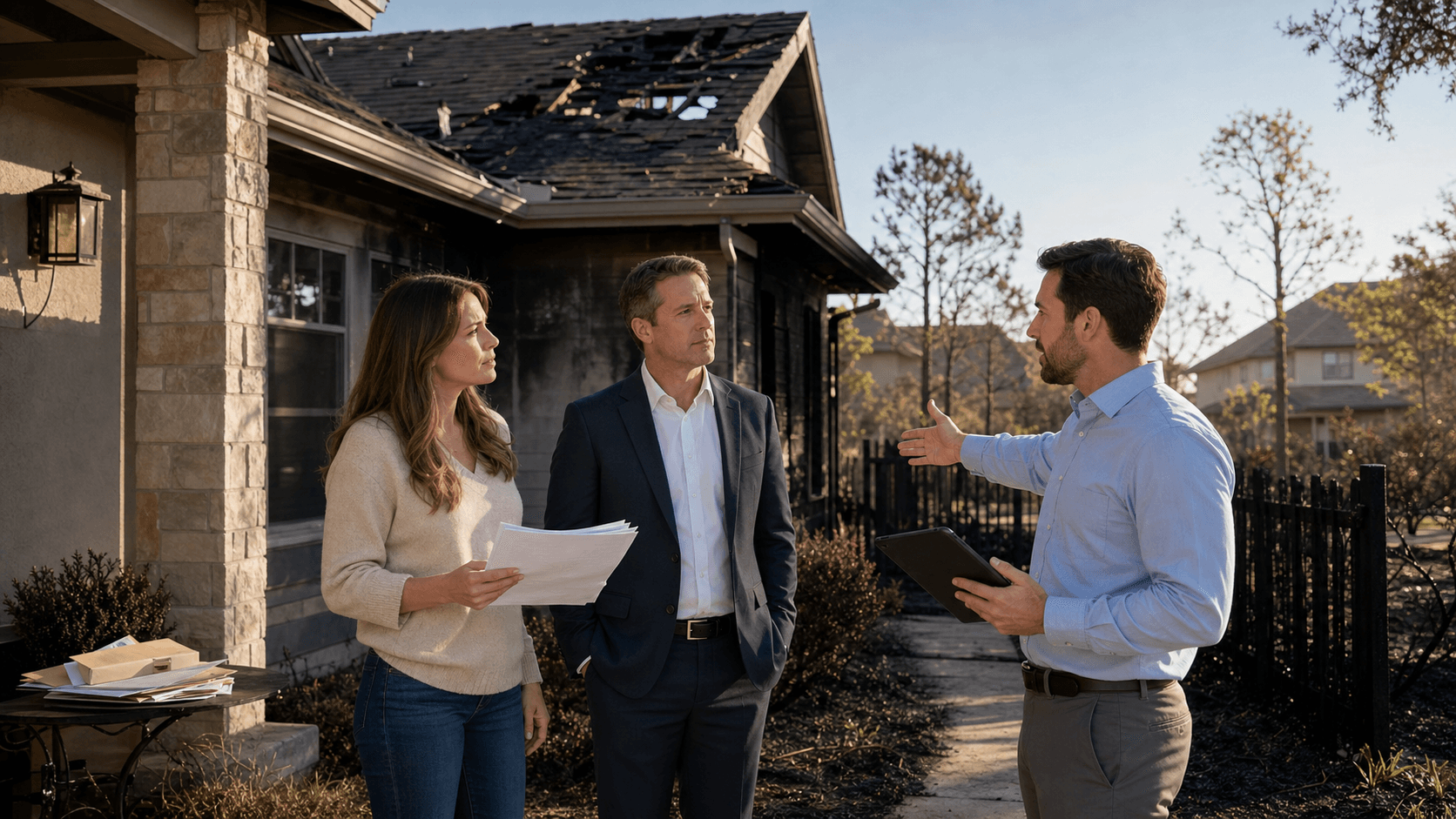
When a Texas Fire Claim Denial Signals a Bigger Problem
A fire or heavy smoke loss is one of the hardest blows a Texas property owner can take. For commercial buildings and high-value homes, a denied or underpaid claim does not just slow things down; it can stall a rebuild, disrupt tenants, and strain lender relationships. When your carrier says no, or keeps everything "under review," that decision hits your schedule, your cash flow, and your reputation.
Fire and smoke claims are often contentious because they touch every part of a property at once. Origin and cause, scope of damage, code upgrades, business interruption, and replacement cost all get pulled into the same fight. What looks like a simple denial can hide deep disputes about coverage, causation, or value that will decide whether your project stays on track.
In our Texas property insurance practice, we see the same red flags over and over again. When these show up in denial letters, reports, or claim handling, it is usually time to bring in a denied fire insurance claim attorney sooner rather than trying to "work it out" informally. That is especially true for commercial policyholders who must worry about code compliance, tenant displacement, loan covenants, and how long the lights stay off at their business.
Problematic Denial Letters and Reservation of Rights Language
The first warning sign is often the paper trail. Denial letters and reservation of rights letters can look formal and final, but the way they are written can tell you a lot about the carrier's strategy.
Watch for vague or shifting denial grounds. For example, some carriers lean on generic exclusions like "wear and tear," "pre-existing damage," or "construction defects" with no real connection to the facts of your fire. Another pattern is an early statement that "coverage is under investigation," followed later by a denial based on a brand-new theory after you send more documents. You may also see citations to policy sections that do not actually apply to a fire loss, or undefined terms used to make the claim sound excluded.
Another red flag is an overreliance on reservation of rights letters that never seem to end. These may come as long letters quoting pages of policy language but refusing to say yes or no on coverage, repeated "we are still evaluating" updates that feel like denials in everything but name, or months of delay that force you to front costs for mitigation, demolition, and temporary space.
These tactics protect the carrier's defenses while slowly draining your leverage. A denied fire insurance claim attorney can:
- Break down which exclusions are being misapplied under Texas law
- Push the carrier to commit to clear written positions instead of half measures
- Help you build an early written record for coverage disputes, bad faith issues, and prompt payment claims
Questionable Origin and Cause Findings After a Fire Loss
Fire origin and cause is another frequent battleground. Carriers often rely on their own experts, and those experts sometimes reach very policy-friendly conclusions.
Be cautious when reports jump quickly to "improper maintenance," "faulty workmanship," or "construction defect" with little real analysis. Other warning signs include investigators who spend minimal time at the scene, ignore burn patterns, or do not talk with key witnesses. You should also be wary of opinions framed as "possible" or "suspected" causes used as a basis for denial, instead of clear findings backed by accepted methods such as NFPA 921.
A different type of problem is a quiet push toward a fraud story, even when there is no proof. That can show up as questions suggesting you inflated the claim or hid prior damage without any real evidence, recorded statements that focus more on your finances or business struggles than on the fire scene, or threats, direct or indirect, that the entire policy might be voided because of "misrepresentation."
Origin and cause disputes are time-sensitive because evidence can be lost or altered quickly. Counsel can:
- Coordinate independent origin and cause experts and other consultants
- Help preserve the fire scene and key physical evidence before demolition or repair
- Push back against unsupported inferences that could taint the whole claim file
Understated Fire Damage, Smoke Contamination, and Code Upgrades
Even if the carrier accepts that the fire is covered, the real fight is often about the scope and cost of repairs. Many commercial owners and high-value homeowners see the carrier try to shrink the loss on paper.
Common patterns include estimates that treat charring and heat damage as "cosmetic," ignoring structural impact to framing, steel, concrete, and fireproofing. Another frequent issue is minimal attention to smoke and soot that has spread into HVAC systems, insulation, wiring, inventory, and tenant improvements. Some claims are also limited by desk-adjusters or third-party estimators making big calls from photos instead of detailed on-site inspections.
On the commercial side, carriers may downplay code and design issues. That can include leaving out required law-and-ordinance upgrades or accessibility work in older buildings, refusing to match façade, roofing, and interior finishes across a shopping center, office building, or multifamily property, or ignoring what your architect, engineer, or contractor says is needed for a safe and code-compliant rebuild.
When the carrier is pushing "patch and paint" while your contractors are talking about replacement and redesign, the gap is usually not going to close on its own. An experienced Texas property insurance attorney can:
- Bring in estimators, engineers, and industrial hygienists who understand fire and smoke losses
- Read the policy language on replacement cost, matching, and code coverage and apply it to your specific property
- Help align your construction planning and your insurance position so you are not stuck in the middle of a half-funded project
Delay, Business Interruption Disputes, and Texas Prompt Pay Issues
Large fire losses often create serious business interruption problems. When the claim stalls, that interruption can last far longer than it should.
You may be facing repeated requests for the same documents, new adjusters cycling in, and constant claims that the investigation is incomplete. Delays can also make it harder to stabilize and rebuild before key business dates on your calendar, which can cost tenants and customers. At the same time, many owners feel a squeeze on cash flow while paying for demolition, temporary power, short-term leases, and other stop-gap measures.
Business interruption and extra expense coverage are frequent targets for narrowing by the carrier. Watch for a tight reading of the "period of restoration" to cut off coverage before you can realistically reopen, arguments that your lost revenue is about market conditions or management issues, not the fire, and refusals to pay for reasonable extra expense like temporary space, equipment rental, and key staff retention.
Under Texas law, carriers have duties tied to prompt payment and fair claim handling. When they delay or underpay, those statutes can create exposure. Counsel can:
- Review your file for missed deadlines and unfair practices
- Turn chronic delay into a legal issue for the carrier, not just a business headache for you
- Build a damages model that accounts for property damage, business income loss, interest, fees, and in some cases bad faith remedies
Strategic Next Steps When Your Fire Claim Is Off Track
Once you see these red flags, the goal is to protect your position while your property and your business move forward. Practical early steps include:
- Capturing all communications with the carrier in writing and keeping organized files
- Insisting that major coverage positions and explanations for denial or limitation be put in writing
- Preserving damaged materials and documenting the scene before demolition or large-scale repairs
- Coordinating your contractors, consultants, and internal team so they understand that insurance recovery is a key part of the project
There is also a point where continuing to negotiate on your own does more harm than good. You may be there when the carrier's offers and explanations stop improving, even as you provide more information; when you are asked to sign releases or accept partial checks that do not match the true scope of loss; or when critical decisions about demolition, redesign, or tenant commitments are coming up, and you cannot wait for the carrier to catch up.
At Lundquist Law Firm, we focus on representing policyholders only in Texas first-party property insurance disputes. Our work includes significant commercial fire and smoke losses, high-value residential fire claims, and related business interruption disputes where coverage, cause, and valuation are contested. When a fire claim is denied, delayed, or clearly underpaid, a targeted legal review can help test the carrier's position and shape a strategy that fits both your policy and your business reality.
Protect Your Rights After a Denied Fire Insurance Claim
If your fire insurance claim has been delayed, underpaid, or denied, we are ready to step in and protect your interests. At Lundquist Law Firm, our denied fire insurance claim attorney will review your policy, investigate the loss, and pursue the full benefits you are owed. We handle the legal details so you can focus on rebuilding your home and moving forward. To discuss your situation and next steps, contact us today.