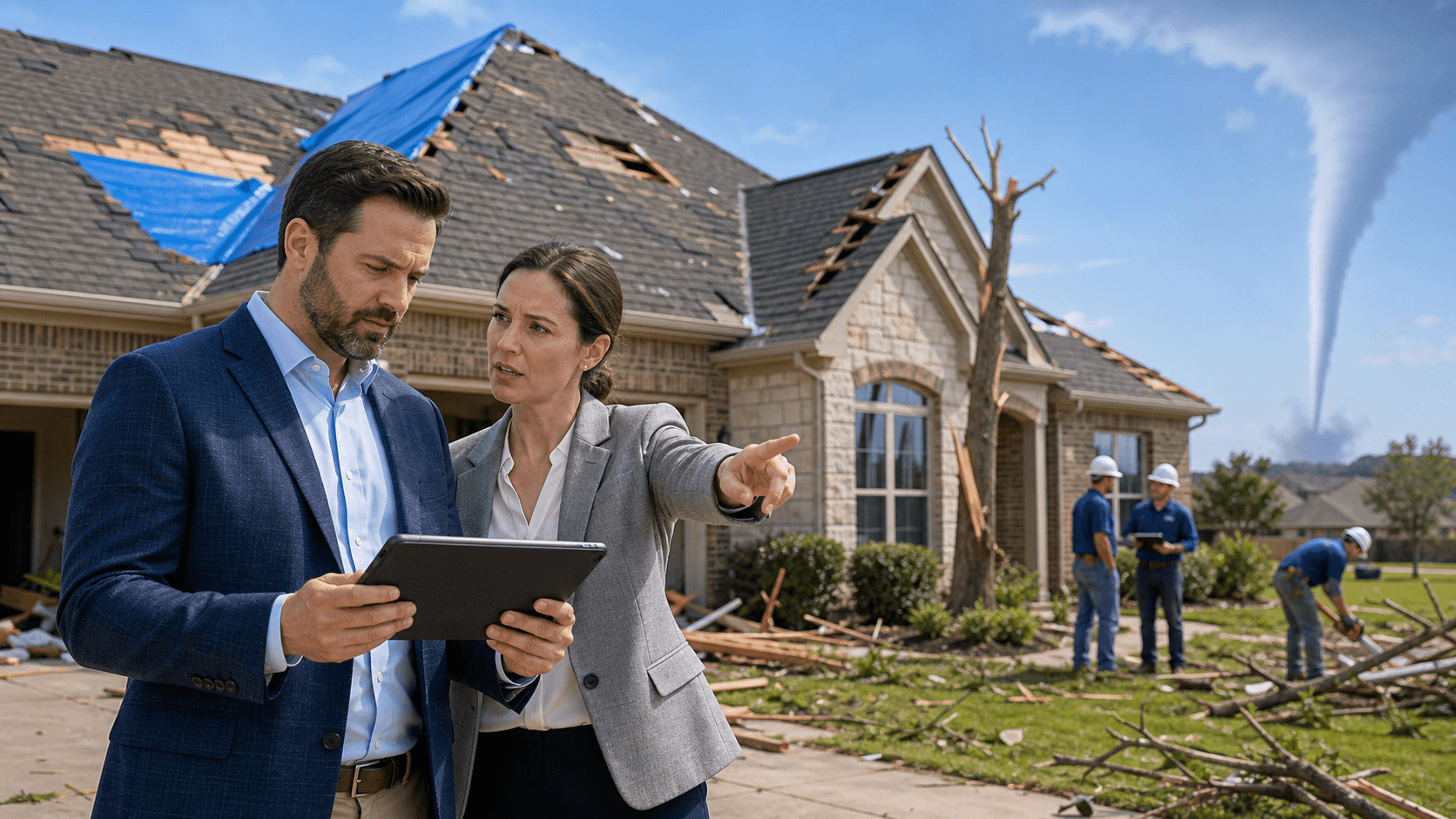
Tornado repairs can erase the proof needed to support a commercial property insurance claim. Roof openings get covered, damaged materials get removed, and interior conditions change quickly once drying and restoration work begins. At the same time, you generally cannot leave a damaged building exposed simply to preserve evidence. You may need to protect the property, prevent further damage, and keep operations moving where possible.
Our focus is helping Texas policyholders preserve a reliable record before emergency and permanent repairs alter the building. That record can matter when an insurer later claims the damage was preexisting, tied to maintenance, unrelated to the tornado, or less extensive than your repair scope shows.
Protect the Claim Record Before Repairs Begin
Commercial tornado losses often create disputes far beyond a few missing shingles or broken windows. A storm can affect roof systems, exterior cladding, rooftop HVAC equipment, structural connections, interior finishes, tenant spaces, and inventory areas. Once a contractor begins repairs, the physical condition that explains the loss may no longer be visible.
We recommend treating documentation and mitigation as parallel tasks. Reasonable emergency work should not be postponed solely because an insurer has not completed its inspection. Instead, the goal is to create a clear record of the condition before tarps, board-up materials, drying equipment, demolition, or replacement work changes it.
The need for a strong record is especially clear with:
- Warehouses and industrial facilities with large roof systems
- Retail centers, office buildings, and multifamily properties with multiple affected areas
- Buildings with rooftop HVAC equipment, skylights, wall panels, or complex exterior systems
- Properties where damage interrupts tenant access, production, sales, or other operations
When a high-value claim involves causation concerns, competing engineering views, or immediate repair pressure, a commercial tornado insurance claim lawyer in Texas can help coordinate evidence preservation without interfering with needed mitigation.
Document the Building, Operations, and Emergency Work
Before cleanup begins, create a visual record that is broad enough to show the overall loss and close enough to show specific conditions. Photographs and video should identify the area, date, direction of view, and visible damage. A simple location reference, such as a roof section, suite number, loading area, or mechanical room, can make the file much easier to follow later.
Documentation should cover more than obvious exterior damage. Tornado-related conditions may include displaced roofing materials, punctures, damaged flashing, broken windows and doors, debris impacts, compromised rooftop equipment, and water entering through a storm-created opening. We also encourage owners to capture unsafe areas, blocked access points, temporary closures, and other operational limits caused by the property damage.
Emergency work should be documented with the same care. Keep records for tarping, board-up work, debris removal, drying, temporary roof protection, and other steps taken to prevent additional damage. Useful records include:
- Work authorizations, contractor proposals, invoices, and payment records
- Timestamped photographs and video taken before, during, and after the work
- Daily logs, inspection notes, moisture readings where applicable, and repair updates
- Communications about why the work was needed and when it occurred
A contractor invoice prepared weeks after the event may not fully explain what the building looked like at the time of mitigation. Contemporaneous images, notes, and logs often provide a clearer answer when the insurer questions whether work was connected to tornado damage.
Preserve Removed Materials and Repair-Stage Evidence
Some of the most persuasive evidence appears only after repairs begin. Opened roof assemblies can reveal damaged decking, wet insulation, punctures, or displaced components. Removal of wall finishes may expose concealed moisture or framing damage. A failed HVAC component may show physical debris impact that is not apparent after replacement.
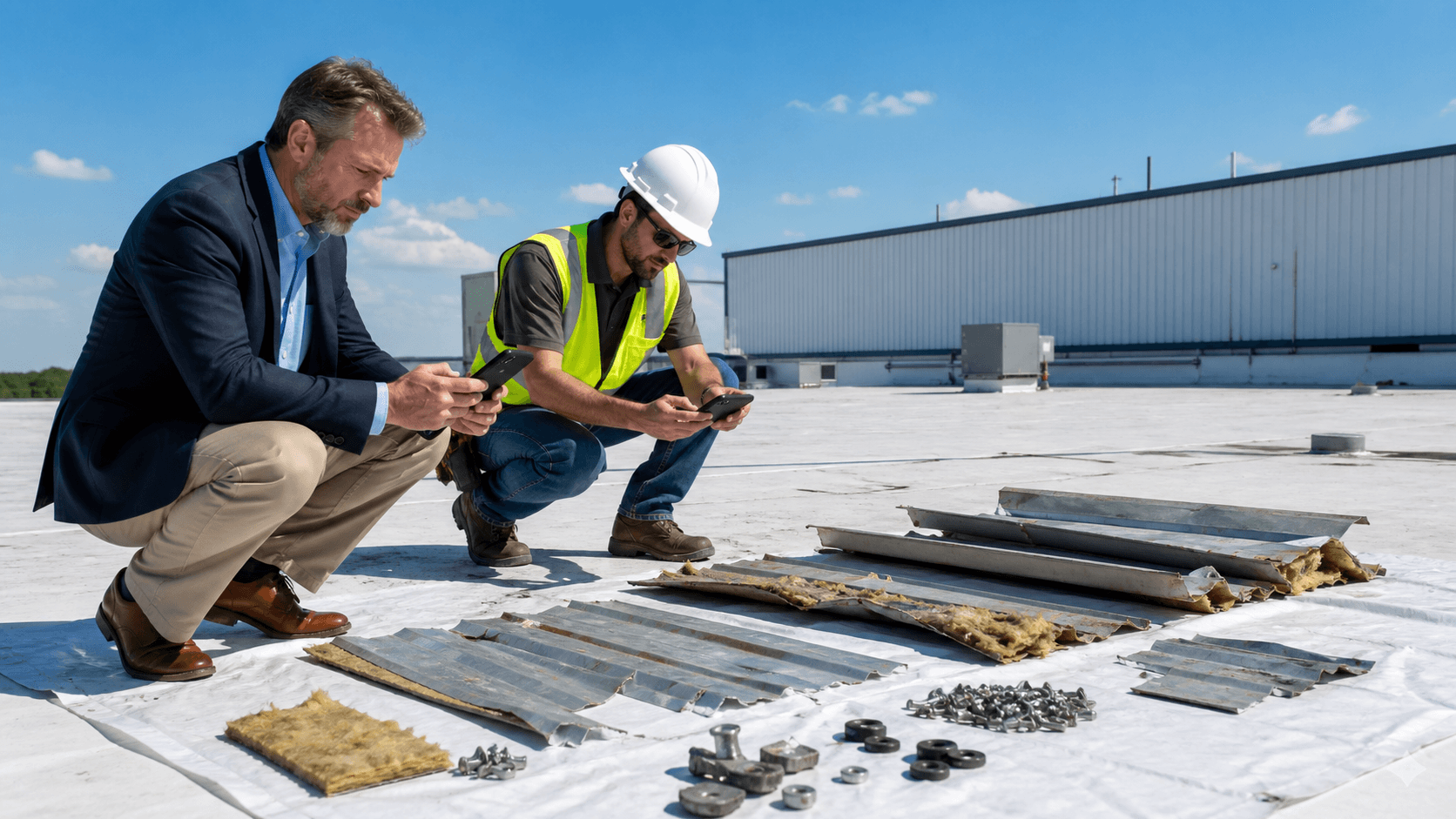
Where feasible and safe, key materials should be photographed in place before removal and again after removal. Significant items may include roofing samples, flashing, skylight components, exterior panels, damaged window framing, insulation, and storm-struck mechanical parts. The point is not to store every discarded piece of material. It is to avoid losing the items that may help explain the source and extent of the damage.
For major removed materials, we suggest maintaining a basic chain-of-custody record. It should state what was removed, where it came from, when it was removed, who removed it, and where it is being kept. That information can become important if the carrier later attributes the condition to age, wear, poor installation, or deferred maintenance.
Contractors should also be asked to photograph and describe conditions that will be covered during the next stage of work. If an insurer has delayed inspection or disputes causation while the business needs to restore operations, legal guidance can help preserve proof while keeping the repair process on track.
Connect Repair Costs to Tornado Damage
Construction invoices alone do not always establish a covered loss. A well-organized claim file connects each major repair category to the tornado damage that made the work necessary. We often see disputes when a carrier characterizes needed restoration as maintenance, a capital improvement, or unrelated renovation.
Your records should link the repair scope to photographs, inspection findings, contractor estimates, invoices, and consultant opinions when appropriate. This becomes particularly important when the dispute involves roof replacement, interior damage from a storm-created opening, matching materials, code-related work, or conditions the carrier describes as preexisting.
Additional damage discoveries deserve prompt attention. A contractor may find new conditions after opening a roof system, removing finishes, or accessing mechanical equipment. When that happens, preserve photographs, revised estimates, reports, and an explanation of why the added work was necessary. Notify the insurer in a documented manner and retain the related communications.
Policy terms may impose notice requirements, inspection provisions, proof-of-loss requests, and documentation deadlines. Before signing a broad release, treating a partial payment as final, or completing work that permanently changes the evidence, a serious commercial loss may warrant review by a commercial tornado insurance claim lawyer in Texas.
Preserve Business Income Evidence After Reopening
Reopening a building does not necessarily end the business-income portion of the claim. Tornado damage can limit occupancy, disrupt inventory movement, delay leasing, reduce sales, restrict access, or require temporary workspaces. A property payment focused only on visible repairs may not address the full operational impact.
Financial and operational records should be gathered early and updated throughout the restoration period. Depending on the business, the file may include profit-and-loss statements, sales reports, payroll data, occupancy records, lease files, vendor communications, customer cancellations, repair schedules, temporary-location records, and extra-expense documentation.
For landlords and commercial property owners, records may also show tenant interruptions, rent concessions, delayed leasing activity, and access restrictions tied to the damaged premises. Insurers may contend that operations could have resumed sooner or that reduced income came from unrelated market factors. A detailed timeline of repairs, permitting, contractor availability, supply delays, and safety restrictions can help show what actually prolonged the loss.
Get Legal Guidance Before the Record Is Lost
Evidence preservation begins immediately after a tornado loss and continues through permanent repairs. The strongest claim files show the building's original condition, the emergency steps taken to prevent added damage, the materials removed, the repair decisions made, and the effect on business operations.
Protect the Value of Your Tornado Claim
For complex commercial losses, Lundquist Law Firm can evaluate coverage, insurer communications, and the evidence needed to support the full scope of damage. Speak with a commercial tornado insurance claim lawyer in Texas before a disputed scope, causation issue, or low valuation affects your recovery. To discuss your claim with our policyholder-focused team, contact us.