Understanding Matching Disputes in Texas Commercial Hail Claims
Matching disputes can turn a commercial hail claim into a much larger property loss than the insurer's initial estimate suggests. After a Texas hailstorm, a carrier may agree that certain roof sections, panels, shingles, or exterior finishes were damaged, yet refuse to pay for the related work needed to produce a reasonably consistent and functional result.
At Lundquist Law Firm, we see that a patchwork repair can affect far more than appearance. For commercial owners, an incomplete scope may raise concerns about roof performance, manufacturer warranties, tenant relations, property value, leasing, and business operations. The right answer depends on the policy language and the evidence at the property, not simply on the carrier's preferred repair plan.
Why Matching Can Turn Into a Major Loss
A covered hail loss does not automatically mean the insurer must replace every undamaged component on the building. Still, an insurer cannot fairly resolve a complex commercial loss by treating each damaged spot as if it were separate from the larger roof or exterior system.
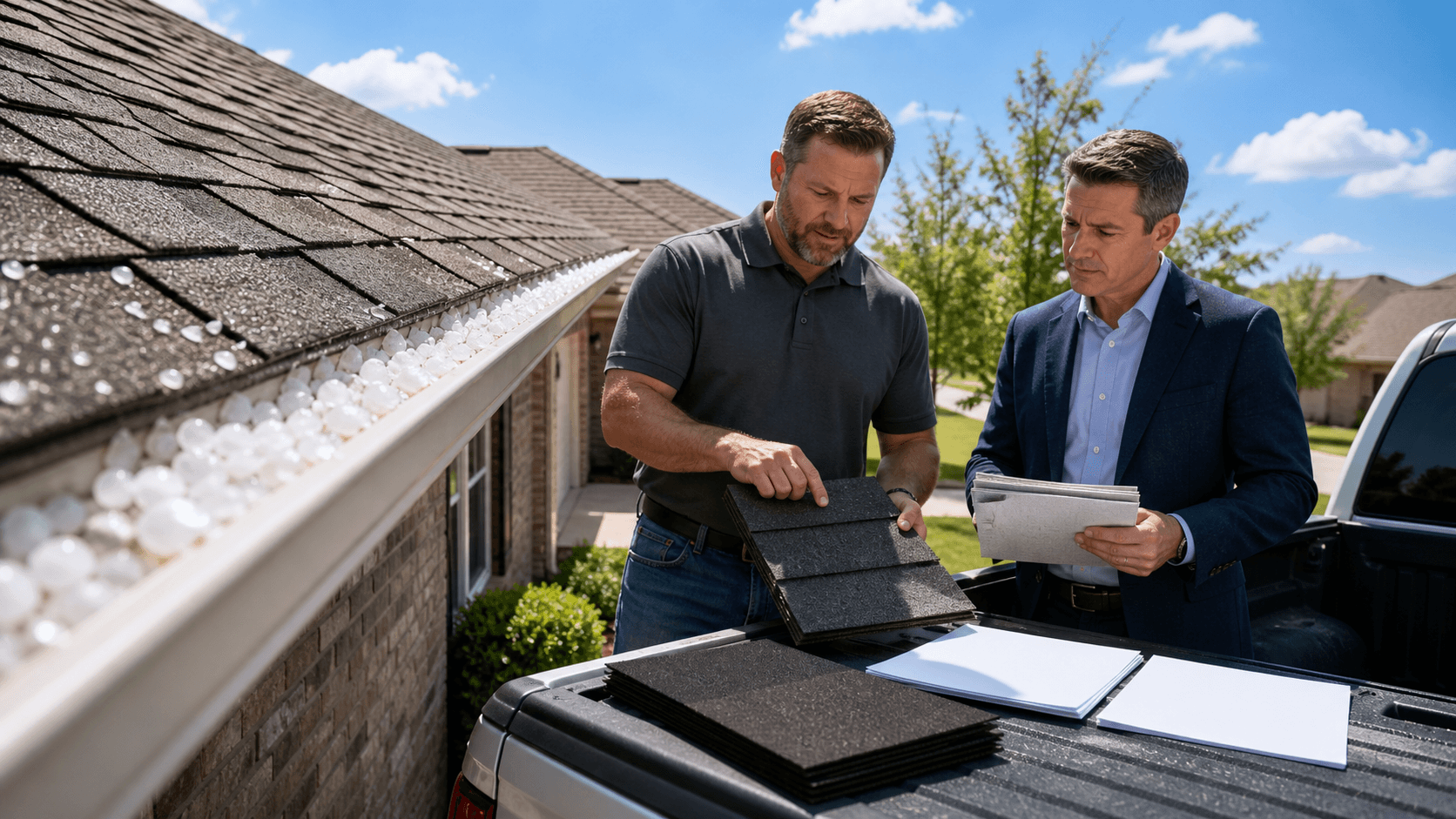
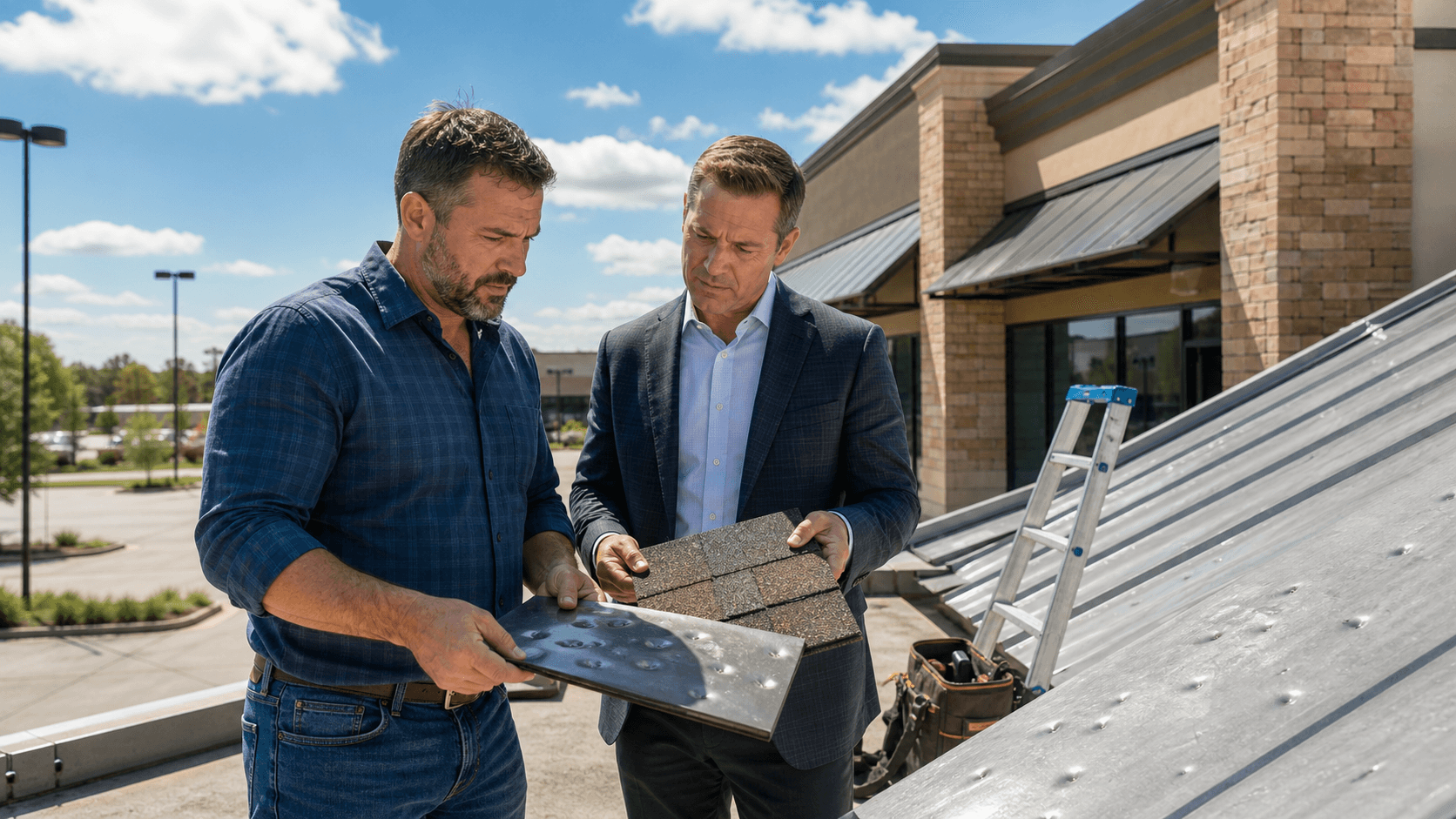
The matching question often arises when damaged materials cannot be reasonably integrated with the undamaged portions of the property. Different colors, profiles, coatings, ages, and installation methods can matter. So can the way materials connect to flashing, drainage systems, wall assemblies, skylights, gutters, and other building components.
For a commercial property, a narrow repair plan may create problems such as:
- Replacement materials that are unavailable or discontinued
- Repairs that affect the performance of an interconnected roof system
- Visible inconsistencies that affect tenants, customers, or prospective lessees
- Warranty concerns when new components are installed beside older materials
- Additional disruption when temporary repairs must later be revisited
We recommend treating matching as a coverage and evidence issue from the start. A hail damage claims attorney can assess whether the insurer's proposed scope fits the policy and whether it actually restores the covered property in a workable manner.
Policy Language Shapes the Dispute
The insurance policy controls the starting point for any matching analysis. An adjuster's estimate is not the policy, and an insurer's interpretation of one isolated provision may not account for the coverage as a whole.
Relevant provisions may include replacement-cost coverage, actual-cash-value language, roof-surface limitations, cosmetic-damage exclusions, ordinance-or-law coverage, and endorsements that limit payment to damaged portions. Language requiring repair or replacement with materials of "like kind and quality" can also be important, particularly where the carrier proposes materials that do not properly integrate with the existing system.
A complete policy review should include more than the main coverage form. We review the declarations, endorsements, manuscript provisions, prior renewals, and coverage changes that may affect the claim. Commercial policyholders should be cautious before accepting a partial payment, authorizing permanent repairs, or agreeing to a repair scope that could later be used to limit recovery.
Insurers may argue that they owe only for the area with visible hail impacts. That position may overlook whether the proposed repair is feasible, whether compatible materials remain available, and whether the work can be completed without affecting adjacent components. The policy language and property-specific facts must be considered together.
Repairability Is More Than Appearance
The strongest matching disputes are rarely limited to an argument that a building "will not match." Hail can damage materials that must function as part of a larger exterior system. Roofing membranes, shingles, metal panels, coatings, flashing, ridge components, gutters, skylight assemblies, and wall systems may all require coordinated analysis.
A repair that looks acceptable from the ground may still create performance concerns. For example, replacing isolated materials can affect wind resistance, drainage, water shedding, attachment methods, or manufacturer requirements. Those questions deserve close attention before permanent work begins.
Useful evidence may come from qualified professionals, including:
- Roofing consultants and experienced contractors
- Engineers and building-envelope professionals
- Manufacturers and material suppliers
- Site inspections, photographs, and drone imagery
- Documentation regarding material availability and warranty requirements
Carriers sometimes rely on small test areas, generalized repair assumptions, outdated pricing, or incomplete material research. They may overlook discontinued products or installation constraints that become apparent only after a full inspection. Our approach is to ground the response in site-specific evidence, rather than broad statements about appearance alone.
Commercial Properties Require a Property-Wide View
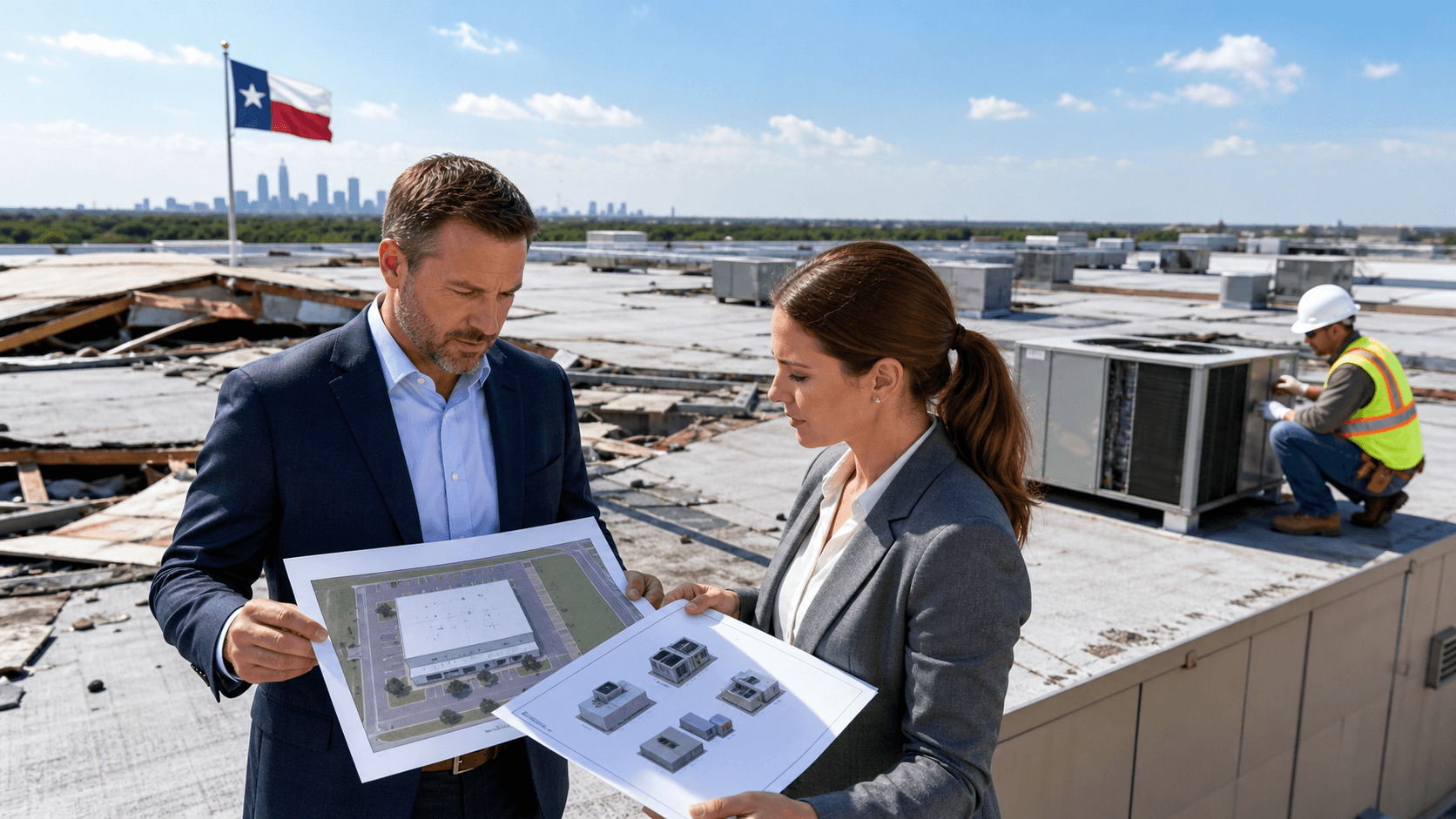
Large commercial properties often make matching disputes more complicated. A shopping center, office building, apartment complex, warehouse, or industrial facility may include multiple roof elevations, additions, prior repairs, varied construction periods, and shared drainage or flashing systems. A limited repair on one section can affect the larger property in ways that do not appear in a line-item estimate.
Causation disputes frequently overlap with scope disputes. The insurer may characterize observed conditions as wear and tear, deterioration, improper installation, or cosmetic damage rather than covered hail damage. It may also question whether replacement is necessary under applicable building requirements. We examine those positions alongside the physical condition of the property and the policy's actual terms.
The repair scope can also affect business-interruption losses when the policy provides that coverage. Delayed roof replacement, tenant disruption, restricted access, inventory protection measures, and operational interruptions may extend the time and expense required to return the property to normal use. An artificially narrow property-damage estimate can understate those related losses as well.
An Aging Roof Can Still Suffer a Covered Hail Loss
An older roof does not end a hail claim. In Douglas v. Landmark American Insurance Co., the dispute centered on why the roof decking at a Midland shopping mall had to be replaced. The policyholder's expert acknowledged that the steel decking had deteriorated with age. He also explained that replacing the decking was necessary to repair the hail-damaged insulation above it, and the policyholder sought that cost as part of the hail repair.
Landmark invoked Texas's concurrent-causation doctrine, which applies when covered and excluded causes combine to produce the same loss. The court found that Landmark first raised the argument in its reply brief and that its reliance on All Saints Catholic Church oversimplified the issue. Evidence of deterioration explained the decking's condition, but it did not establish that deterioration independently required replacement or contributed to the particular repair cost the policyholder claimed.
The court denied Landmark's motion for partial summary judgment, leaving the decking claim for trial. For Texas policyholders, the practical point is that an expert can acknowledge preexisting wear and still explain why repairing covered hail damage requires replacing an older component. The same reasoning matters in matching disputes, where the question is what the covered repair actually requires, not whether the rest of the building is older.
Douglas v. Landmark Am. Ins. Co., No. MO:22-CV-00167-DC, 2024 WL 4101934, at *3–4 (W.D. Tex. July 7, 2024).
Preserving the Full Value of the Claim
Early claim decisions can limit the options available later. Before permanent repairs change the condition of the property, we encourage policyholders to preserve photographs, weather information, maintenance records, prior inspection reports, repair invoices, manufacturer documents, material samples, and communications with the insurer and its consultants.
An undisputed payment may be important for mitigation and cash flow, but it should be reviewed carefully. Initial estimates can omit necessary components, understate labor or material requirements, or assume repairs that are not workable in the field. Understanding what the payment covers, and what remains unresolved, helps protect the claim.
As autumn follows the primary Texas hail season, unresolved spring and summer claims deserve attention before year-end budgeting, insurance renewals, and capital projects affect the property owner's position. Matching disputes should be evaluated before a permanent repair strategy locks in an incomplete scope.
Protect the Full Value of Your Property Claim
Lundquist Law Firm represents Texas policyholders confronting disputed scopes, undervalued repairs, and insurer positions that do not reflect the policy's requirements. Speak with a hail damage claims attorney who can assess the coverage, evidence, and claim-handling issues affecting your commercial property loss. To discuss your claim with our team, contact us.