Texas severe storm events do not just damage buildings; they test insurance programs. For commercial owners and asset managers, the more difficult phase often begins after the sky clears, when large commercial property damage claims encounter resistance, delays, and narrow readings of the policy. Handling those first-party claims in a disciplined, strategic way can determine whether you recover in line with your policy or absorb a long-term loss.
We focus our work on policyholders only, so we see how these disputes actually play out on the ground. In this article, we outline how major storm events affect commercial coverage, what strong claim files look like, the pushback you can expect from carriers, how business interruption disputes develop, and when it makes sense to bring in experienced coverage counsel on high-value Texas losses.
When Texas Severe Storms Turn Into Insurance Disputes
Texas has always had demanding weather, but extended hail seasons, organized wind events, and late-season Gulf storms have changed the risk profile for commercial property. Flat commercial roofs, large building envelopes, and complex interiors are now exposed to multiple storm types over a single year.
For sophisticated policyholders, several patterns repeat after major events:
- High-value claims get flagged and scrutinized
- Scope and pricing become the central areas of dispute
- Carrier investigations slow down just as repair decisions need to move forward
Our practice is focused on those inflection points. We handle first-party property coverage only, and only for insureds, not insurers, with a particular emphasis on complex commercial and significant residential losses across Texas. The goal here is to give you a practical framework so you can prepare for the next storm season rather than operating in a purely reactive posture.
How Major Texas Storms Impact Commercial Coverage
The large-scale weather events that drive substantial commercial property damage claims in Texas tend to fall into a few categories:
- Large hail outbreaks across North and Central Texas
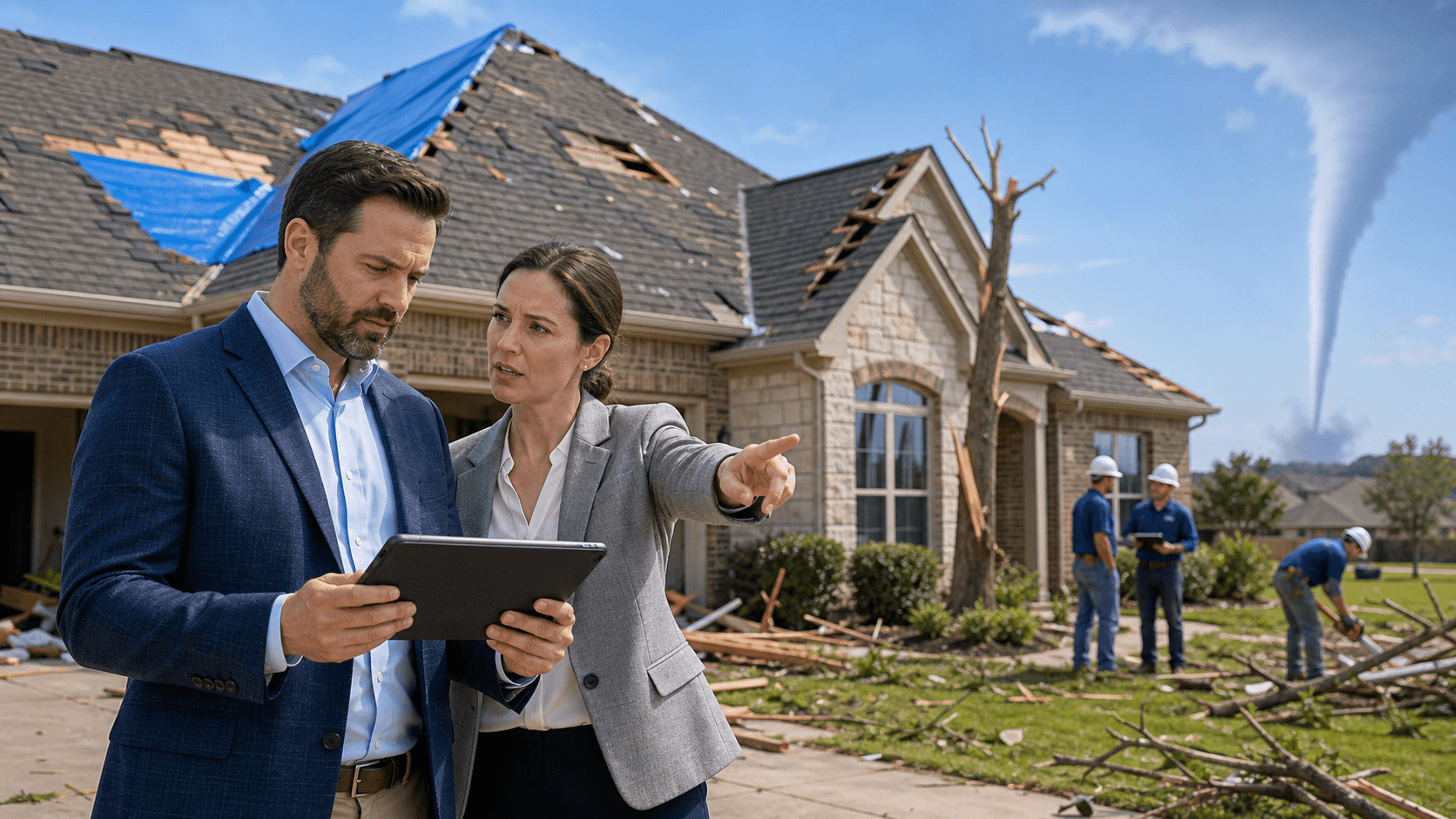
- Wind and tornado clusters that track along major corridors
- Gulf hurricanes that bring extended high winds and heavy rain
- Severe convective storms that mix wind, hail, and embedded tornadoes
Those events affect commercial assets in predictable ways. We often see:
- Roof damage on TPO, PVC, modified bitumen, and metal systems
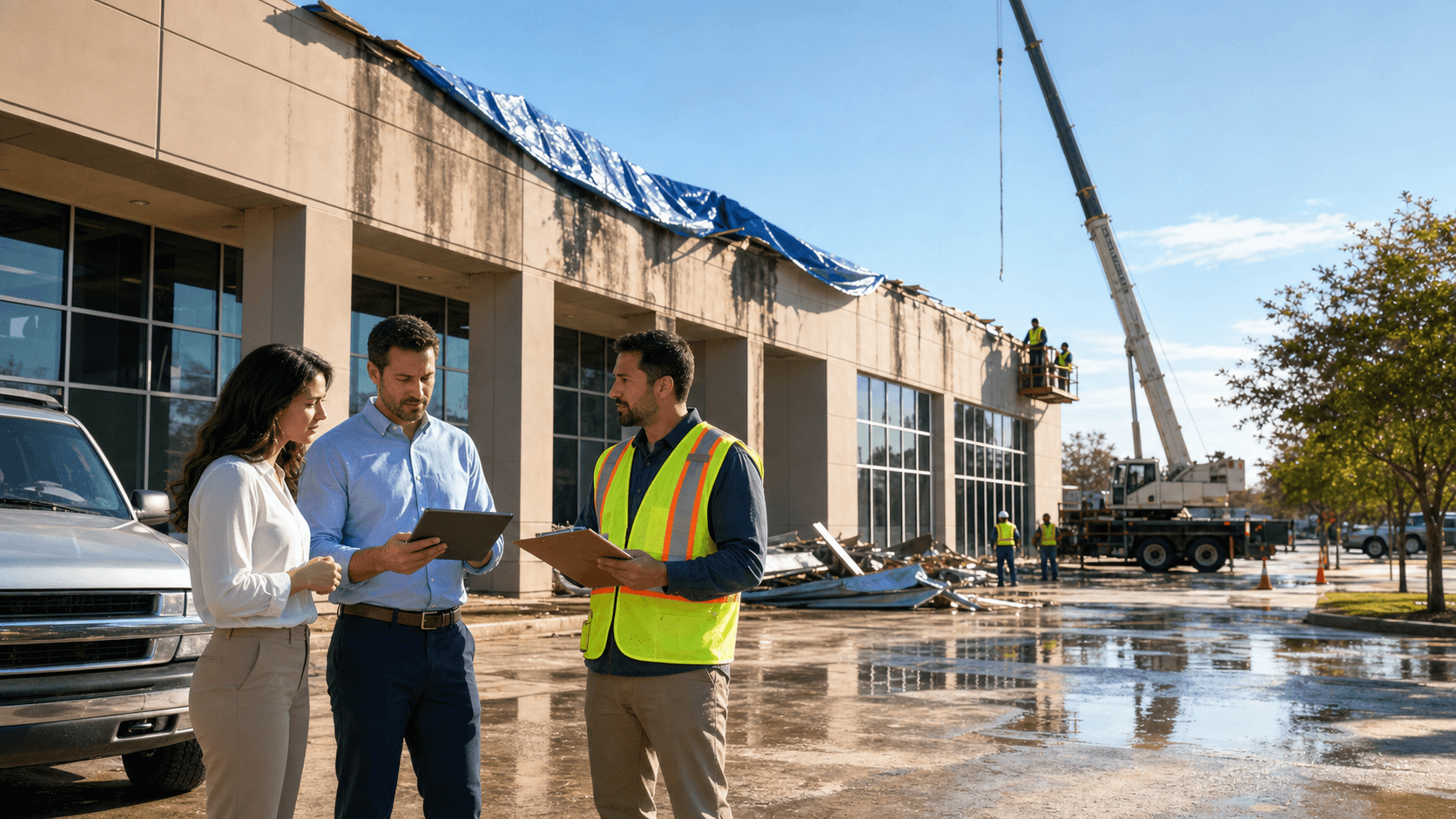
- Compromised building envelopes, including facades, windows, and sealants
- Damage to mechanical systems on roofs or at grade
- Interior buildout damaged by storm-driven rain and internal water intrusion that follows
By mid-summer, many late-spring hail and tornado losses are still being adjusted, while early hurricane-season exposures are on everyone's mind along the Gulf Coast. That combination pushes carriers to limit their exposure on large losses through close claim scrutiny and conservative reserving. High deductibles, named-storm provisions, and narrow readings of key terms often show up first on the largest commercial files.
Building a Strong Commercial Property Damage Claim File
The first 24 to 72 hours after a major storm are about safety and structural stability. But from a claim perspective, they also establish the record your carrier will use to evaluate coverage, liability, and scope.
We generally encourage policyholders to focus on four early priorities:
- Life safety and site security
- Emergency mitigation that is documented, not just performed
- Preservation of damaged materials where possible
- Early coordination with trusted vendors who understand insurance-driven projects
A strong commercial property damage claim file rarely happens by accident. It usually includes:
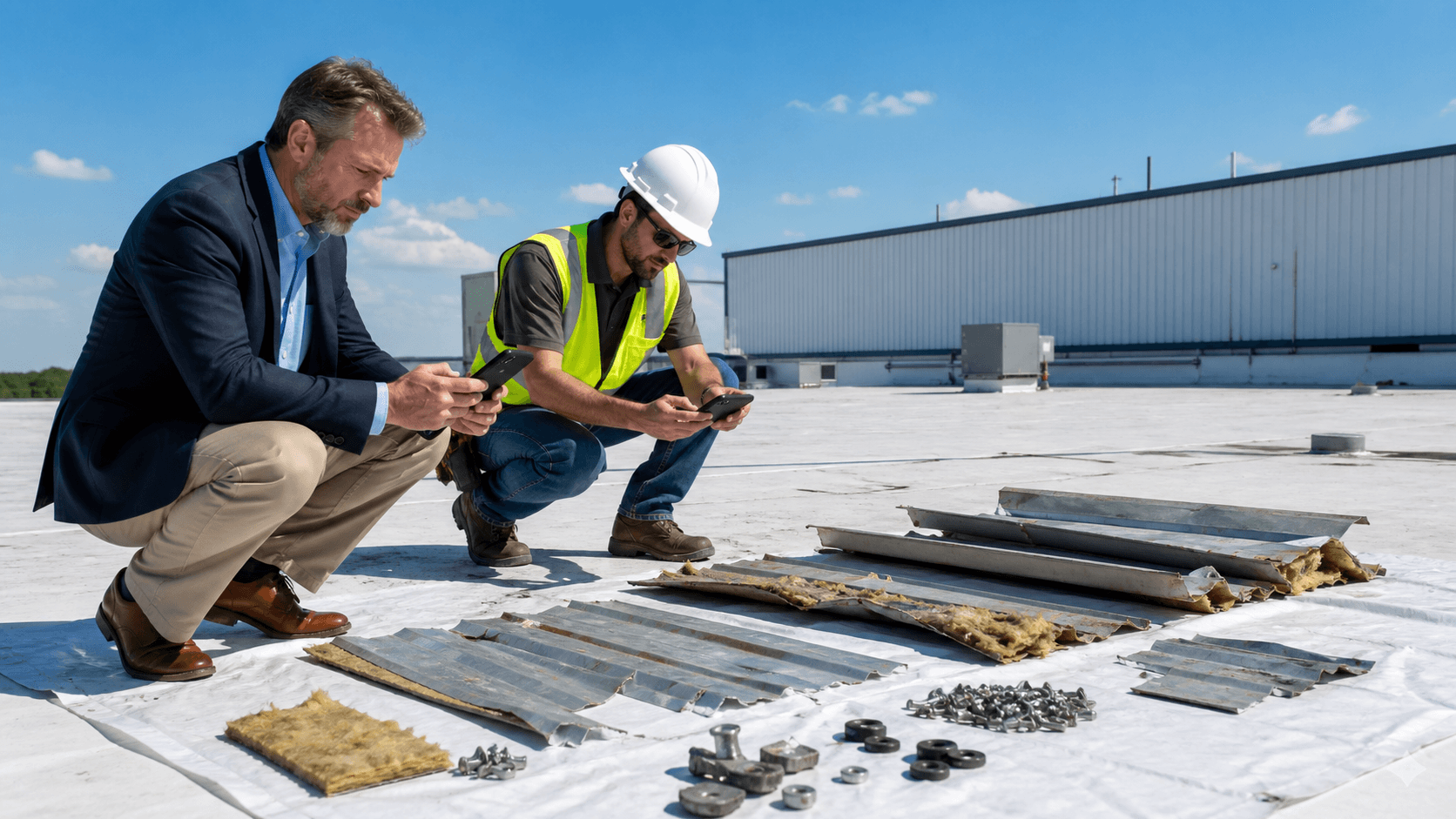
- Clear, date-stamped photos and video from ground level and roof level
- Drone or thermal imaging for large or complex roofs where appropriate
- Contractor and engineer reports that distinguish storm-related damage from age or wear
- Detailed inventories of damaged systems, spaces, and tenant improvements
Aligning scope and pricing early is just as important. Roofing, building envelope, interior remediation, code upgrades, and business interruption should be treated as one connected loss, not five different mini-claims. When those pieces are fragmented, carriers often try to compartmentalize and reduce the overall exposure.
Common mistakes we see include:
- Allowing only the carrier's preferred vendors to describe damage and repair scope
- Signing broad proofs of loss or releases without legal review
- Discarding or repairing key components before they can be inspected by qualified experts
Those missteps can be difficult to correct once a dispute is underway.
How Insurers Push Back on High-Value Storm Losses
When losses are small, coverage disputes tend to be less intense. When the numbers increase, carriers often rely on a familiar set of defenses and tactics.
On large Texas storm cases, we often see:
- "Cosmetic only" hail positions on metal or membrane roofs
- Arguments that damage is due to wear, age, or prior storms, not the reported event
- Narrow readings of wind or named-storm deductibles that increase the out-of-pocket amount
- Disputes over interior water, especially whether water followed a storm-created opening
Carriers also hire consultants whose work, in practice, is frequently used to limit scope and valuation. Common moves include:
- Engineering reports that downplay functional damage and focus on "continued serviceability"
- Building consultant estimates that substitute limited repairs for full replacement where needed
- Accountant analyses that shorten the reasonable period of restoration or discount lost income
Delay tools are another pressure point. Policyholders often experience:
- Repeated document and information requests with vague timelines
- "Ongoing investigations" that extend while repairs stall
- Changing adjusters or desk examiners who reset the conversation
- Partial payments that underfund work and push insureds toward lower settlements
Texas law recognizes bad-faith and unfair-claims-handling theories, but they are fact-specific and not automatic. Patterns of delay, low offers, or biased investigations can create additional exposure for carriers, yet those arguments need to be built carefully alongside the contractual claim, not in place of it.
Business Interruption and Complex Coverage Issues After Storms
Major storm events in Texas rarely cause only physical damage. For many commercial insureds, the more significant economic impact appears in business interruption and extra expense.
High-impact categories include:
- Manufacturing facilities with production lines knocked offline
- Hospitality and healthcare properties with partial closures or reduced occupancy
- Multi-tenant office or retail centers with damaged common areas and access problems
Key business interruption issues usually involve:
- How the period of restoration is defined and when it should reasonably end
- Concurrent delays tied to construction schedules, permitting, and supply chain constraints
- Contingent business interruption when suppliers or key customers are impacted
- How revenue trends and saved expenses are modeled by carrier accountants
Commercial policies also carry a number of limitations that can quietly cap recovery:
- Sublimits for wind, hail, or named storms
- Off-premises power or utility service restrictions
- Civil authority coverage with short time limits and narrow triggers
- Ordinance or law limits when code upgrades follow a substantial damage finding
Large storm losses require early coordination among ownership, asset management, internal accounting, and experienced coverage counsel. That team approach helps keep the description of the loss accurate, consistent, and aligned with the policy language, which matters later if the claim turns into litigation.
Strategic Legal Involvement in High-Value Storm Claims
Not every claim requires counsel. But certain patterns signal that it is time to consider experienced first-party coverage attorneys who only represent policyholders.
Warning signs include:
- Large or multi-location losses with no clear path to full payment
- Repeated low estimates that disregard credible contractor or engineer input
- Shifting denial theories or new exclusions raised late in the process
- Extended "investigations" with no firm coverage position and no meaningful funding
At Lundquist Law Firm, we evaluate and advance complex commercial property damage claims through detailed policy analysis, independent expert engagement, and targeted litigation when appropriate. We draw on carrier-side and policyholder-side experience, but our work is solely for insureds, not insurers.
Timely involvement can influence the direction of a claim. Counsel can help:
- Clarify notice and proof of loss requirements so they are satisfied without over-sharing
- Protect the insured from harmful written statements or poorly framed emails
- Challenge flawed carrier expert opinions with well-supported rebuttal work
- Preserve bad-faith and statutory rights under Texas law when claim handling crosses the line
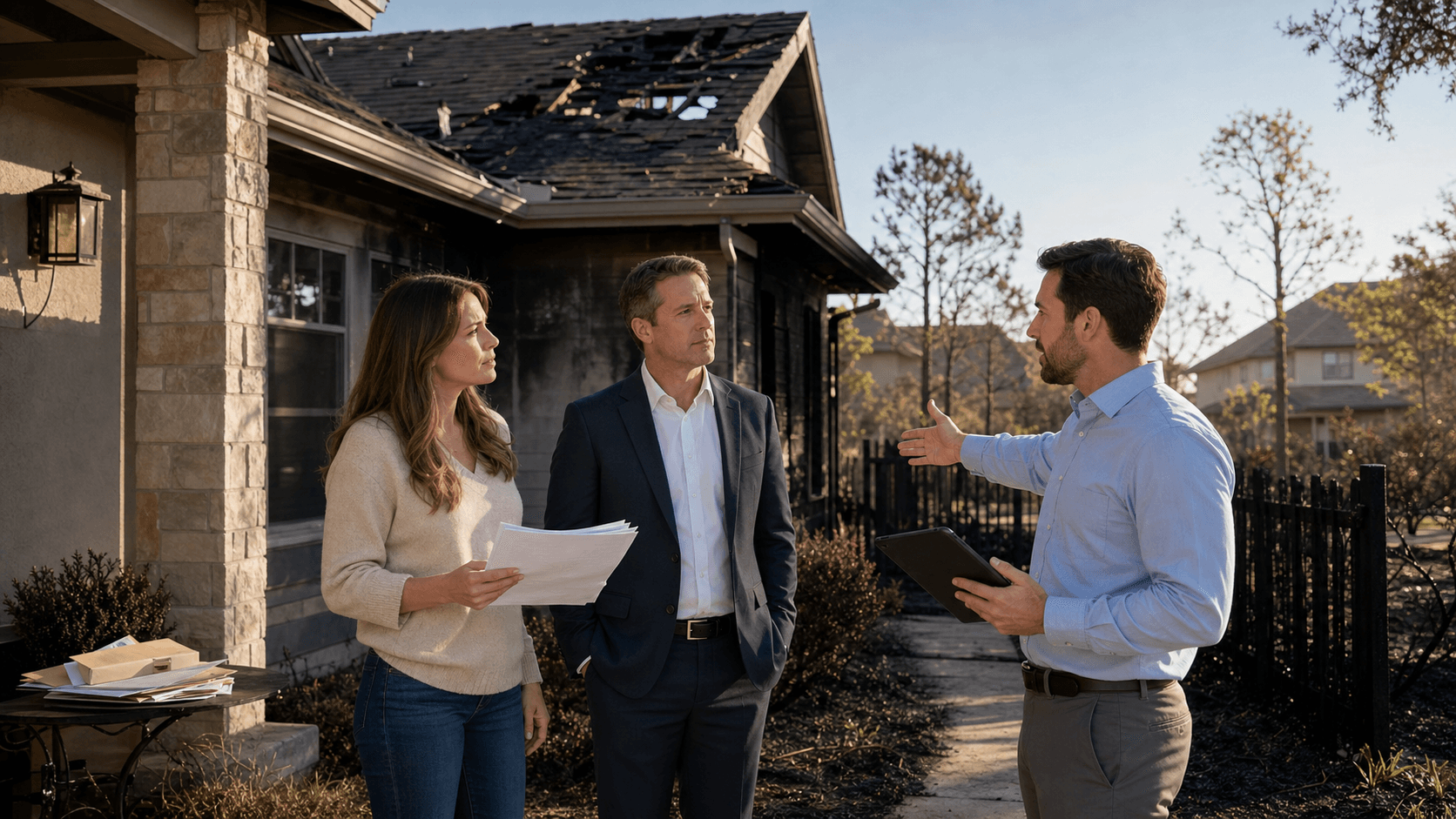
The same strategic approach often applies to significant residential losses, especially high-value fire claims and internal water losses tied to pipe bursts, plumbing failures, or sprinkler discharges. Carriers frequently try to narrow those claims by blaming maintenance or "ongoing leaks," and careful legal framing can be important there as well.
Navigating Your Next Storm Season with a Plan
Major Texas storm events are not rare; they are recurring business risks. Treating them as one-off surprises leaves commercial owners and managers in a reactive stance every year.
A more effective approach is to build claim readiness into your broader risk strategy by:
- Reviewing property and business interruption coverage before the next storm hits
- Understanding how wind, hail, and named-storm deductibles actually operate under your program
- Identifying trusted forensic and construction experts who can respond quickly
- Deciding in advance which policyholder-focused law firm you would contact on a serious denied, delayed, or underpaid claim
For commercial policyholders facing complex first-party property disputes after hail, wind, hurricane, tornado, fire, or internal water events, having that plan in place can shorten the path from loss to recovery. Our team at Lundquist Law Firm is structured for substantial Texas property claims, and we represent sophisticated insureds seeking to enforce their rights under commercial and significant residential property policies.
Protect Your Commercial Property Investment Today
If your business is facing losses from storms, fire, or other damage, Lundquist Law Firm is ready to guide you through complex commercial property damage claims. We carefully review your policy, document your losses, and advocate for the full compensation you are owed. Reach out today to discuss your situation and learn your legal options, or contact us to schedule a consultation.