Turning Chaos Into Coordination After a Hail Loss
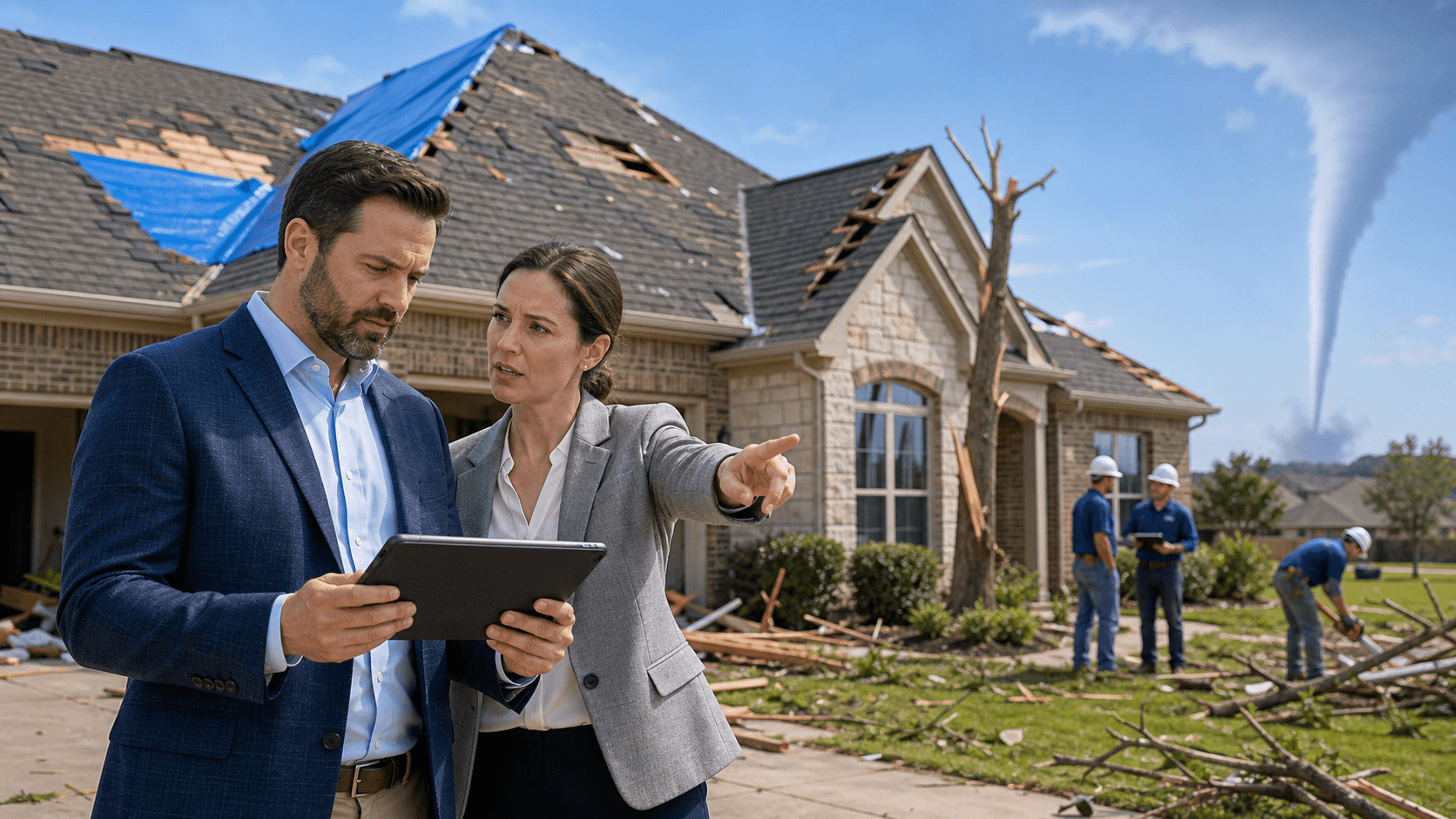
After a Texas hailstorm, a commercial property can feel like a construction zone and a war room at the same time. Roof systems are bruised and punctured, tenants are worried about leaks and downtime, lenders want assurance that collateral is protected, and the insurer is already asking for quick decisions. All of that is happening while your team is still trying to figure out what is actually damaged and how bad it is.
We see this often with a commercial hail damage insurance claim. The legal and financial risk usually does not come from the storm itself, it comes from disorganized decisions made in the first days and weeks. Our goal here is to show how owners, property managers, tenants, and lenders can move in a coordinated way, so you protect coverage, protect income, and keep the insurer from using confusion against you.
Mapping the Stakeholders and Their Legal Interests
A large commercial claim in Texas is rarely just between the owner and the insurer. You often have multiple stakeholders involved, including the fee owner or ownership entity, an asset manager or investment manager, a property manager or management company, a master tenant and subtenants, a lender or loan servicer, and sometimes an association or similar group.
Each of those parties may have different rights and duties laid out in leases, management agreements, and loan documents. Those documents often control who must perform repairs and who has a say in the scope, who controls insurance proceeds and how they are disbursed, how deductibles are allocated or passed through, and who can make a business interruption or extra expense claim.
The risk is misalignment. A tenant might order its own contractor and start repairs that hide evidence. A lender might insist on a contractor the owner does not trust. A property manager might casually tell the adjuster the roof is “old anyway,” which later becomes an excuse to shave the scope. The owner might sign off on a limited repair plan that undermines future disputes with the carrier. All of this can be avoided with structure.
Setting up a Claim Coordination Framework Early
The most helpful step after a commercial hail loss is to set up a claims control group quickly. For a larger commercial property, this usually includes:
- The owner’s main decision maker
- Asset manager, if there is one
- Property manager
- Representatives of key tenants, if operations are heavily affected
- Coverage counsel experienced in Texas commercial hail claims
Once the group is formed, it should agree on a basic communication protocol so everyone is working from the same playbook and the insurer is not receiving mixed messages. At a minimum, the protocol should cover:
- Who gives formal notice and who is the single point of contact for the insurer
- Who schedules and hosts site inspections
- How all photos, reports, and invoices are stored in one master file
- How and when updates are shared with tenants and lenders
It is also important to put authority in writing. The owner should give written instructions to the property manager about speaking with adjusters and vendors. Tenants should get clear guidance not to admit fault, not to sign insurer forms, and not to negotiate directly with the carrier about building envelope issues. Lenders should get notifications that meet loan requirements but do not concede coverage positions or final damage numbers.
Notice, Reporting, Access, and Temporary Repairs
Texas policies often require prompt notice of a loss. With hail, you may discover damage weeks or months later, especially on large roofs. Late notice can open the door to a coverage dispute, so timing and wording matter.
A practical reporting sequence might look like this:
- Property manager sends an internal incident report to the owner and control group
- Owner, or designated representative, gives notice to the carrier
- Tenants send standardized damage notices to the property manager, not directly to the insurer
- Lender gets a coordinated notice that matches the description given to the carrier
The goal is consistency. Dates, storm reference, and general description of damage should line up, so the insurer does not point to conflicting stories. Avoid overly narrow descriptions like “a few damaged panels” if you have not completed a full inspection of the building envelope and mechanical systems. Also avoid premature “final” numbers before experts have weighed in.
Access must also be controlled. The insurer’s adjuster, the insurer’s engineers, roofing consultants, and the policyholder’s own experts all need time on site. The property manager should coordinate access windows so inspections do not overload operations or safety protocols. One person should host the insurer’s visits and keep detailed notes about who came, what was inspected, and what was said.
Most policies require the insured to protect property from further damage. That often means:
- Tarping or sealing obvious openings
- Drying wet interiors to prevent mold and additional damage
- Stabilizing damaged HVAC or electrical elements that present safety issues
Emergency work should be documented so the carrier cannot later argue that temporary repairs were excessive, unnecessary, or poorly done. A solid emergency documentation package typically includes:
- Date-stamped photos and video before, during, and after the work
- Detailed invoices broken down by labor, materials, and location
- Brief written descriptions of why each step was necessary
For tenants, temporary relocation or workarounds should be documented as well, since these decisions can support business interruption and extra expense claims tied to the commercial hail damage insurance claim.
Building a Defensible Documentation and Scope Workflow
Large hail losses tend to turn into scope fights. The carrier may push for spot repairs while the owner’s experts see widespread damage that calls for replacement and code upgrades. To prepare for that, the control group should agree on a documentation workflow early.
A strong record typically includes:
- Date-stamped photos and video across roofs, facades, windows, and interiors
- Drone or elevated imaging of roofs and hard-to-reach areas
- Infrared or other testing where appropriate
- Tenant damage logs that identify when leaks started and how operations changed
- Vendor and expert proposals tied to specific locations and items
Scope disputes in commercial hail claims frequently come down to what must be repaired versus replaced, and whether hidden components and code requirements are included. Common examples include:
- Roof repair vs full replacement
- Underlayment, insulation, and code-driven upgrades
- Curtain wall and window systems with seal or frame damage
- Interior finishes affected by repeated leaks
- Mechanical and electrical components impacted by water intrusion
All of this should live in a single master file, controlled by the owner’s team. Just as importantly, the narrative about what happened, what is damaged, and what is required to fix it should match across the owner and asset manager, the property manager, tenants, and the lender and lender’s inspectors. If the insurer hears three different versions of the loss, they may use that confusion to delay, underpay, or question causation.
Aligning With Lenders and Tenants: When to Bring in Counsel
Lenders often require the following, and these requirements can slow a hail claim if not planned for:
- Being named as loss payee
- Approval rights over contractors and repair plans
- Joint payee checks on claim proceeds
- Reserve holdbacks until work is complete
- Construction monitoring or inspections
The control group should involve the lender early enough to satisfy those rights, but with care not to let the lender’s forms or letters concede anything that might limit coverage or support the carrier’s position.
Tenants have their own concerns, like rent abatements, access to space, disruption to common areas, and who is responsible for build-out repairs. Owners can reduce friction by:
- Giving tenants simple written guidance on how to document their own inventory or business income losses
- Using standardized forms or templates for tenant damage notices
- Coordinating with tenants so their separate claims, if any, do not undercut the owner’s building claim
Some warning signs should prompt early involvement of policyholder counsel. These include delayed inspections, repeated requests for the same information, denial or minimization of hail damage despite clear evidence, unreasonably low scopes, or pressure to accept partial settlements while major work is still unfolding.
At Lundquist Law Firm, we focus on Texas property insurance disputes for policyholders only, including complex commercial hail and business interruption claims. Thoughtful coordination across owners, managers, tenants, and lenders, supported by experienced coverage counsel when needed, can turn a chaotic post-storm situation into a controlled, documented claim that is far better positioned for fair resolution.
Protect Your Commercial Property and Recover Insurance Benefits Fully
If your building was hit by a recent storm, our team at Lundquist Law Firm is ready to help you pursue your commercial hail damage insurance claim with confidence. We carefully review policies, document damage, and challenge unfair denials or lowball offers so you can focus on running your business. Reach out today to discuss your situation and let us explain your options. To get started, contact us for a straightforward case evaluation.