Fire Loss Denied, Clock Running: What Owners Must Do Now
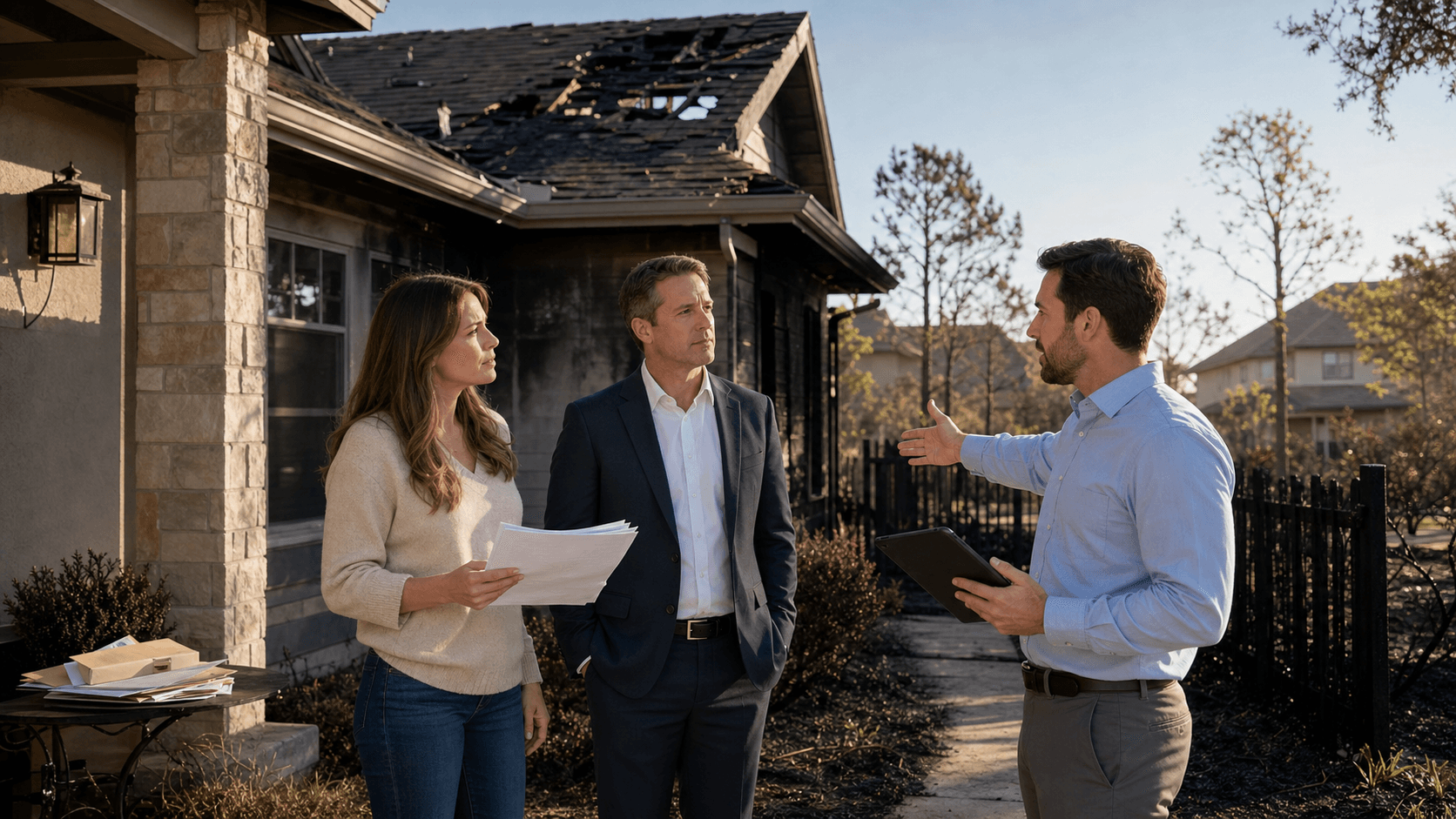
When a Texas commercial property or high-end home burns, the first shock is the damage. The second shock is a denial or a payment that does not come close to real repair and business interruption costs. While you are trying to keep tenants, customers, or family life steady, the insurance clock is already ticking in the background.
Fire claims move fast for all the wrong reasons. You may be dealing with smoke and soot that keep showing up in new areas, code upgrades you did not plan for, and a carrier that is eager to close the file and move on. At the same time, you face deadlines that are easy to miss and hard to fix later.
For Texas policyholders, three traps often hit at once after a fire denial or drastic underpayment:
- Notice and proof of loss timing
- Contractual deadlines for appraisal and suit
- Practical deadlines for evidence, experts, and any effort to reopen the claim
Our work as a Texas policyholder firm is to step into that chaos, sort out those clocks, and build a plan that keeps options open, including appraisal, litigation, or a strategic reopening when that makes business sense.
How Texas Deadlines Quietly Kill Denied Fire Claims
Most commercial owners know there is a statute of limitations, but fire policies often shorten your time to sue long before general Texas law would. Many policies require suit within periods like two-year-and-one-day from a specific trigger. That trigger is not always the same, and misunderstanding it can end the case before it ever starts.
Common timing traps include:
- Policy limits that run from the date of loss instead of the date of denial
- Contract terms that tie deadlines to "inception of the loss," which can be read very strictly
- Confusing references in letters that never plainly say, "your suit deadline is this date"
Carriers and adjusters often add to the confusion. You may see:
- Reservation of rights letters that are heavy on legal quotes but unclear on what is accepted or denied
- Partial denials that leave you guessing what parts of the loss are still "open"
- "We are still investigating" notes that sound reassuring but do not stop the contractual clock
This is especially risky in the summer, when owners are focused on peak occupancy, build-outs, tenant changes, or storm season concerns. A denied fire claim can slide down the priority list while internal deadlines keep moving.
When we are brought in early on a denied fire claim, one of the first steps is to build a clean, written timeline. We identify each potential trigger date, match it to the policy language, and map your options so that any demand, appraisal discussion, or lawsuit is lined up with those dates instead of working against them.
Notice, Proof, and Re-Inspection Traps After a Fire Denial
With fire claims, damage often unfolds in layers. Initial notice may cover obvious structural damage, but months later you might find:
- New smoke or soot staining in remote areas
- Internal water damage from firefighting activities that shows up behind walls or in ceilings
- Business interruption impacts that are worse than early estimates
Carriers sometimes argue that later findings are "late notice" or a "new claim" and that delay hurt their ability to investigate. That is where "prejudice" and "failure to cooperate" defenses come in, especially when the insured tries to reopen or supplement a denied claim.
Most policies also have proof of loss and documentation requirements. Problems we see often include:
- Missing a sworn proof of loss deadline, which gives the carrier a talking point to resist further payment
- Sending informal spreadsheets or partial records that are then treated as "your final numbers"
- Inconsistent repair scopes or business income figures that later get used to question credibility or causation
On top of that, there is the "file closed" tactic. An adjuster might say the claim is closed unless you accept a low settlement, sign broad releases, or agree to new conditions that were not in the policy. The risk is that casual agreement or unclear emails can be pointed to later as consent to narrow or end the claim.
A more disciplined approach often includes:
- Framing supplemental notices as part of the same covered fire loss, tied to ongoing investigation and repair
- Meeting proof of loss requirements in a way that preserves room to adjust as experts refine scope and pricing
- Requesting re-inspection with careful, written language that does not waive rights or shorten deadlines
A denied fire insurance claim attorney can structure these notices and proofs so that, if suit or appraisal is needed, the paper trail supports coverage rather than shrinking it.
Preserving Litigation and Appraisal Options Without New Risks
Many owners want to keep a business solution on the table, even after denial. At the same time, they do not want to lose the right to sue. That balance is possible, but it takes planning.
Key tools and tactics can include:
- Formal demand letters that clearly state the dispute while preserving rights
- Requests for Tolling Agreements in appropriate cases to pause contractual deadlines
- Coordination with contractors, public adjusters, and forensic accountants so their work product fits a future litigation strategy
Appraisal can be useful in some fire disputes, but it is not a cure-all. Risks include:
- Missing policy timing or notice requirements tied to any appraisal demand
- Entering appraisal before there is agreement on what is fire-related vs excluded causes
- Locking in a narrow scope on structure, smoke and soot, contents, or business interruption values that does not reflect the full loss
Protecting privileged communications is another piece that is often overlooked. Owners sometimes send everything they have to the carrier, including internal emails or expert drafts. That can backfire.
A safer structure usually means:
- Separating what is claim documentation from what is legal and expert strategy
- Limiting what is shared to what the policy requires and what advances a clear plan
- Keeping sensitive analysis within a legal team so it stays out of the insurer's file
Handled this way, you can keep negotiation, appraisal, and litigation all as real options without accidentally handing the carrier new defenses.
Strategic Reopening of Denied Fire Claims Before It's Too Late
Reopening a denied Texas fire claim is not magic. It usually means presenting new, focused information that justifies another look at coverage or value. Common grounds include:
- Supplemental claims for damage discovered during repairs or code upgrade work
- New expert findings about origin and cause or how smoke and soot spread through the building
- Fresh business interruption data that shows longer downtime or deeper revenue loss than first expected
Reopening can be productive when:
- New evidence is specific, credible, and clearly tied to the fire
- Contractor or engineer reports are lined up with policy terms and exclusions
- Regulatory complaints, where appropriate, are used as pressure points while the legal case is quietly built
But there is a point where endless reopening does not help. Warning signs include:
- The insurer repeating the same denial reasons regardless of new information
- Requests for more and more records that do not change the core coverage dispute
- A gap between claimed and paid amounts that is large enough to justify moving straight to suit
For large commercial or high-end residential fire losses, a denied fire insurance claim attorney can look at the file and give a candid view: does one more reopening attempt help the bigger strategy, or does it just burn time while deadlines keep moving?
Turning a Denial Into a Strategy for Texas Policyholders
When a Texas fire claim is denied or heavily underpaid, the next steps should be deliberate, not rushed or reactive. Owners can protect themselves by:
- Locking down a timeline of the loss, claim, denial, and every key letter
- Identifying and calendaring all contractual suit and appraisal deadlines
- Preserving physical evidence and documentation, including inspection photos, expert reports, repair estimates, tenant records, and revenue data
- Shifting from casual calls with the adjuster to controlled, written communication backed by legal and coverage analysis
At Lundquist Law Firm, we focus on representing policyholders only, in complex, high-value property and business interruption disputes across Texas. Our background gives us a clear view of how carriers handle fire claims, how they use notice and proof issues to limit payment, and where timing mistakes quietly destroy otherwise strong cases.
Protect Your Fire Loss Claim With Experienced Legal Help
If your fire insurance claim has been denied or underpaid, we can step in to challenge the decision and fight for the coverage you paid for. As your trusted denied fire insurance claim attorney, Lundquist Law Firm will review your policy, gather supporting evidence, and handle negotiations with the insurer on your behalf. Reach out today to discuss your situation and learn what options you have to move forward. If you are ready to talk with our team directly, please contact us.