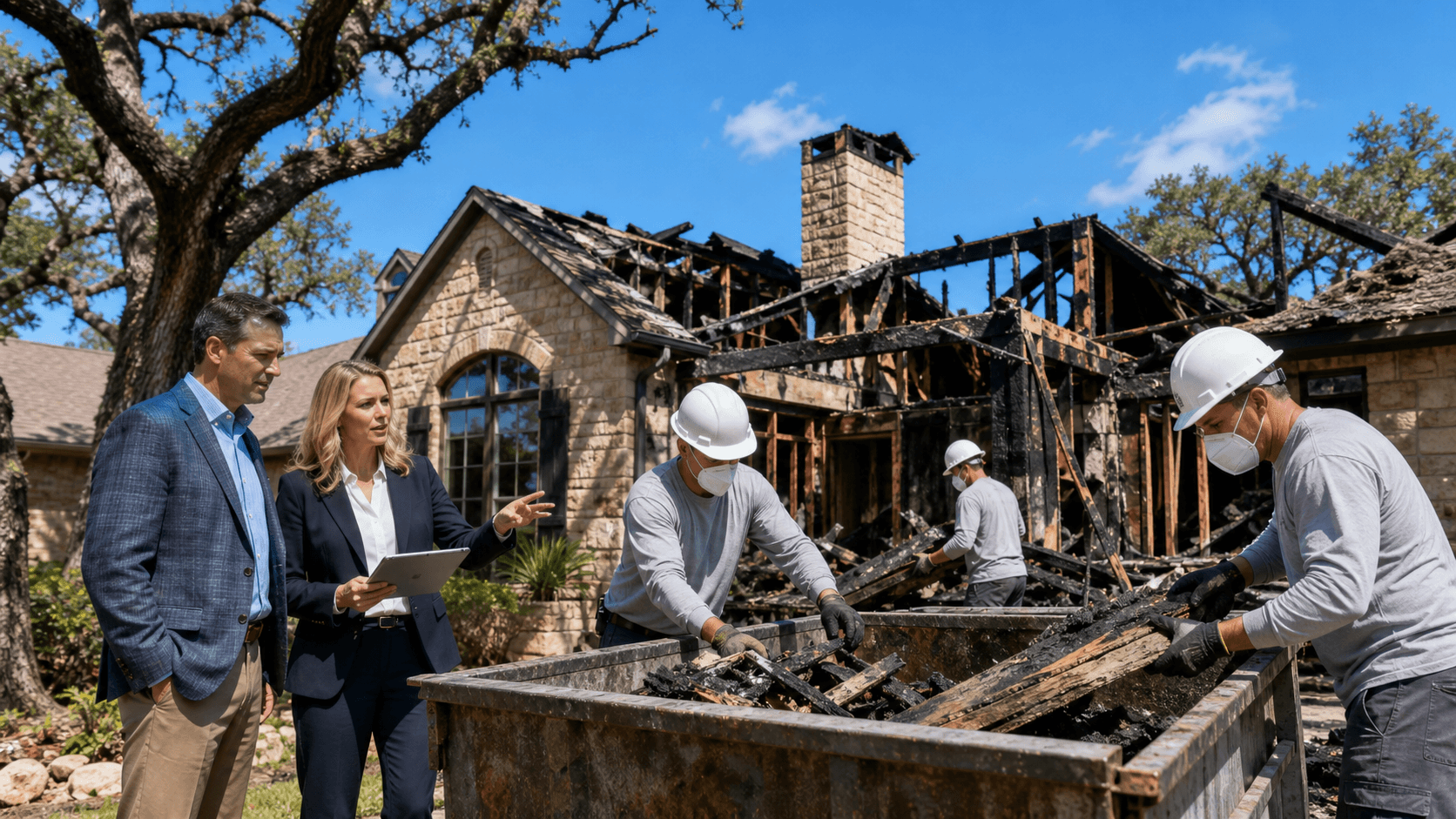
Debris Removal Limits in Texas Fire Insurance Claims
Debris removal is often one of the first major expenses after a Texas fire, and it can shape the entire property insurance claim. Demolition, hauling, sorting, disposal, and site cleanup may seem like obvious parts of a fire loss, but the available coverage can depend on separate policy language, sublimits, and documentation.
For commercial owners, a disputed cleanup scope can delay stabilization, reconstruction, tenant occupancy, inventory replacement, and business-income recovery. We recommend reviewing the actual policy and the insurer's estimate early, rather than assuming debris work will be fully paid as part of the building loss.
Fire Debris Can Consume Coverage Quickly
A serious fire can leave far more behind than visibly burned materials. Smoke-damaged insulation, damaged roofing, collapsed framing, electrical equipment, ruined stock, and water-affected materials may all need to be removed before safe repairs can begin.
Early claim decisions can affect whether necessary cleanup costs are recognized and paid. Before demolition proceeds, the policyholder should document the condition of the site, obtain a detailed scope from qualified contractors, and identify any debris-removal limitation or additional coverage provision that may affect available funds.
For a commercial property, cleanup delays can create a chain reaction. Until the site is cleared and stabilized, it may be difficult to begin reconstruction, reinstall equipment, bring in replacement inventory, or restore tenant spaces. The debris dispute can become much larger than the demolition invoice when it restricts the recovery available for the rest of the loss.
When the insurer and policyholder disagree about limits, demolition scope, or the cause of the damage, a Texas fire insurance claim lawyer can examine the policy language and the estimate being used to limit payment. We represent policyholders only. We focus on what the contract says and whether the insurer's position fits the actual fire loss.
Coverage Depends on the Policy Language
Many commercial and residential policies address debris removal under an additional coverage provision. That does not mean every cleanup expense receives the same treatment. Some policies include debris removal within the applicable property limit, while others may provide a limited additional amount when qualifying debris expenses exceed that limit.
The controlling issue is not simply whether cleanup seems necessary. The question is what the policy promises for this particular loss. We commonly review:
- Whether the debris resulted from a covered fire or smoke event
- Whether it involves building property, business personal property, tenant improvements, or landscaping
- Whether demolition is tied to direct physical loss, safety concerns, code requirements, or reconstruction choices
- Whether endorsements change the available coverage or apply a separate limitation
Disposal can become more disputed when debris includes ash, charred materials, damaged electronics, contaminated inventory, chemicals, or asbestos-containing materials. An insurer may label part of the work environmental remediation, an excluded upgrade, or unnecessary demolition. Those labels matter, but they are not the end of the analysis. We examine whether the policy language supports the insurer's classification and whether the loss facts support the work performed.
Initial Cleanup Estimates May Miss the Real Scope
An insurer's first estimate is not always a complete roadmap for clearing a fire-damaged property. Early inspections may occur before structural engineers, demolition contractors, industrial hygienists, or other qualified professionals have evaluated the site. Generalized pricing, incomplete measurements, and low labor assumptions can leave major work out of the scope.
Commercial fire losses often involve more than loading debris into containers. Damage may affect roof systems, structural framing, exterior walls, insulation, mechanical equipment, plumbing, electrical components, fire suppression systems, machinery, stock, and tenant improvements. Clearing the site may require selective demolition, segregation of salvageable materials, equipment removal, secure transport, structural protection, and controlled disposal.
A well-supported scope should separate necessary categories of work without artificially breaking the claim into disconnected pieces. The insurer may argue that demolition belongs under building repairs, hauling falls under a debris limitation, and specialized disposal is excluded. Documentation can help show how each expense relates to the covered fire loss, including:
- Photographs and video from before materials are removed
- Contractor bids that identify labor, equipment, hauling, permits, and disposal
- Engineering reports, testing results, and written safety recommendations
- Invoices and dated communications explaining changes to the scope
Cleanup Limits Can Affect Rebuilding and Business Recovery
A narrow debris-removal interpretation can reduce the funds available for the rest of a commercial property claim. That may affect building repairs, replacement of business personal property, code-related work, and efforts to restore operations. The issue is especially significant when a fire leaves part of the building standing but unsafe or impractical to repair without substantial demolition.
Physical-property coverage and business-income coverage are separate parts of the claim, but they can be closely connected in real life. A business may be unable to rebuild, reinstall equipment, restock, or reopen until cleanup is approved and the site is stabilized. Delayed approval of a reasonable debris scope can therefore have consequences beyond the direct cleanup payment.
We encourage commercial policyholders to review the declarations page, building and personal-property limits, debris-removal provisions, endorsements, deductibles, and business-income coverage together. Looking at only one policy provision can obscure how an insurer's limit position shifts fire-loss expenses back to the insured.
Preserve the Record Before Debris Is Removed
Fire scenes can present immediate safety concerns, so professional cleanup may need to begin quickly. Still, preserving evidence before disposal is often important. Once materials are removed, an insurer may later argue that the work was excessive, unrelated to the fire, or unsupported by the condition of the property.
You should promptly report the loss, cooperate with reasonable requests for information, and keep written records of inspections, coverage positions, payments, and delays. Detailed proposals from qualified demolition and cleanup professionals can be more useful than broad lump-sum figures because they explain why the work is required for safe restoration.
For serious commercial or residential fire losses, we often see disputes develop when policyholders accept the insurer's characterization of a cleanup item without comparing it to the policy. A Texas fire insurance claim lawyer can assess whether a claimed limitation, exclusion, or scope reduction is grounded in the policy and supported by the facts.
Protect the Funds Needed to Restore the Property
Debris removal is not a minor administrative issue after a fire. It is frequently the first major step toward making a residence safe, rebuilding a commercial property, restoring tenant space, and resuming operations.
The strongest approach is to evaluate applicable limits early, preserve the condition of the site, document the full cleanup scope, and closely review any insurer estimate that omits necessary work or relies on unsupported coverage restrictions.
Protect the Full Value of Your Fire Claim
Lundquist Law Firm represents policyholders facing substantial fire-loss disputes involving incomplete estimates, coverage disagreements, and delayed payment. A Texas fire insurance claim lawyer can assess the policy language, insurer's position, and documentation needed to support the claim. For a confidential discussion of your fire insurance dispute, contact us to speak with our team.