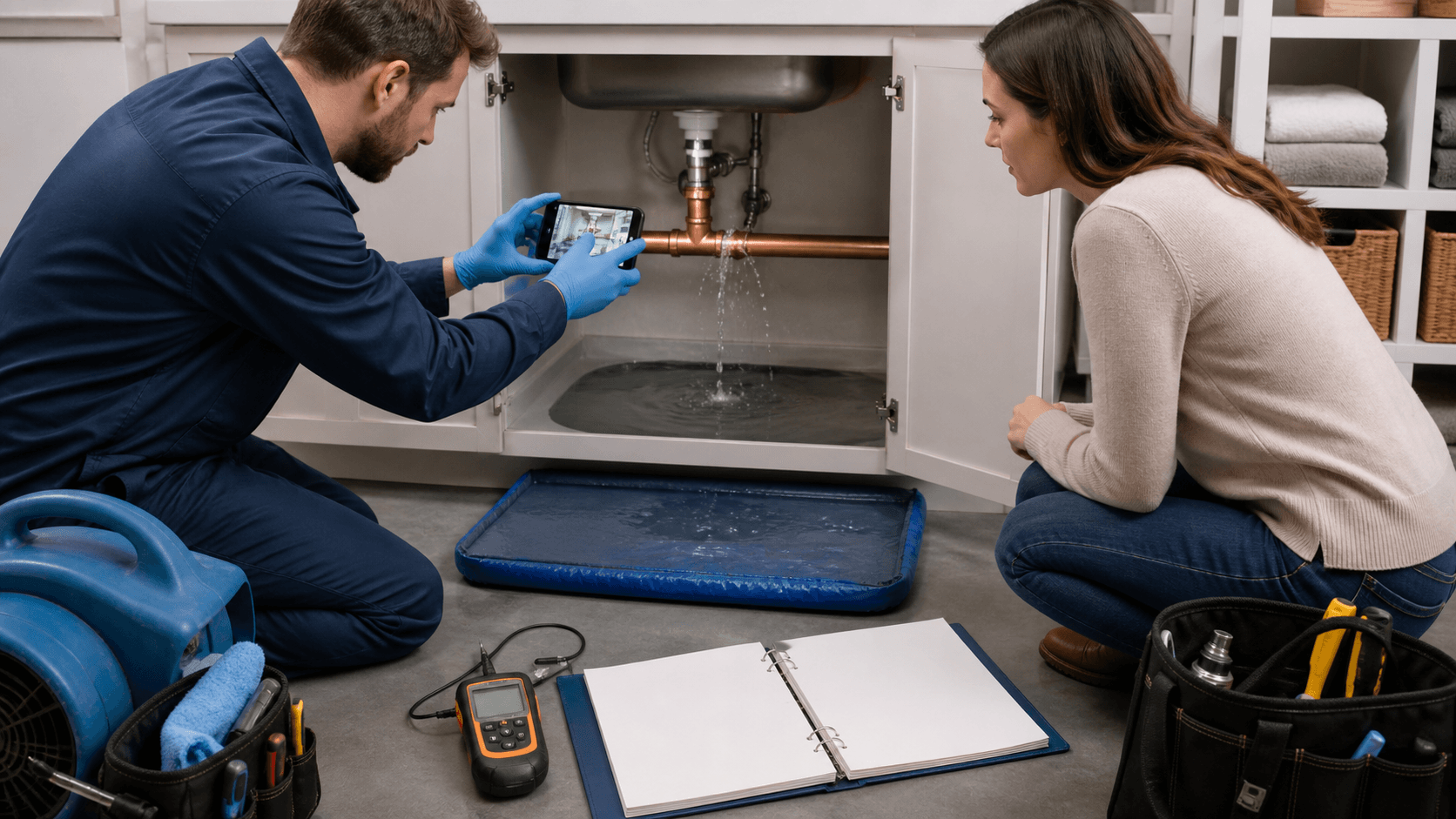
A burst pipe claim can turn into a causation dispute quickly. An insurer may argue that the damage came from gradual leakage, corrosion, deferred maintenance, or preexisting deterioration instead of a sudden plumbing failure. What you do in the first hours and days after an internal water loss can shape the claim record for months.
Prompt mitigation and evidence preservation can happen at the same time. We recommend stopping the water source, protecting the property, and engaging qualified plumbing and restoration professionals while carefully documenting the failed plumbing, affected materials, and any interruption to your home or business.
Preserve the Facts Before the Leak Narrative Sets In
The insurer will eventually form a theory about why the loss occurred. If the carrier sees only removed drywall, discarded pipe, and a restoration invoice, its consultant may fill the gaps with assumptions that favor a long-running leak theory.
Before major demolition begins, document what can be seen. Photograph standing water, damaged ceilings, wall stains, wet flooring, and the area around the failed pipe. Video can also capture water flow, affected rooms, and the condition of the property before drying equipment and demolition change the scene.
Early fall is also a good time for Texas property owners to review freeze-protection procedures, plumbing-maintenance records, emergency vendor contacts, and internal documentation protocols. Colder weather can increase the risk of pipe failures, but a documented maintenance history can matter even when a loss occurs at another time of year.
Why Insurers Recast Burst Pipes as Long-Term Leaks
Insurers often try to distinguish a sudden pipe break from repeated seepage, gradual deterioration, rust, corrosion, wear and tear, or inadequate maintenance. Those terms may appear in exclusions or limitations, but the controlling question is not the label assigned by an adjuster. It is the actual policy language, including its exclusions, exceptions, endorsements, and definitions, measured against the facts of the loss.
We often see carriers point to conditions such as staining, mold growth, softened building materials, prior repair records, or elevated water bills. An adjuster may also assume that corrosion means a pipe had been leaking for an extended period. Those observations may require investigation, but they do not automatically establish when a plumbing component failed or whether all claimed damage resulted from an excluded condition.
For property owners searching for a denied burst pipe insurance claim attorney in Texas, early legal analysis can help identify unsupported causation assumptions before the carrier's consultant report becomes the dominant narrative. The more complete the evidence record is, the easier it is to test whether the insurer's position actually fits the policy and the physical evidence.
Build a Timeline That Supports a Sudden Failure
A precise timeline can be one of the strongest tools in a disputed pipe claim. It should begin with the date and time the water was discovered, who found it, what they observed, when the water supply was shut off, when mitigation began, and when notice was provided to the insurer.
For commercial properties, the record should also address operational effects. That includes tenant impacts, closures, reduced access, disrupted production, canceled events, and other lost-use consequences. A building may be drying while the business remains unable to operate normally.
Helpful contemporaneous records often include:
- Photographs and video taken before demolition
- Security footage, alarm records, building-management logs, and work orders
- Plumber invoices, emergency restoration reports, and maintenance records
- Communications with tenants, employees, vendors, or property managers
We recommend requesting clear written findings from the plumbing professional. A useful report identifies the failed component, the likely mechanism of failure, the visible condition of the pipe, whether the failure appears recent, and whether more testing or material retention is needed. The report should document facts, not repeat an insurer's coverage conclusion.
Protect Damaged Materials and the Full Repair Scope
The failed pipe section, fittings, valves, insulation, drywall, flooring, cabinetry, and other removed materials may be important evidence. When practical, those materials should be photographed, identified, and retained until the cause of loss has been evaluated. If emergency demolition cannot wait, the contractor should document the process and preserve representative samples where appropriate.
Drying the property is only one part of the claim. An insurer may focus on visible water damage while overlooking concealed moisture, damaged insulation, electrical components, microbial conditions, finish matching, code-related requirements, and the work needed to return a commercial space to operating condition.
Commercial policyholders should keep business interruption evidence separate from the physical repair file. Records may include:
- Closure dates and reduced operating capacity
- Tenant disruptions, canceled bookings, or lost production
- Extra expenses, temporary relocation, and mitigation measures
- Financial and operational records showing the effect of the interruption
A claim can be underpaid when the carrier evaluates only the building repairs and does not properly account for covered operational losses.
Challenge Unsupported Exclusions and Low Estimates
An insurer should not deny or limit a claim based on a gradual-leak or maintenance theory without a reliable factual basis. The carrier's coverage position should be tested against the policy and the evidence concerning the timing, cause, and resulting damage from the plumbing failure.
Even when an insurer accepts part of a claim, underpayment disputes remain common. Problems may include incomplete repair scopes, inadequate drying allowances, omitted demolition or access work, unsupported depreciation, failure to account for matching finishes, and missing business-income or extra-expense components where coverage applies.
When a policyholder needs a denied burst pipe insurance claim attorney in Texas, counsel can review the policy, claim correspondence, consultant findings, repair estimates, and insurer conduct. We represent Texas policyholders only in first-party property insurance disputes, including contested pipe failures, internal water damage, delayed claims, underpayments, and wrongful denials.
Escalate the Claim Before the Record Hardens
Time matters because physical evidence disappears quickly. Pipes are discarded, wet materials are removed, memories fade, and the insurer's explanation can become harder to correct once it is repeated across adjuster notes and consultant reports.
The practical next step is a disciplined review of the policy, plumbing evidence, mitigation records, repair scope, operational losses, and every carrier communication. A clear record gives you a stronger basis to evaluate whether the insurer's leak narrative is supported by the facts.
Protect the Full Value of Your Claim
Lundquist Law Firm represents policyholders confronting disputed internal water losses, including claims where insurers mischaracterize a sudden pipe failure as a long-term leak. Speak with a denied burst pipe insurance claim attorney in Texas to assess the policy, claim record, and insurer's coverage position before critical evidence is lost. If your commercial or residential property claim has been denied, delayed, or underpaid, contact us to discuss a focused legal strategy.