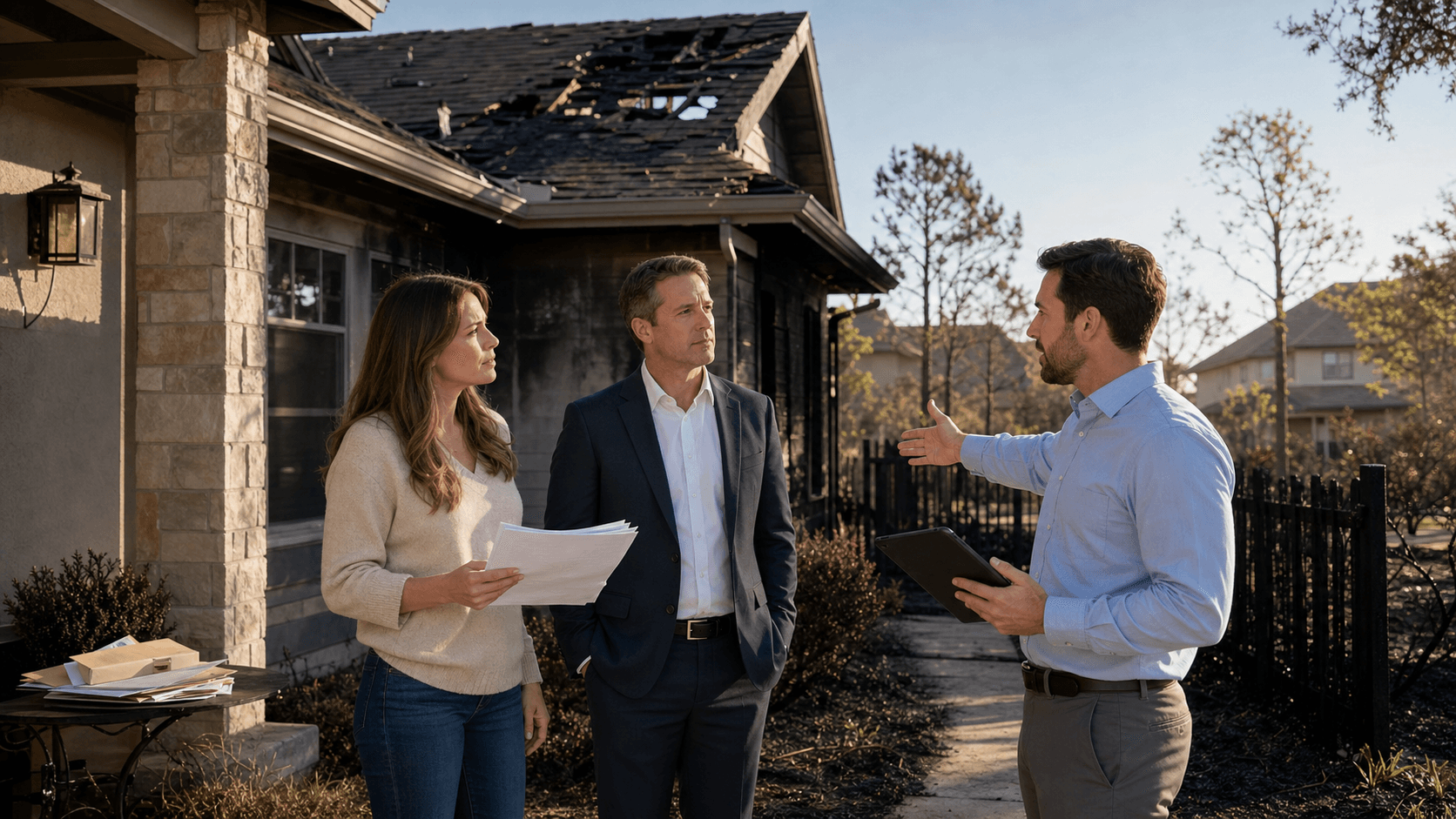
Commercial property owners in Texas know hail is not rare. The real problem is not the storm itself; it is what happens inside the insurance claim file afterward. A strong, disciplined file often decides whether your commercial hail damage insurance claim is paid fully, chipped down, or denied.
We see this every spring. Carriers lean on “wear and tear,” “cosmetic only,” or “no functional damage” arguments, especially on older roofs. In this article, we walk through how to build a defensible hail-claim evaluation file around three pillars: evidence that stands up to scrutiny, clear causation documentation, and smart expert selection.
Strong Files Win Texas Hail Disputes
In a serious commercial loss, the adjuster’s first number is just a starting point. The real leverage comes from what is in your file when the carrier, its consultants, and later its lawyers review the claim.
A strong file:
- Shows organized, consistent evidence
- Ties that evidence to a specific covered storm
- Anticipates and answers common insurer defenses
Texas carriers often accept that something on the roof looks beat up, then argue it is old, cosmetic, or not caused by the reported storm. If your file is thin, it is easy for them to hold that line. If your file is detailed and clean, it is harder to justify delay or underpayment.
The goal is not to bury the carrier in random documents. The goal is to build a clear, defensible story of what happened, when it happened, and how it affected the building.
Evidence That Survives Scrutiny
Good hail files start on the roof and in the field, not at a desk.
Photographic record that tells a causation story
Think of your photos as a movie, not a single snapshot. Helpful practices include:
- Wide overview shots of each roof area and elevation
- Mid-range photos that show the surface and layout
- Close-ups of impact marks, fractures, and related damage
- Clear labeling with date, roof area, and orientation
You also want comparison shots. Show damaged areas next to reasonably undamaged control areas so you can push back on “it was always like that” claims. Time-stamped, consistently labeled photos carry more weight in later negotiations, appraisal, or trial.
Test squares and inspection details
Carriers often talk about hits per test square and hail thresholds. Your file should talk that language too. That means:
- Marking and photographing test squares on each slope
- Counting and recording hits per square
- Noting directionality, slope, and roof material
Do not stop at the membrane. Document soft metals, gutters, downspouts, flashings, sealants, skylights, and rooftop equipment. This helps show system-wide impact instead of a few isolated spots.
Field notes, roof diagrams, and inspection logs are just as important. Write them so that someone who has never seen the building can understand them two years later.
Weather data and corroborating sources
Good meteorological evidence does not replace fieldwork, it supports it. Your file should include:
- Credible hail reports showing size, path, and time of impact
- Wind data where wind-driven damage is at issue
- Historical weather information if the roof has multi-year exposure
When your roof photos and test squares line up with radar, NOAA, and third-party reports, you have a consistent story. That is much harder for an insurer to brush off with “no hail that day” or “storm was too small” arguments.
Proving Storm Causation, Not Just Damage Photos
Many disputes are not about whether there is damage, but about what caused it and when.
Linking the loss to a specific storm
For older or previously repaired roofs, Texas carriers often argue that a covered storm did not cause the current condition. To connect the dots, your file should gather:
- Any prior inspection reports or photos of the roof
- Maintenance logs, including leak calls and repairs
- Tenant complaints and work orders before and after the storm
If several storms hit in different years, your documentation needs to explain how you are allocating damage. Guesswork gives the insurer an easy way to say your claim is speculative.
Differentiating hail from wear, tear, and installation issues
On TPO, modified bitumen, metal, and built-up roofs, it is important to separate:
- Functional impact damage from simple appearance issues
- Storm-created openings from long-term ponding or design problems
- Hail-related damage to HVAC and rooftop equipment from old rust or age
Your notes and photos should highlight impact fractures, bruising, spatter marks, displaced fasteners, bent fins, and other details that are characteristic of hail or wind, not poor installation. At the same time, clearly flag unrelated conditions so the carrier cannot lump everything into “maintenance.”
Internal water intrusion and business interruption
When roof openings let water into the building, the file should track how that water moved and what it touched. Useful steps include:
- Linking specific roof locations to interior staining or ceiling collapse
- Photographing the progression room by room
- Documenting damaged tenant build-out and inventory
For businesses that lost income or incurred extra expense, early records of interruptions, closures, and temporary workarounds matter. Causation documentation here is not just for the field adjuster. It is for future experts, mediators, judges, and juries.
Choosing Experts Who Strengthen Your Claim
The right expert team can turn a good file into a very strong one. The wrong team can make your claim harder.
Matching expert type to the dispute
In large commercial hail losses, different experts fill different roles:
- Roofing consultants to assess damage and replacement needs
- Forensic engineers to address structural questions and causation
- Meteorologists to tighten the date and intensity of the storm
- Cost estimators to explain pricing, code issues, and phasing
- Accounting experts for business interruption and extra expense
On many roofs, a seasoned roofing consultant who knows how systems actually perform in Texas heat can be more effective in the field than a generalist engineer doing a quick walk and a long desk review.
Qualities of a litigation-ready expert
Carriers and their lawyers routinely attack:
- Bias or “hired gun” reputations
- Light credentials for the opinions given
- Sloppy methods, copying, or inconsistent language
Good experts follow recognized inspection standards, use clear terminology, and understand basic Texas policy concepts. Their reports explain both causation and scope in plain language, backed by photos, measurements, and weather data.
Avoiding common expert pitfalls
Your file is weaker when experts:
- Say all damage came from one storm without solid support
- Ignore prior work or multi-year exposure issues
- Treat a seven-figure loss as if it will never see a courtroom
Expert opinions should fit together with the rest of the claim. The file should read like one coherent narrative, not a stack of unrelated reports.
Structuring Your Claim File to Resist Denial and Underpayment
From the first notice of loss, assume a significant commercial hail claim might end up in litigation, even if everyone is polite at the start.
Building a file for litigation from day one
That means:
- Keeping detailed notes of carrier inspections and statements
- Tracking changes in position and long periods of silence
- Storing emails, photos, videos, and invoices in an organized way
When the file is clean and chronological, it is easier to show where the carrier’s handling fell short of Texas standards.
Anticipating insurer tactics and defenses
Common carrier arguments in Texas include:
- Narrowing the date of loss to a storm that fits their outcome
- Labeling damage “cosmetic” to avoid full replacement
- Depreciating aggressively or disputing scope
- Ignoring collateral damage to other building components
Structure your file so that each likely defense has labeled, targeted rebuttal evidence. For example, keep maintenance records and prior condition photos together where you know “pre-existing” will be raised.
Aligning documentation with policy terms
Finally, your documents should connect back to policy language, including:
- Covered causes of loss and key exclusions
- Deductibles, limits, and endorsements
- Notice requirements, proof of loss, and suit deadlines
Experienced Texas policyholder counsel can help audit your existing file for gaps that insurers tend to exploit, then help you plan how to close those gaps before positions harden. For complex commercial hail, wind, hurricane, fire, or internal water losses, that planning can be the difference between a claim that drags on and one that is ready for a fair resolution.
Protect Your Commercial Property And Recover Insurance Benefits Fully
If your building has been hit by a storm, we can guide you through every step of your commercial hail damage insurance claim so you are not left paying for damage your policy should cover. At Lundquist Law Firm, we review your policy, document your losses, and push back when insurers try to underpay or deny valid claims. Reach out today so we can evaluate your situation and outline a clear strategy for moving forward. If you are ready to talk with an attorney, please contact us.