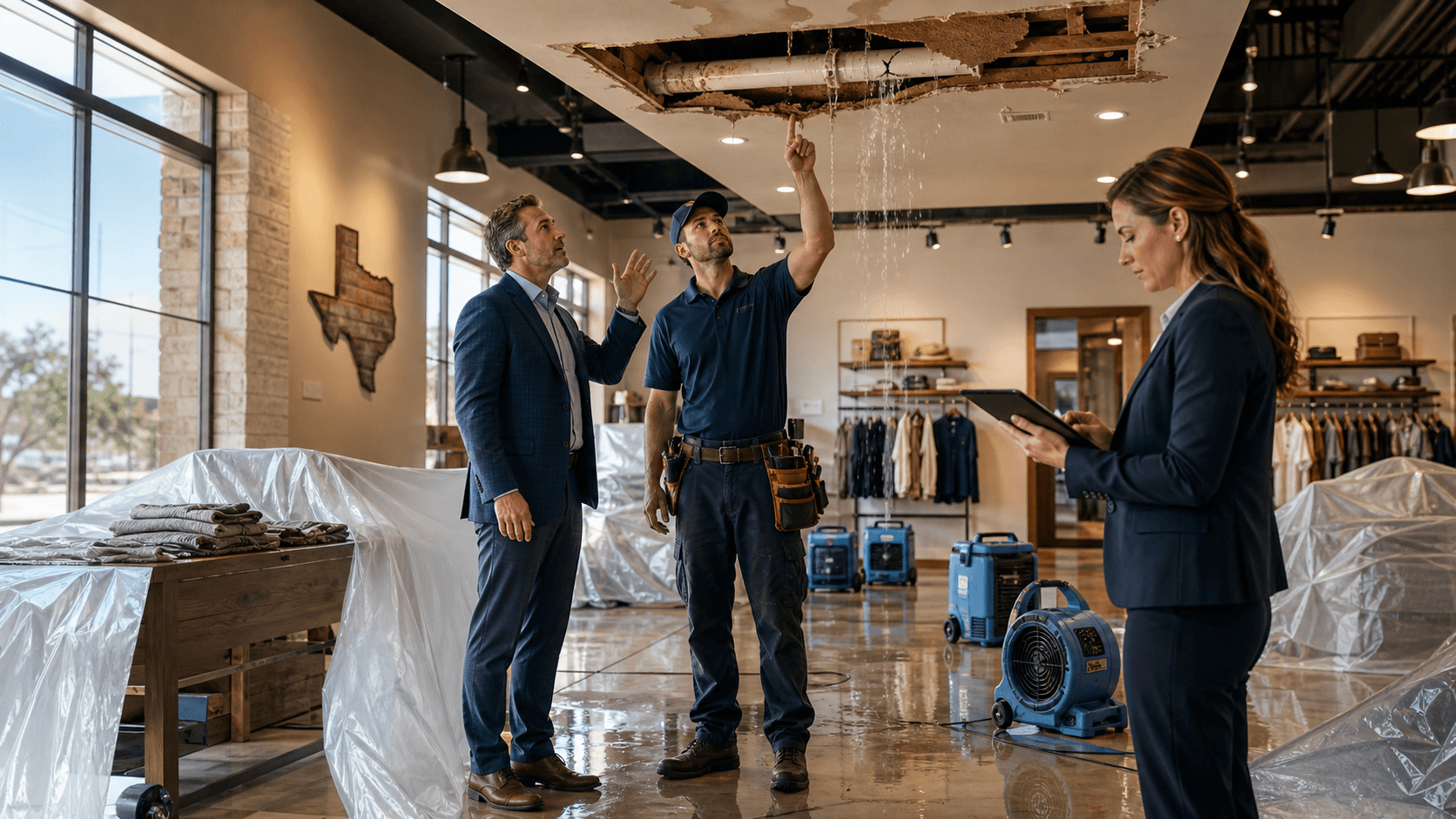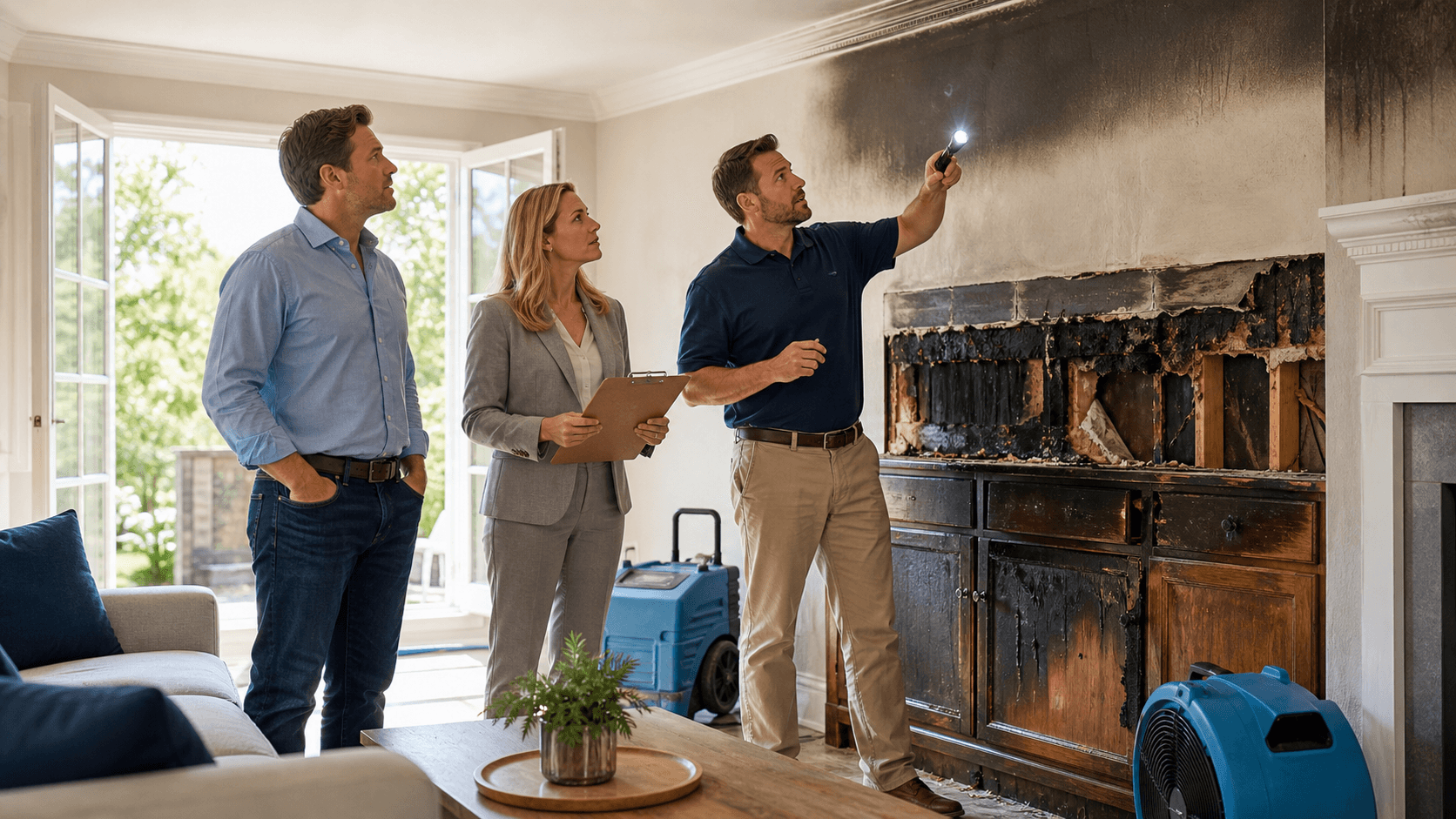
Smoke damage can be a major property loss even when fire never reaches most of a building. Soot, odor, and chemical residue can move far beyond the area of visible burning, affecting spaces that may look intact at first glance. For Texas commercial owners, that can mean damage to tenant areas, inventory, electronics, machinery, documents, finishes, and HVAC systems.
At Lundquist Law Firm, we see how insurers may accept obvious burn damage while minimizing the wider effects of smoke. The result is often a dispute over whether the property can truly be cleaned, repaired, and returned to normal operations.
Smoke Damage Can Leave a Building Unsafe or Unusable
A structure does not need to be burned through to suffer serious physical damage. Smoke residue can settle on surfaces, enter ventilation systems, migrate through wall cavities, and affect sensitive equipment. Odor may also persist after surface-level cleaning, creating problems for tenants, customers, employees, and operations.
Commercial losses often involve more than visible soot. A complete assessment may need to address:
- Tenant spaces and common areas
- Inventory, records, and stored materials
- Electrical panels, computers, and machinery
- HVAC components and ductwork
- Finishes, insulation, and concealed building materials
When smoke makes all or part of a property unsafe, unusable, or commercially impaired, the issue is not simply whether flames touched that area. The real question is what work is required to return the insured property to its pre-loss condition.
Policy Language May Treat Smoke and Fire Differently
Coverage begins with the policy itself, including its insuring agreement, endorsements, exclusions, limitations, and definitions. Many commercial property policies cover direct physical loss or damage caused by fire. Still, an insurer may dispute whether smoke-related conditions qualify as covered physical damage, especially where visible burn damage is limited.
We often see insurers take narrow positions, such as claiming that odor alone is not covered, soot can be cleaned instead of repaired, or contamination came from an excluded cause. The source of the smoke can matter. Coverage questions may differ when smoke comes from an on-site fire, a neighboring structure, an electrical malfunction, a kitchen incident, a wildfire, or another source.
A smoke damage insurance claim lawyer can evaluate whether the insurer's interpretation matches the policy language and the actual condition of the property, rather than accepting a narrow adjustment based only on visible damage.
Evidence Defines the Proper Scope of Repairs
Smoke claims are frequently decided by proof. Photographs of soot are important, but they may not show contamination inside HVAC systems, equipment, insulation, electrical components, wall cavities, or mechanical systems. A building may appear clean while residue remains in areas that affect safety, performance, or future reliability.
For significant commercial losses, we recommend timely evaluations by qualified professionals who can document the conditions and the work needed for proper restoration. Depending on the loss, that may include restoration professionals, industrial hygienists, engineers, contractors, equipment specialists, and accountants.
Scope disputes often center on cleaning versus replacement. An insurer may favor surface cleaning because it costs less. Yet materials, electronics, fixtures, inventory, and machinery may absorb smoke residue, retain odor, corrode over time, or fail after being returned to service. You should not assume the insurer's proposed remediation plan is complete simply because it is less expensive.
Business Income Requires Its Own Analysis
Smoke can interrupt business operations even where the fire did not destroy the entire premises. A company may be unable to reopen because affected areas require testing and cleanup, equipment cannot operate, tenants object to conditions, or building requirements delay occupancy.
Property repair costs and business-income losses should be evaluated separately. A complete commercial claim may involve:
- Lost revenue during the period of restoration
- Continuing payroll and fixed operating expenses
- Extra expense and temporary relocation costs
- Lost rental income and tenant-related disruption
- Delays tied to testing, approvals, repairs, and replacement equipment
Insurers may understate business-income losses by assuming operations could resume sooner than they actually could. In our experience, the analysis should reflect your specific operations, seasonality, customer demand, lease obligations, available alternatives, and reasonable mitigation efforts. Cleanup time is not always the same as the time required to restore normal business activity.
Protect the Claim Before the Scope Shrinks
Texas smoke and fire claims can become difficult when an insurer delays inspection, changes adjusters, produces incomplete estimates, undervalues contents, or repeatedly requests documents without making meaningful progress. Causation disputes can also become significant if the insurer attributes conditions to maintenance issues, wear and tear, prior contamination, or other alleged excluded causes.
A smoke damage insurance claim lawyer can help policyholders assess coverage positions, challenge inadequate scopes, organize technical evidence, and address improper delay or underpayment in a serious property loss. Lundquist Law Firm represents Texas policyholders only in complex first-party property disputes involving commercial property, business interruption, fire, smoke, and other significant losses.
Prompt mitigation matters, but so does preserving evidence. Keep records of damaged property, contamination findings, restoration proposals, operational disruption, expenses, and insurer communications. Visible burn damage is only one measure of the loss. Smoke can affect building systems, tenant spaces, equipment, inventory, and income long after the flames are out.
Protect the Full Value of Your Claim
Lundquist Law Firm represents Texas policyholders facing disputed fire and smoke losses, including inadequate scopes, delayed investigations, and undervalued business-income claims. Speak with a smoke damage insurance claim lawyer before accepting an insurer's evaluation or allowing important coverage issues to go unaddressed. To discuss the claim and the available next steps, contact us.