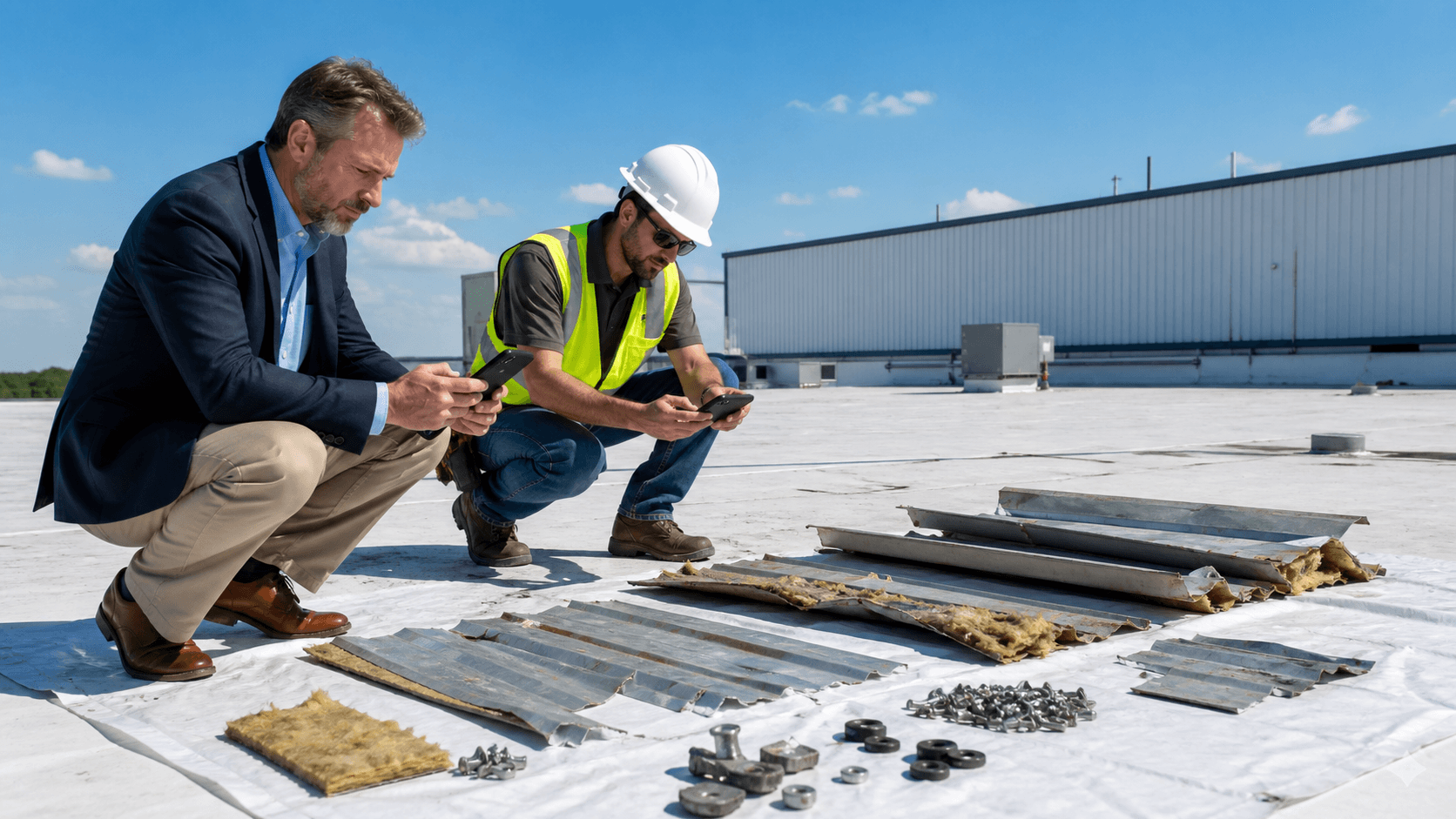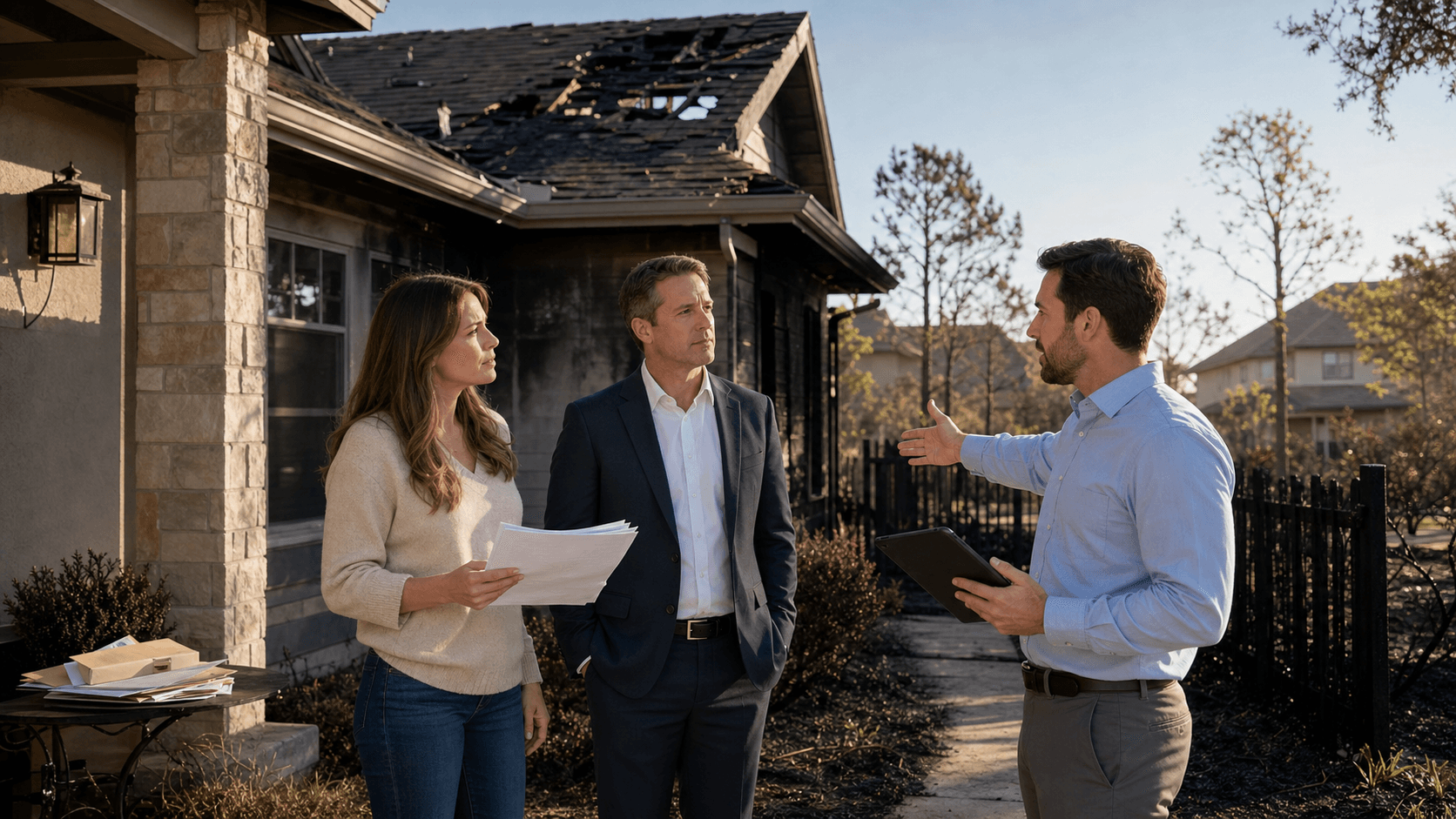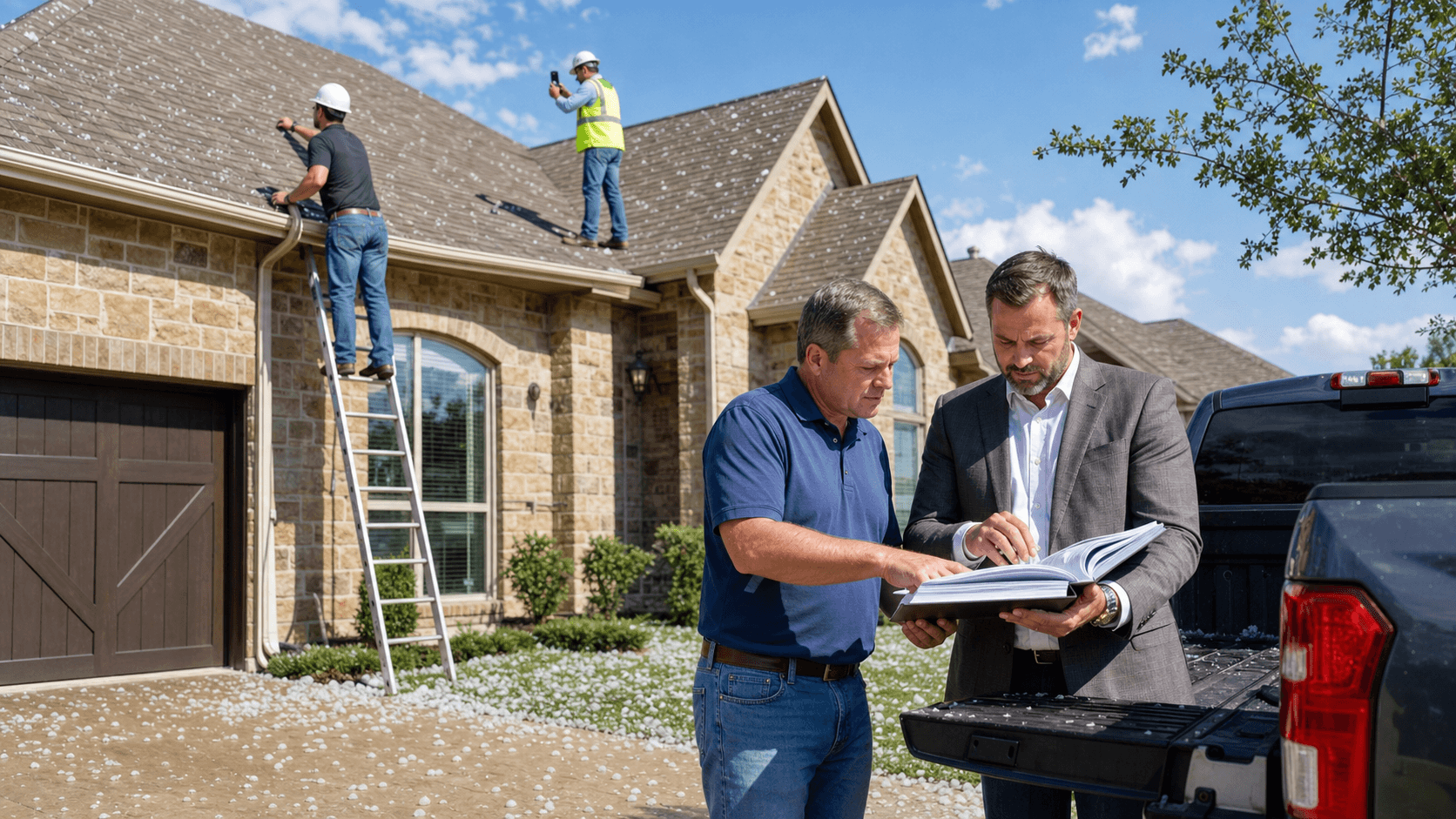
Commercial hail claims in Texas often rise or fall on one thing: the engineering report. Photos of dents and cracked membranes are important, but for larger commercial properties, the carrier usually leans on a hired engineer to say what is "real" damage and what is not. If that report goes against you, your commercial hail damage insurance claim can be delayed, underpaid, or flatly denied.
We see this pattern over and over with shopping centers, industrial buildings, and multifamily roofs. The good news is that these reports are not magic and they are not neutral. They are written by humans, working from narrow questions set by the insurer. When you understand how these reports are built, you are in a better position to challenge bad opinions and protect the value of your property.
Why Engineering Reports Matter in Texas Hail Claims
On larger commercial losses, carriers almost never rely only on the adjuster's photos and notes. They want an engineer on paper saying the loss is small, old, or "cosmetic only." That report becomes the anchor for low numbers and limited repairs.
Insurers know that many owners, asset managers, and even some contractors will back down when they see a thick report full of technical language and charts. The carrier can point to it as "objective science" and treat your claim position as just an opinion.
In this article, we focus on three things that matter for policyholders:
- How insurers structure engineering assignments to favor denial
- The common tactics we see in carrier-side engineering reports
- Practical ways to build a counter-record and rebut weak opinions
If you own or manage commercial property in Texas, you do not want to learn this after a spring storm has already rolled through and your claim has gone sideways.
How Insurers Deploy Engineers in Commercial Hail Claims
Carriers usually bring in engineers when the stakes are higher. Common triggers include:
- Large roofs or multiple buildings on one schedule
- Complex systems like TPO, PVC, modified bitumen, or coated metal roofs
- Higher claimed values or aggressive contractor scopes
- Prior claims, prior repairs, or a long ownership history
Here is how the life cycle often looks:
First, an adjuster does an initial visit. They take some photos, measure, and then note that "extent of damage is unclear" or "engineering review recommended." Next, the file gets sent to one of the carrier's preferred engineering firms. The assignment is usually framed with questions like:
- "Can you determine whether observed conditions are from wear and tear or hail?"
- "Is there any functional damage requiring replacement?"
- "Can localized repairs restore the roof to serviceable condition?"
These are not neutral questions. They are aimed at limiting covered damage. Many times the engineer knows the carrier's expected answer before they ever step on the roof.
The report that follows is often written as if it is already headed to a courtroom: dense language, selective photographs, and careful wording to justify denial or minimal repairs. Meanwhile, you are waiting weeks or months with an open loss and no clear path forward.
Common Engineering Tactics Used to Minimize Hail Damage
Certain arguments show up so often in insurance engineering reports that we start looking for them before we even turn the first page.
A few of the greatest hits:
- "Cosmetic only": The report admits that hail hit the roof but calls all impacts "cosmetic" or "aesthetic," claiming no effect on performance or life expectancy.
- "Pre-existing or wear and tear": Damage is blamed on age, poor maintenance, foot traffic, or prior storms outside the policy period.
- "Isolated damage": Hail effects are called "localized" or "isolated," then used to argue for small patch repairs instead of full replacement.
Engineers may lean on the age of the roof, notes about ponding, or any prior repairs to push damage outside the coverage window. The timing discussion often includes seasonal claims, such as:
- Stating that warm weather hail "could not" have caused certain fractures
- Blaming surface cracking and granular loss on sun exposure and summer heat alone
- Suggesting that damage developed "gradually" from environmental conditions, not from a specific storm
We also see reports that downplay or ignore collateral indicators like:
- HVAC fins and soft metal dents
- Damage to vents, coping, and flashings
- Impact marks on elevations and site features
Those clues often contradict a "no functional damage" conclusion. When they are missing from the report, that silence is telling.
Red Flags That Your Engineering Report Is Stacked Against You
Not every insurance engineer is biased, but many reports follow a familiar pattern. Warning signs include:
- The engineer did not inspect every roof or elevation, yet still claims "no hail-related damage" property-wide.
- Large sections of the report read like generic boilerplate that could apply to any building in Texas.
- Photographs focus on worn areas, old repairs, or debris, while skipping obvious fresh impact marks.
Pay close attention to causation language. Words like "primarily," "predominantly," or "most consistent with" are often used to dodge the harder question: what portion of this damage was caused by the covered hail event, even if other factors are present?
Process red flags can be just as telling:
- A request for re-inspection right after you submit a higher contractor or public adjuster estimate
- An adjuster who originally acknowledged damage, then reverses course only after the engineer is involved
- Repeated use of the same engineer who always seems to support denial or extremely limited scopes
We see these patterns most often on high-value commercial roofs: shopping centers, industrial sites, office buildings, and large multifamily portfolios.
Building a Counter-Record to Rebut Biased Engineering Opinions
When the carrier's engineer undercuts your commercial hail damage insurance claim, you need your own evidence, not just disagreement.
That usually means bringing in qualified professionals on the policyholder side, such as:
- Engineers who regularly work for insureds, not carriers
- Roofing consultants who understand large commercial systems
- Commercial contractors with real experience on similar projects
A strong rebuttal report looks very different from the carrier's version. It should include:
- Roof-by-roof inspections with clear mapping of damage
- Testing where appropriate, like core cuts, uplift testing, or moisture surveys
- Specific causation analysis tied to storm dates, weather data, and on-site conditions
You also want contemporaneous documentation that supports your story on timing and progression, such as:
- Post-storm photos from building staff or tenants
- Maintenance logs and prior inspection reports
- Work orders, leak complaints, and invoices after the storm
From a legal strategy standpoint, experienced policyholder counsel can go deeper. Through depositions and claim file discovery, we can examine how the engineer was selected, what instructions they were given, and whether they have a track record of opinions that always seem to favor the insurer. However, Texas law is clear that an insurer "cannot insulate itself from bad faith liability by investigating a claim in a manner calculated to construct a pretextual basis for denial." State Farm Fire & Cas. Co. v. Simmons, 963 S.W.2d 42, 45 (Tex. 1998) (concluding that State Farm did not make a good-faith effort to objectively investigate the insured's claim, but instead engaged in an outcome-oriented investigation). In other words, an insurer's reliance on an engineering report in denying or underpaying a claim does not shield the insurer from liability for bad faith "if there is evidence the report was not objectively prepared or the insurer's reliance on the report was unreasonable." Douglas v. State Farm Lloyds, 37 F. Supp.2d 532, 542 (S.D. Tex. 1999) (citing State Farm Lloyds v. Nicolau, 951 S.W.2d 444, 448 (Tex. 1997)).
Strategic Steps if Your Hail Claim Was Denied on Engineering Grounds
If your claim has already been denied, or dramatically cut, based on an engineering report, your next moves matter.
Key steps to consider:
- Do not treat the report as the final word. It is the insurer's position paper, not an unquestionable truth.
- Avoid making permanent repairs that destroy evidence before you speak with qualified counsel and experts.
- Gather and organize all claim-related material, including emails, letters, texts, photos, estimates, and internal notes about the loss.
At a certain point, further back-and-forth with the adjuster stops being productive, especially on larger commercial losses where the engineering opinion is driving the numbers. That is often when owners look at litigation options under Texas law.
At Lundquist Law Firm, we focus our practice on representing policyholders only in complex, high-value first-party property disputes. That includes hail, windstorm, hurricane, fire, and pipe burst claims on commercial and residential properties. We do not handle flood or personal injury matters, and we do not represent insurers.
Secure the Full Hail Damage Coverage Your Business Deserves
If your property took a hit in a recent storm, our team at Lundquist Law Firm is ready to help you pursue a fair and timely commercial hail damage insurance claim. We handle the legal and insurance complexities so you can stay focused on running your business. Reach out today and let us review your policy, assess your losses, and guide you through your options, or contact us to schedule a consultation.