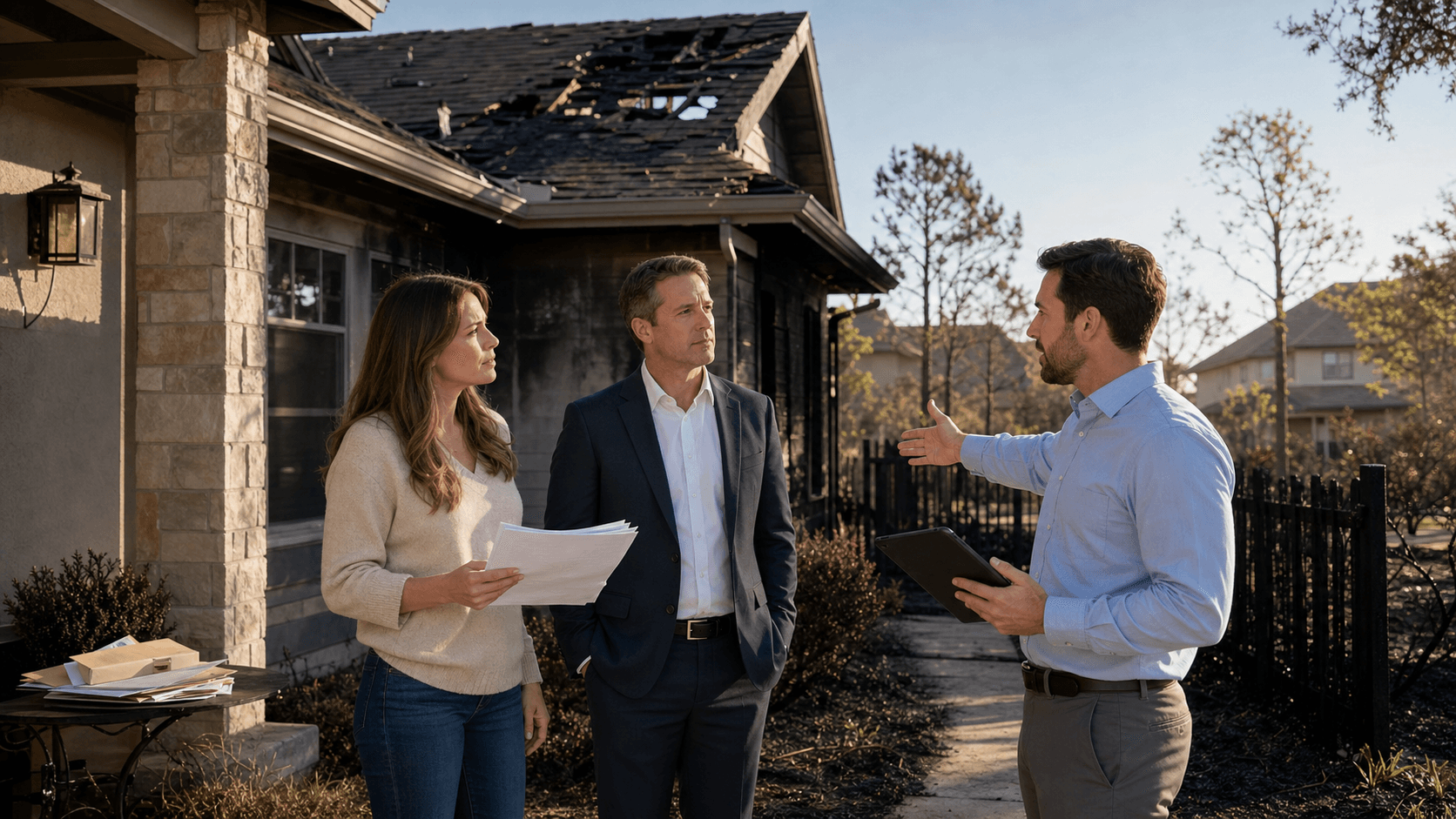
Why How You Handle the Claim Matters More Than You Think
When a Texas commercial property takes a hit from hail, wind, a tornado, a hurricane, fire, or a pipe burst, most owners focus on fixing the damage and keeping operations running. The insurance claim file feels like paperwork you will deal with along the way. But how you handle that claim from day one often matters more than the loss itself.
Insurers start thinking about defenses the moment the claim is reported. Every email, text, photo, report, and recorded statement can be used later to deny, limit, or delay payment. What feels like a quick email to "get the ball rolling" can become Exhibit A in a dispute about causation, notice, or business interruption.
Our goal here is simple: to give Texas commercial policyholders, and owners with serious residential losses, practical guidance on how to manage property damage claims without quietly building the insurer's defense file for them.
Common Missteps That Quietly Build the Insurer's Defense File
Most problems start small. A rushed email. A casual phone call. An offhand comment during an inspection. Insurers then stitch those pieces together into arguments about coverage.
Some common trouble spots include:
- Casual notice of loss, like "we think it is old damage" or "probably minor cosmetic issues"
- Incident reports that downplay the event, or guess at the cause
- Internal emails suggesting the damage is "no big deal" or "maybe we caused part of this"
Those types of statements are often used later to:
- Claim the loss was preexisting or maintenance related
- Shorten the period of restoration or business interruption
- Argue that only a small scope is covered
Another quiet risk is unguarded statements made to adjusters, contractors, or the insurer's "vendor partners", such as engineers or forensic accountants. Simple comments like "it has leaked before" or "we waited to call because we were busy" can become:
- Late notice defenses
- Failure to mitigate arguments
- Wear-and-tear or pre-loss condition defenses
When the insurer's experts control the narrative, they can label major damage as "cosmetic," "ongoing," or "not related to this event," especially on:
- Large commercial roofs hit by hail or wind
- Structures exposed to hurricane conditions
- Fire and smoke damage in mixed-use or multi-building sites
- Internal water losses from pipe bursts or sprinkler failures
Once those labels are in their reports, they often drive the entire claim.
Controlling the Paper Trail Without Looking Adversarial
You do not have to pick a fight to protect your position. You just need discipline in what is written and how records are kept.
For initial notices and claim emails, we suggest:
- Keep it factual and short: what happened, when, where, and obvious impacts
- Avoid guessing at the cause or calling damage "minor" or "cosmetic"
- Use terms that track the policy where you can, such as "direct physical loss" or "interruption of operations," if those are accurate
Inside your organization, it helps to separate business communications from privileged discussions with counsel. Good habits include:
- Avoiding "worst case" emails speculating that the company may be at fault
- Assigning one or two people to coordinate claim communications
- Keeping a clean record of damage, mitigation steps, and operational impacts, including photos, videos, vendor invoices, and basic revenue data
When the insurer starts sending broad document requests, you do not have to treat every request as set in stone. It may be appropriate to:
- Clarify what is truly needed to adjust the loss
- Narrow overbroad or duplicative demands
- Involve a Texas commercial property damage lawyer when the requests feel more like discovery than claim handling
The goal is to stay cooperative, but not let the claim file turn into a one-sided investigation of your business.
Working With Adjusters, Experts, and Vendors on Your Terms
Site inspections are often where the narrative is set. The people who walk the property and ask questions write the records that may decide your claim.
You can structure inspections without being difficult by:
- Making sure a knowledgeable company representative is present
- Having your own contractor or expert attend for major or technical issues
- Agreeing in advance on what areas will be inspected and for what purpose
- Keeping notes of what is said and who attends
When picking your own contractors, estimators, and accountants, think about how their work will look inside a claim file. Helpful practices include:
- Choosing vendors who understand insurance-level detail
- Asking for clear, itemized scopes and pricing, not just lump-sum bids
- Making sure they document how the loss affected operations, equipment, or tenant spaces
Insurers often try to label your experts as "biased." That is harder to do when the work is detailed, consistent, and supported by real data.
Communication with carrier representatives can be just as important as the written record. For recorded statements and examinations under oath, policyholders should:
- Answer honestly, but avoid guessing or filling in gaps
- Stick to what they saw, did, or know, not what someone else told them
- Review key dates, contracts, and major events in advance, so answers are accurate and consistent
You are not required to adopt the insurer's theory of the claim during a recorded statement. It is fine to say "I do not know" when that is the truth.
When to Bring in a Texas Commercial Property Damage Lawyer
There is a point in some claims where it becomes clear the insurer is building a defense file, not just adjusting the loss. Warning signs include:
- Multiple or repeated reservation of rights letters
- Shifting explanations about what is or is not covered
- Requests for new recorded statements without clear reasons
- Heavy focus on prior claims, maintenance logs, or unrelated building issues
In high-value commercial losses, hail and hurricane events, major fire claims, or serious internal water losses in large homes, involving counsel early can make a real difference in how the record develops.
Before any lawsuit is filed, a Texas commercial property damage lawyer can:
- Review the policy and frame coverage issues in real time
- Help control written communications so they are accurate and strategic
- Push back on unreasonable document demands and delay tactics
- Prepare owners and managers for recorded statements or EUOs
- Coordinate policyholder-side experts so their work lines up with policy language and claim requirements
The aim is to position the claim for a fair resolution, and if that is not possible, to have a record that supports litigation instead of undercutting it.
Turning a Vulnerable Claim Into a Strategic Asset
Handled well, a commercial or serious residential property claim can actually strengthen your business. It can prove resilience to lenders, investors, and tenants. It can protect income streams tied to key locations and assets.
The behaviors that help keep control in your hands are simple, but they require discipline:
- Careful written communications, inside and outside the company
- Thoughtful handling of inspections, experts, and vendor relationships
- Organized documentation of damage, mitigation, and lost income
- Early legal input on complex, disputed, or high-dollar claims
Filing a property claim is not just paperwork. It is a business decision that affects the value of your real estate, your brand, and your long-term cash flow. By treating the claim file as a strategic asset, and not a casual record, Texas policyholders give themselves a far better chance of turning a loss event into a full and timely recovery instead of a slow, one-sided fight in the insurer's defense file.
Protect Your Commercial Property Claim With Experienced Legal Help
If your business has suffered property damage and you are facing delays or denials from your insurer, we are ready to step in and advocate for you. At Lundquist Law Firm, our Texas commercial property damage lawyer can review your policy, gather supporting evidence, and pursue the compensation your claim deserves. Reach out today to discuss your situation, get clear answers about your options, and let us handle the legal details while you focus on running your business. To schedule a consultation, please contact us.