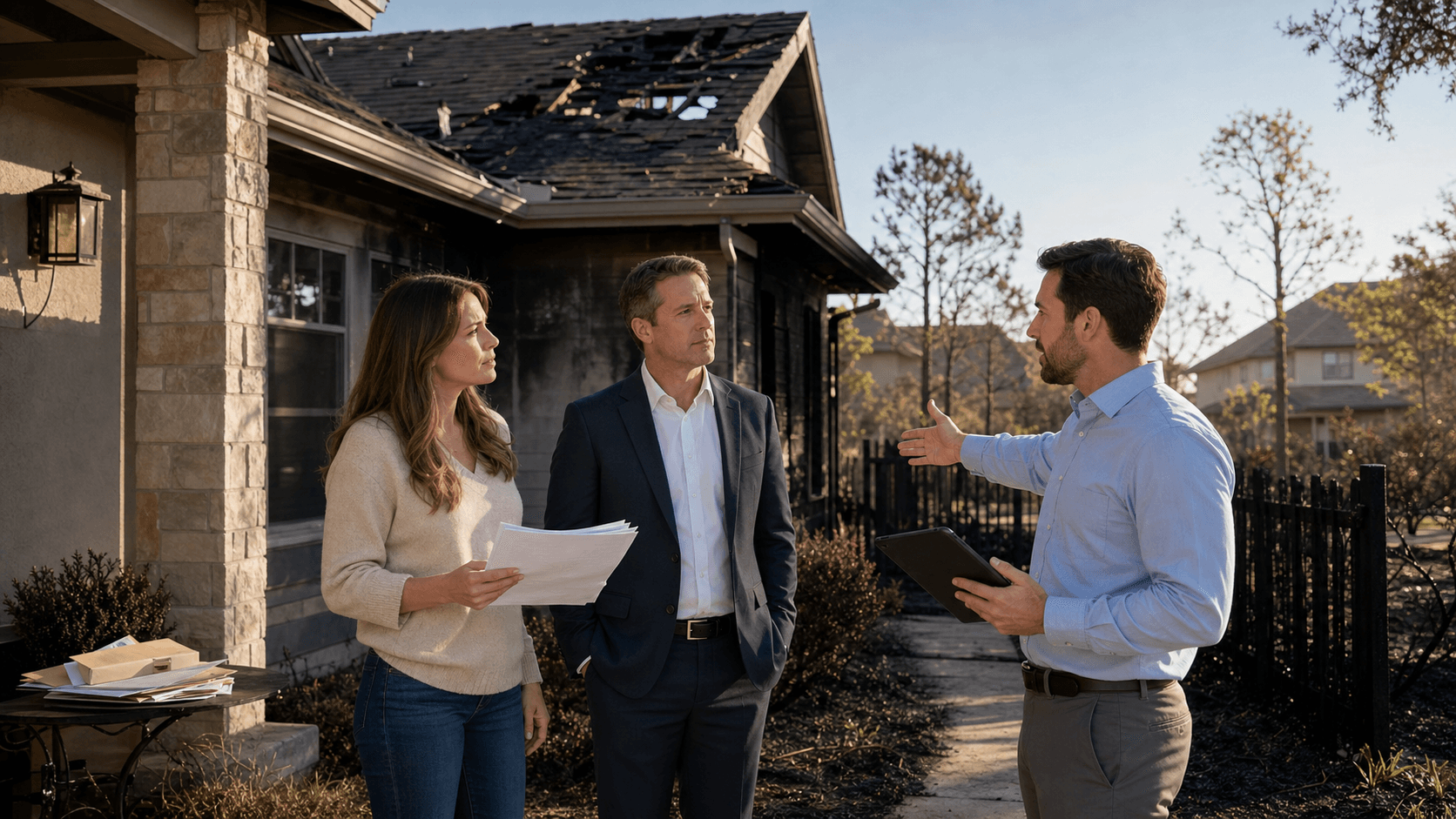
When a Fire at One Property Threatens Your Whole Portfolio
A fire in one Texas building should not put your whole portfolio at risk, but that is what often happens when an insurer denies or guts a key claim. One damaged location in a mixed portfolio can throw off rent collection, push loan covenants to the edge, and unsettle investors who expect steady cash flow. When the carrier questions coverage, it is not just that one structure on the line; it is the entire capital stack.
Mixed commercial portfolios are especially exposed because everything connects. Leases may depend on co-tenancy, parking access, shared lobbies, or common HVAC and power. A problem in one anchor space can cascade into defaults across other units or even other sites within the same borrowing group. Lenders then look closely at insurance recoveries and compliance with policy requirements.
Insurers know these portfolios are complex and they sometimes lean on that complexity to justify denials or harsh limitations. Many denial positions rest on policy readings that are open to challenge, on aggressive causation theories, or on an unfair focus on one use within a multi-use property. A denied fire insurance claim attorney will usually look at the dispute in a different way than the adjuster, focusing on long-term business impact, how the loss touches the entire portfolio, and how Texas law applies to the carrier's actions.
How Insurers Attack Fire Claims in Mixed Commercial Portfolios
When fire hits a multi-tenant or mixed-use property, carriers often try to shift blame away from covered causes and toward someone or something they say is excluded. We see repeated storylines in these situations.
Common insurer narratives include accusations that:
- A tenant's operations were unsafe or outside the allowed use
- Alleged code violations void coverage for the owner
- Interior build-outs were "non-compliant" or unapproved
- Maintenance or inspection gaps are the "real" cause of loss
In mixed portfolios, complexity becomes a tool for limiting payment. Carriers may dispute the origin and cause of the fire, argue there were multiple causes, or carve out parts of integrated systems. For example, they might try to separate out:
- MEP or HVAC systems serving multiple units
- Shared electrical infrastructure feeding several buildings
- Fire alarm or suppression systems tied to multiple occupancies
Portfolio structure can also be turned against the policyholder. Insurers may argue that one LLC has no insurable interest in a particular building, or that only a named insured and not an additional insured has coverage. They sometimes attempt to confine business interruption to the one "scheduled location," even when policy language and the real-world operation show a much broader impact across different sites or entities.
Reading Denial Letters Like a Texas Coverage Lawyer
When you get a fire claim denial or "coverage position" letter, it can feel dense and technical on purpose. It is not unusual for key facts or favorable policy terms to be left out or glossed over.
A sophisticated policyholder should look closely at:
- The exact policy provisions quoted and what is left unquoted
- How the letter describes "cause" or "origin" of the fire
- Whether the carrier is reserving rights on issues beyond what it decided
A denied fire insurance claim attorney will read that same letter alongside the complete policy, including all endorsements and portfolio-wide schedules. We compare the stated reasons for denial to:
- The real loss timeline and on-site facts
- NFPA guidance and local code issues
- Texas-specific claim-handling rules and deadlines
Red flags in these letters often include a heavy reliance on an origin-and-cause expert hired and paid by the carrier, selective use of exclusion language, and silence about endorsements that broaden coverage. In a portfolio setting, it is also suspect when the letter ignores business interruption across related locations or fails to discuss how common areas or shared systems are treated under the policy.
Proving Fire Damage and Business Loss Across Multiple Sites
In a single-family residence, proving damage can be more direct. In a mixed commercial portfolio, fire and smoke rarely stay in one neat box. Smoke and soot can travel through HVAC and chase spaces, electrical and data systems can be compromised far from the burn area, and tenants can lose access even when their unit did not actually burn.
Key evidentiary issues often include:
- Smoke and soot migration through ducts and shafts
- HVAC contamination that affects multiple units or buildings
- Damage to shared electrical, telecom, and control systems
- Access, habitability, and safety concerns across the site
At the portfolio level, documentation looks different. You are not just dealing with a contractor estimate; you are dealing with building engineers, environmental consultants, and sometimes multiple property managers and asset managers. Helpful documentation can include:
- Engineering and environmental reports
- Rent rolls and CAM records showing lost revenue
- Co-tenancy and use clauses triggered by tenant shutdowns
- Lender notices and correspondence about the event
In Texas summers, fire risks often track higher HVAC loads and electrical demand. Equipment can run hard for long hours and small faults can become ignition sources. Inspection reports, maintenance logs, and utility records can either support or contradict the carrier's causation theory. A careful portfolio owner will want those records preserved and reviewed early, not only by the insurer's experts.
When a Denied Fire Insurance Claim Requires Litigation
There comes a point in some high-value fire claims when more letters and more "supplemental" submissions to the adjuster will not change the result. For complex Texas portfolios, it is often clear that the dispute is not just about a missing invoice; it is about how the carrier has chosen to read the policy and frame the cause of loss.
At that stage, litigation may be the only realistic path. That step requires attention to:
- Preserving physical evidence before repairs erase key proof
- Coordinating experts in origin and cause, engineering, accounting, and leasing
- Handling entity structure issues where different LLCs own different sites
- Keeping strategy in line with lender expectations and investor reporting
Texas law provides several tools when a claim is wrongly denied or underpaid. Depending on the facts, policyholders may assert breach of contract, violations of the Texas Insurance Code, unfair claim-handling practices, and in serious situations, bad-faith theories or misrepresentation of coverage. These are fact-specific legal claims, not automatic penalties, and they need to be evaluated with care.
A firm that represents only policyholders, not insurers, approaches these cases without divided loyalties or concern about carrier relationships. At Lundquist Law Firm, we focus our practice on complex, high-value first-party property disputes for Texas policyholders, including denied, delayed, or underpaid fire and smoke claims in commercial and mixed-use portfolios.
Protect Your Fire Loss Claim With Experienced Legal Help
If your fire insurance claim has been delayed, underpaid, or denied, we are ready to step in and protect your rights. At Lundquist Law Firm, our denied fire insurance claim attorney will review your policy, explain your options, and build a strategy tailored to your situation. Reach out today and let us handle the insurer while you focus on rebuilding. You can get started by using our online form to contact us.