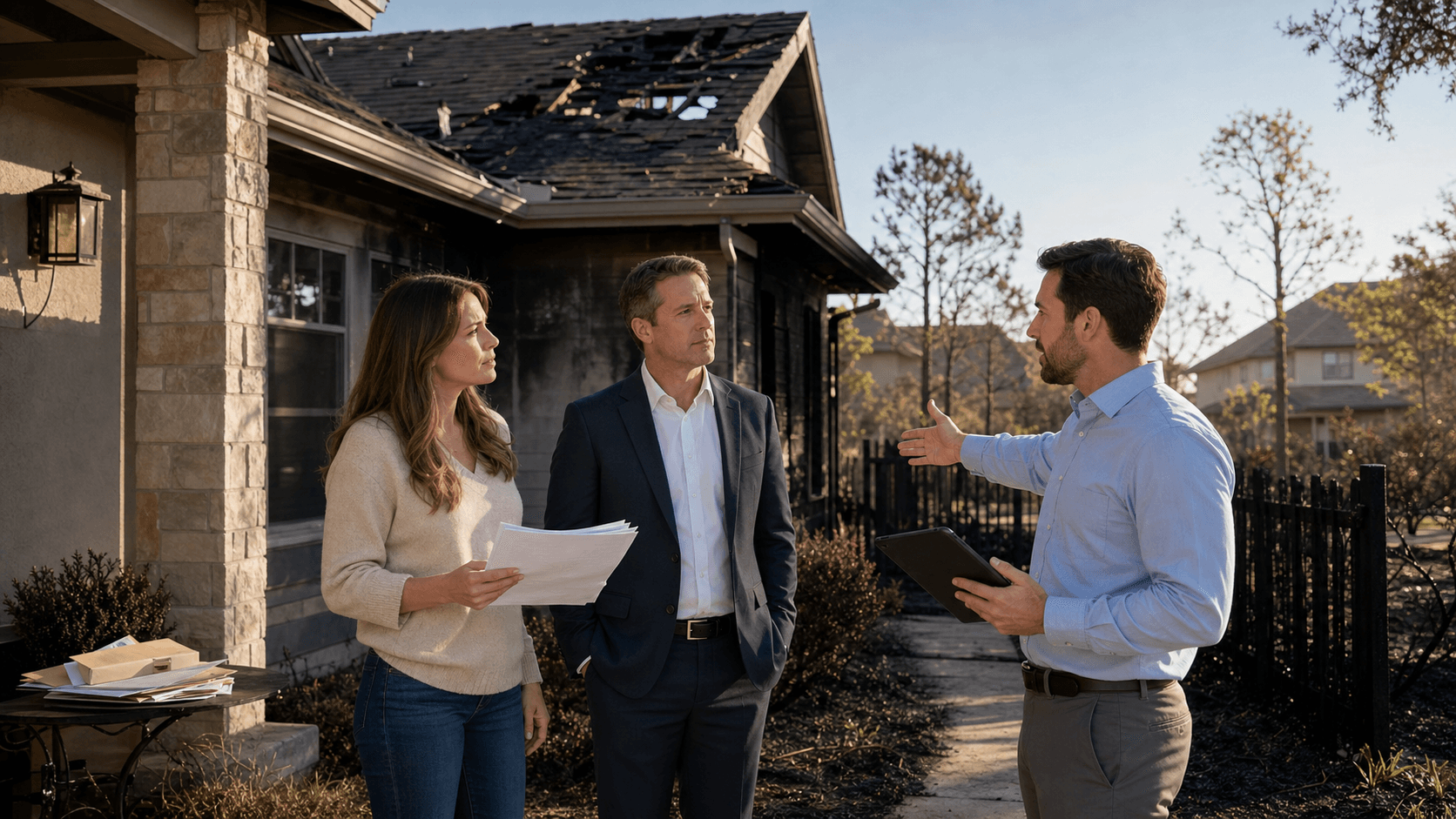
Late May is not "early" storm season in Texas. By then, we are already in the middle of hail and windstorm claims, and the first tropical systems are not far behind. If you own commercial property or run a business, waiting until after a storm to read your policy puts you behind from day one. At that point, you are reacting to the carrier's view of the contract instead of enforcing your own.
This is a business issue, not paperwork. Your commercial property and business interruption policy controls how millions of dollars in buildings, improvements, equipment, and revenue are treated when hail, wind, fire, or internal water damage hits. Carriers and their lawyers have spent years tightening language to narrow coverage. Sophisticated owners need to understand that language now, while there is still time to correct gaps, adjust limits, and plan for the claim fights that often follow.
Treat Your Policy Like a Major Business Contract
A commercial property policy is not boilerplate. It is a negotiated risk transfer contract that sits alongside your leases, loan documents, construction contracts, and operating agreements. If you treat it as fine print to be ignored until a loss, the carrier will fill that vacuum with its own interpretation when it matters most.
Before the first hurricane watch or severe thunderstorm warning, it helps to:
- Read the full policy, including all endorsements
- Identify who is actually named as the insured
- Match what you think is insured to what is actually listed
When owners skip this step, they give carriers easy arguments after a storm: "wrong entity," "wrong location," or "no coverage for that property category." Those fights can be avoided if you review the contract like the high-dollar business document it is.
Know What Property Is Actually Covered
Commercial policies draw lines between "covered property" and excluded property. The labels are not always intuitive. Typical categories include:
- Buildings and permanent structures
- Tenant improvements and betterments
- Outdoor signs, fences, and landscaping
- Business personal property and inventory
- Property of others in your care
Storm season exposes weak spots fast. Roof systems, HVAC units, glass, facades, and signage often sit in gray areas or hidden sub-limits. After a hail or tornado event, owners are surprised to learn that the roof membrane is treated differently than the underlying deck, or that certain exterior features are capped at low limits.
There are special risks for:
- Multi-building locations, where schedules are incomplete or outdated
- Mixed-use properties, where commercial and residential areas are treated differently
- Portfolios held in multiple entities, where the wrong name appears on the declarations
These issues give carriers excuses to deny or narrow coverage. Having a Texas insurance claim attorney look over your schedules, named insureds, and category descriptions before storm season can surface errors while they can still be fixed.
Deductibles, Sub-Limits, and Hidden Traps
Many insureds focus on limits and forget that deductibles and endorsements can turn what looks like strong coverage into something far thinner in practice.
First, deductibles. Policies often separate:
- "All other perils" flat deductibles
- Percentage-based wind or hail deductibles tied to insured value
- Special hurricane or named storm deductibles
A two percent wind deductible on a large schedule can translate into a very high self-insured retention. Carriers often argue "no payable loss" because their estimate does not pierce that number. They may also apply different deductibles by county or by distance from the coast, and may treat each location or building as a separate deductible event.
Second, limits and sub-limits. Endorsements frequently reduce coverage for:
- Roofs and roof surfacing materials
- Cosmetic hail damage or "matching" of shingles and panels
- Ordinance or law upgrades required by code
- Business personal property, debris removal, or specific internal water losses
These restrictions are often buried deep in the policy. Cosmetic and matching provisions are especially common in hail and wind claims. Carriers attempt to pay only for patch repairs on obvious damage, then point to policy language to avoid full replacement, even where Texas law supports broader recovery under the right facts.
Time-based and dollar-based limits matter just as much, including:
- Caps on extra expense
- Different sub-limits for fire and smoke versus pipe burst or sprinkler failures
- Margin clauses that effectively reduce recovery when property is undervalued
A careful review with a Texas insurance claim attorney can show where your actual risk diverges from what you thought you were buying.
Business Interruption, Notice, and Claim Preparation
For many commercial policyholders, business interruption is the most important coverage in the policy, yet it is often the least understood. Business income coverage typically turns on:
- What qualifies as a "suspension" of operations
- How the "period of restoration" is defined
- How long extended business income runs after reopening
Storms, fires, and internal water losses do not always shut a business down completely. Carriers may argue operations were only "slowed," not suspended, and use that position to cut or deny business income. They also challenge causation, claiming that lost profits were due to pre-existing issues, market conditions, or management decisions instead of the covered event.
On top of that, many policies include:
- Waiting periods before business income begins
- Coinsurance requirements tied to reported revenue
- Limitations on service interruption, ingress/egress, or dependent property losses
Carriers use these provisions to chip away at recovery. Good preloss planning includes understanding how your operations would be measured, what documents you would need to prove lost income, and where the policy gives the carrier arguments to attack your calculation.
Procedural rules are just as important. Policies often require:
- Prompt notice of loss
- Sworn proofs of loss within a set number of days
- Ongoing record-keeping and document production
- Suit limitation clauses that shorten the time to file suit
After a major Texas storm, carriers regularly point to alleged late notice, incomplete documentation, or "failure to cooperate" to slow down or underpay large and multi-location claims. Internal response plans should assign responsibility for notice, deadline tracking, adjuster coordination, and expert retention before the first cell pops up on the radar.
Use Storm Season as Your Policy Deadline
Every year, late May should be the reminder to pull your policies, not just stock batteries and fuel. Treat this season as your deadline to get policy-ready. At a minimum, it helps to:
- Gather current policies, endorsements, and schedules in one place
- Confirm named insureds, locations, and building descriptions
- Flag deductibles, sub-limits, and exclusions that hit hail, wind, hurricane, fire, and internal water risk
- Identify gaps in your claim response plan for complex sites or portfolios
At Lundquist Law Firm, we focus our practice on representing policyholders, not insurers, in complex first-party property insurance disputes across Texas. Our attorneys spent years working on the carrier side, and we now use that background to help commercial owners and select residential policyholders understand how their contracts will actually work when hail, windstorm, hurricane, fire, or internal water events occur. Thoughtful review before storm season can reduce surprises, strengthen your position, and better prepare you for the denied, delayed, or underpaid claims that often follow major Texas losses.
Protect Your Rights And Move Your Claim Forward
If your insurance company is delaying, underpaying, or denying your claim, our team at Lundquist Law Firm is ready to step in and fight for you. A skilled Texas insurance claim attorney can evaluate your situation, explain your options, and help you pursue the full compensation you are owed. Reach out today to tell us what happened and let us handle the next steps while you focus on getting your life back on track. You can also contact us to schedule a consultation and get started.