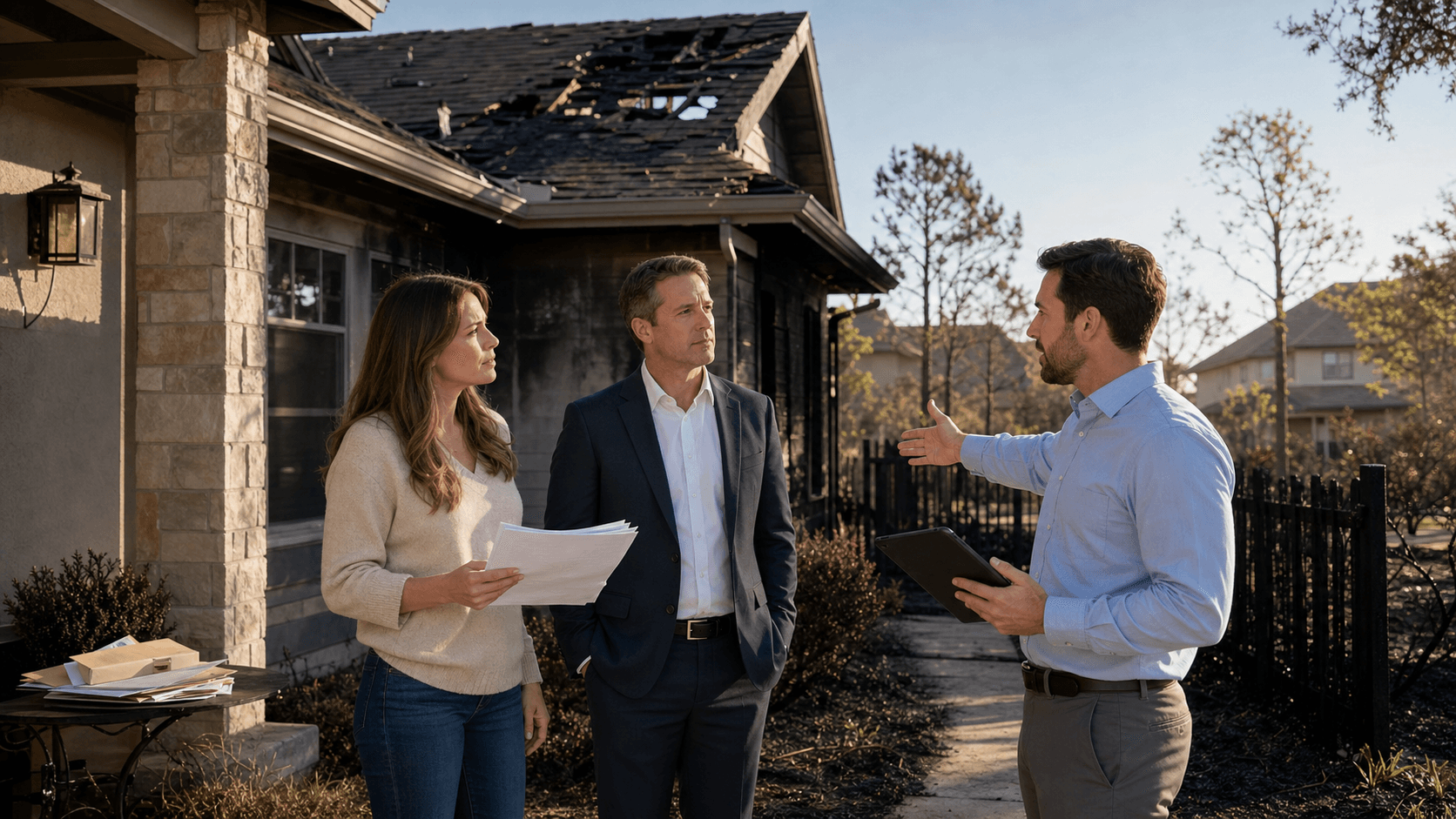
A large Texas fire can turn a property or business upside down. When the smoke clears, many owners are told that appraisal is the way to finally settle the dollar amount of the loss. Then the appraisal award shows up, full of line items, columns, and legal labels that are anything but clear.
In serious commercial and high-value residential fire claims, reading that award correctly matters. The numbers on those pages can shape your rebuild plan, your business recovery, and your remaining rights against the insurer. We want to walk through how to read a Texas fire loss appraisal award with a critical eye and where a Texas insurance appraisal attorney fits into that picture.
Why Fire Loss Appraisal Awards Are so Hard to Read
Large fire losses are rarely simple. A single event in Texas might hit:
Multiple buildings or units
Structural framing, roof, and exterior
Interior finishes and HVAC
Contents, stock, and equipment
Smoke contamination in areas that did not burn
On top of that, fire brings code upgrades, demolition and debris removal, and complicated business interruption questions. Many awards try to capture all of this in dense schedules, often spread across several pages.
For a sophisticated owner, risk manager, or asset manager, the goal is not just reading the numbers, but understanding what the panel actually valued and what it left out. This is also where insurers sometimes try to weaponize the award, treating it as a limit on payment instead of a statement of the amount of covered loss.
How Texas Appraisal Works in Significant Fire Claims
Under most Texas property policies, either side can demand appraisal when there is a dispute over the amount of loss. Each side picks an appraiser, and the appraisers choose an umpire, and any agreement by two of the three is the award.
A few key points for fire and smoke claims:
The panel decides amount of loss, not coverage or policy interpretation
The award is generally binding on value if the process was proper
The award is not a global settlement of all issues or claims
Bad faith and prompt payment claims usually do not disappear just because an award was signed
Fire claims often go to appraisal because the dollars are large and the scope is messy. There can be arguments over what must be torn down, what can be cleaned, how far smoke migrated, and how long a realistic rebuild will take.
Timing is a special problem in fire cases. Business interruption start and end dates, period of restoration, and cost escalation during a long rebuild all matter. If the panel does not understand your schedule, your award may undervalue both the property and the lost income.
Key Parts of a Fire Loss Appraisal Award
Most substantial fire awards in Texas are broken into sections. You might see separate pages or tables for:
Building damage and interior finishes
Contents, equipment, and stock
Smoke remediation and cleaning
Demolition and debris removal
Code upgrades and ordinance or law work
Business income and extra expense
You will often see two key numbers for each category: replacement cost value and actual cash value. Replacement cost is what it takes to repair or replace with like kind and quality. Actual cash value is usually replacement cost minus depreciation. Some panels show depreciation on its own line, some bury it in the math.
Insurers sometimes point to the lower ACV numbers as if those are the only amounts owed, even under a replacement cost policy. The policy terms usually control when and how replacement cost is paid, for example, after work is performed or contracts are signed. Reading the award without reading the policy can set you up for underpayment.
Fire awards also raise Texas-specific issues such as:
Scorch and smoke staining that insurers want to call "cosmetic"
Contaminated ductwork, electrical, and mechanical systems
Matching of finishes, exterior facades, and roofing across a building or complex
Partial structural compromise that really should be treated as a near total loss
It is not enough that the numbers add up. The scope of work behind those numbers must reflect a full, code-compliant restoration, not a patch job that leaves you with a fractured asset.
Reading Between the Lines on Coverage, Exclusions, and Limits
An award usually does not spell out how policy limits, sublimits, or exclusions will be applied. It is a valuation document, not a coverage opinion. That silence is where many problems start.
Things the award often does not show:
Coinsurance penalties or how the insurer claims to calculate them
Sublimits for ordinance or law, debris removal, or business income
Exclusions for alleged pre-existing damage or faulty workmanship
Waiting periods or caps for business interruption
After the award, insurers sometimes issue a "coverage letter" and carve down the numbers. They may:
Re-label parts of the award as uncovered
Treat the award as a ceiling rather than the amount of physical loss
Allocate across multiple locations or policy years in a way that erodes limits
Large commercial and multifamily claims raise even more questions. Multiple named insureds, layered programs, or shared limits can create real tension over how the insurer allocates payment. A careful review by counsel usually includes both the award and the full policy schedule, not just the top-line award figure.
Business Interruption and Extra Expense Inside the Award
Business interruption and extra expense sections are often the hardest for non-experts to read. They may include:
Lost gross earnings or lost rents
Continuing expenses that still had to be paid
Mitigation costs, like temporary space or added labor
Professional fees tied to the claim or recovery
Fire realities in Texas affect BI in ways that do not always show up in a neat spreadsheet. Code and permitting delays, supply chain issues for custom materials, and contractor backlog after a regional event can all stretch the real recovery period. There may also be operational limits tied to smoke and partial loss, where the business could not reasonably run at full speed even with temporary repairs.
Insurers sometimes push shorter, hypothetical repair schedules that ignore real-world hurdles. They may also refuse to recognize lost key accounts or tenant turnover that flowed directly from the fire and the downtime, even where the policy language supports that broader view.
When to Involve a Texas Insurance Appraisal Attorney and Use the Award
Some owners bring in a Texas insurance appraisal attorney before appraisal starts, others wait until the award arrives. In our experience, there are clear red flags that should trigger legal review after the fact:
The insurer's payment is well below the award and the gap is not explained
The carrier claims the award wiped out all earlier bad conduct
The BI portion seems to ignore the real rebuild schedule
There are sudden references to exclusions or sublimits never raised before
A lawyer who focuses on Texas property insurance can read the award against the policy, the Texas Insurance Code, and prompt payment rules. That analysis usually looks at two big questions: whether the carrier actually complied with the award, and whether additional claims for underpayment, bad faith, or statutory interest remain.
Under recent Texas Supreme Court decisions, the answer to that second question on fire losses is increasingly clear: policyholders who prevail on appraisal are entitled to recover not just the award amount, but also penalty interest and their attorney's fees. This means the appraisal award itself is often just the floor of your recovery, not the ceiling. A specialized property coverage lawyer can help you identify what the insurer actually owes you under these statutes once the award is in hand.
From there, the award should become part of a larger recovery plan. Owners can use it to coordinate with contractors, lenders, and accountants, to plan cash flow, and to document any remaining gaps quickly. Treated that way, the appraisal award is not the end of the dispute, it is a key tool for getting the full benefit of the coverage your business or property was supposed to have when the fire started.
Protect Your Insurance Claim With Experienced Legal Guidance
If your insurer is undervaluing or disputing your property damage, Lundquist Law Firm is ready to step in and guide you through the appraisal process. Our Texas insurance appraisal attorney will review your policy, evaluate your losses, and advocate for a fair outcome. Reach out today to discuss your situation and learn your options, or contact us to schedule a consultation.