Why Hail Underpayment Is a Hidden Business Risk
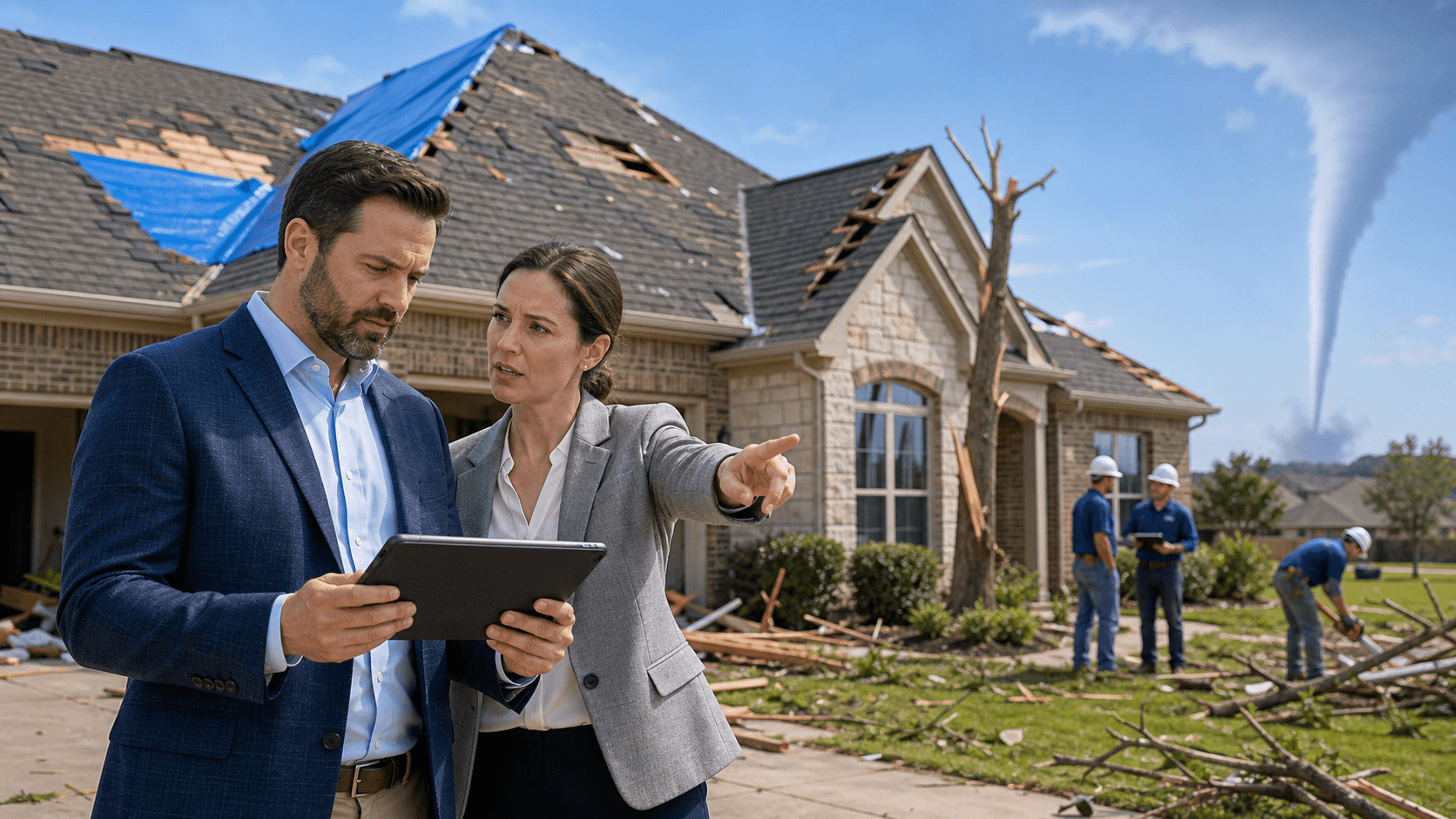
Hail is not a rare surprise for commercial properties in Texas. It is a regular part of doing business here, especially as we move through the heart of storm season and toward late summer and fall. Roofs, HVAC units, siding, and parking structures all take repeated hits over time. That exposure is predictable, and smart owners plan for it.
What is harder to see is the quiet financial damage when a commercial hail claim is underpaid. A roof can look patched and presentable, while hidden damage shortens its life and increases leak risk. Future claims can be questioned because the last loss was not fully addressed. Capital plans can drift off course when insurance recoveries do not line up with real repair or replacement costs.
Many Texas commercial hail claims are not flatly denied. They are paid, then closed, with numbers that feel low but are hard to pin down. The scope is trimmed, pricing is thin, depreciation is aggressive, and policy language is interpreted in narrow ways that sophisticated owners can miss. The result is a long-term hit to asset value and cash flow.
Our firm focuses on significant, complex first-party property disputes for policyholders only. We are not adjusters, and we do not represent insurance companies. In this article, we will walk through how underpayment happens in a commercial hail damage insurance claim, the red flags to watch for, and how legal review can help protect long-term property value and business continuity.
How Insurers Quietly Shrink Texas Hail Payouts
A flat denial is obvious. A subtle underpayment is not. Many commercial hail claims close as "paid in full" even though large pieces of the loss were never properly scoped or valued. On high-value roofs and large campuses, those gaps can be significant.
Common carrier tactics we see in Texas hail claims include:
- Minimizing scope by recommending spot repairs instead of full roof system replacement
- Disputing causation by labeling hail impact as "wear and tear," "foot traffic," or "installation defect"
- Leaning on cosmetic damage exclusions to avoid paying for functional problems in metal or membrane systems
The estimate itself often tells the story. Carriers may:
- Omit line items for code-required upgrades, safety measures, or access
- Use below-market unit pricing that no reputable contractor will honor
- Apply deductibles in ways that do not match the policy language
- Take depreciation as if the insured agreed to absorb part of the replacement cost risk
There is also a human factor. Many owners like their field adjuster. The adjuster walks the site, seems reasonable, and gives verbal signals that the carrier is "taking care of it." But the real decisions often happen later, in a desk adjuster's office, in consultant meetings, or in claim review committees the owner never sees. By the time the payment arrives, the friendly tone has covered up major cuts.
Underpayment is especially common on:
- Large single-ply roofs on warehouses and distribution centers
- Multi-building campuses and retail centers with varied roof types
- Industrial facilities with complex rooftop equipment
- Office and mixed-use properties with multiple elevations and exposures
When the numbers are big and the structures are complex, quiet shrinkage in scope or price can have lasting effects.
Red Flags in Your Commercial Hail Damage Insurance Claim
There are patterns that often show up when a commercial hail claim is underpaid. Owners and asset managers can watch for these early signals.
On the numbers and process side, pay attention to:
- Estimates that feel far out of line with pre-loss property values or realistic contractor bids
- Claims closed after only a brief site visit, especially on large or multi-building locations
- Adjusters who never walked every roof, elevation, or structure that may have been hit
In the paperwork, red flags include:
- Vague estimate descriptions like "repair roof" with no clear scope or method
- Missing trades, such as no HVAC, electrical, masonry, or glazing work where it is obviously affected
- No reference to building code compliance or ordinance or law coverage
- No clear explanation of how depreciation was applied or how the deductible was calculated
Process and timing also tell you a lot. Watch for:
- Long periods of delay followed by a sudden "take it or leave it" payment
- Heavy reliance on carrier-retained engineers whose reports frame almost everything as age or wear
- Repeated requests for the same documents with no real movement toward a fair resolution
Operationally, underpayment often shows up months later:
- Recurring roof leaks after normal storms
- Rising maintenance and emergency repair bills
- Tenant complaints about water intrusion or ceiling issues
- Questions from lenders or insurers during renewals or refinancing
When you compare the carrier's position with independent contractor or consultant evaluations, wide gaps in scope or price are a strong signal that the claim deserves legal review.
Technical Pressure Points in High-Value Hail Claims
High-dollar hail claims turn on technical details. The type and condition of your roof system matter a great deal. For example, the analysis can differ for:
- TPO or PVC single-ply membranes
- Modified bitumen and built-up roofs
- Standing seam or screw-down metal systems
Age, prior repairs, and manufacturer warranties all feed into whether patching is realistic or whether system replacement is the only way to restore performance and keep coverage in place.
Policy language is another pressure point. Key areas include:
- Cosmetic damage limitations that carriers may try to stretch too far
- Matching requirements when only part of a roof or elevation is visibly damaged
- Valuation provisions, especially replacement cost versus actual cash value
- Duties after loss, such as prompt notice and mitigation steps
- Endorsements that single out roofs, HVAC units, signs, or canopies for special treatment
Building code and ordinance or law coverage often comes into play when a partial loss triggers mandatory upgrades. These can involve insulation levels, energy code compliance, attachment methods, or drainage improvements. Carriers may try to sidestep these costs or limit them to a narrow area, even when the code impact is broader.
Business interruption and extra expense issues should not be an afterthought. Hail-related repairs can:
- Interfere with operations and access
- Disrupt tenants or customers
- Lead to lost rental income or business income
- Create extra expenses for temporary measures or relocation
On complex properties, such as multi-tenant centers, healthcare facilities, manufacturing plants, and corporate campuses, owners often need coordinated input from roof consultants, engineers, estimators, and accountants to prove the full measure of loss.
Protecting Claim Value Before and After You Are Underpaid
There are steps owners can take to protect claim value from the start of a hail event.
Early actions that help include:
- Prompt, targeted notice of loss to the carrier
- Thorough inspections of all roofs, elevations, and structures, not just the obvious damage
- Organized photo and video documentation with date and time information
Historical information is also important. Maintenance records, past repair invoices, warranties, and prior inspection reports can push back on common carrier themes like "pre-existing" damage or long-term wear.
During claim handling, best practices include:
- Responding in writing and keeping a clear record of what was said and when
- Asking adjusters to confirm their coverage positions in email or letters
- Insisting on full access to all buildings and elevations for inspections
- Requesting copies of any engineer or consultant reports that the carrier relies on
Once it becomes clear that a claim may be underpaid, policy-based rights can matter. These can involve supplemental claims, requests for reconsideration, or direct challenges to consultant reports. At that stage, many owners choose to bring in policyholder counsel to assess whether the carrier's handling is consistent with Texas law and with the policy.
Early legal involvement on major commercial hail losses can prevent a low settlement from hardening into the final story. It can also help preserve documents, site conditions, and other evidence that may be important if formal dispute resolution or litigation becomes necessary later.
When to Call a Texas Policyholder Attorney for Your Hail Claim
Not every hail claim justifies legal involvement. But when the loss is large, the property is complex, or the carrier is slow-walking or nickel-and-diming the claim, a policyholder-focused attorney can be an important part of the response.
It often makes sense to seek legal review when:
- The claim involves a high-value commercial property or multiple locations
- There are serious scope or pricing gaps between the carrier and your experts
- Building code, roof system, or business interruption issues are in play
- The carrier leans heavily on vague engineer reports or shifting explanations
Lundquist Law Firm is a Texas-based property insurance litigation firm that represents policyholders only, primarily commercial property owners and businesses, in first-party property damage disputes. Our work includes hail, windstorm, tornado, hurricane, fire and smoke, pipe burst, internal water losses, and business interruption disputes, with a focus on complex, high-value claims and underpayment issues.
For owners and decision-makers, a significant commercial hail damage insurance claim is not just a repair project. It is a long-term asset and cash-flow issue. When the carrier's numbers or explanations do not line up with the real-world cost to restore your property, a focused legal assessment can help you understand your options and protect the value you have built.
Protect Your Commercial Property And Maximize Your Insurance Recovery
If your business has suffered hail damage, Lundquist Law Firm is ready to help you navigate your commercial hail damage insurance claim from start to finish. We evaluate your policy, document losses, and push back when insurers try to underpay or delay. Reach out today so we can review your situation and outline your next steps, or contact us to schedule a consultation.