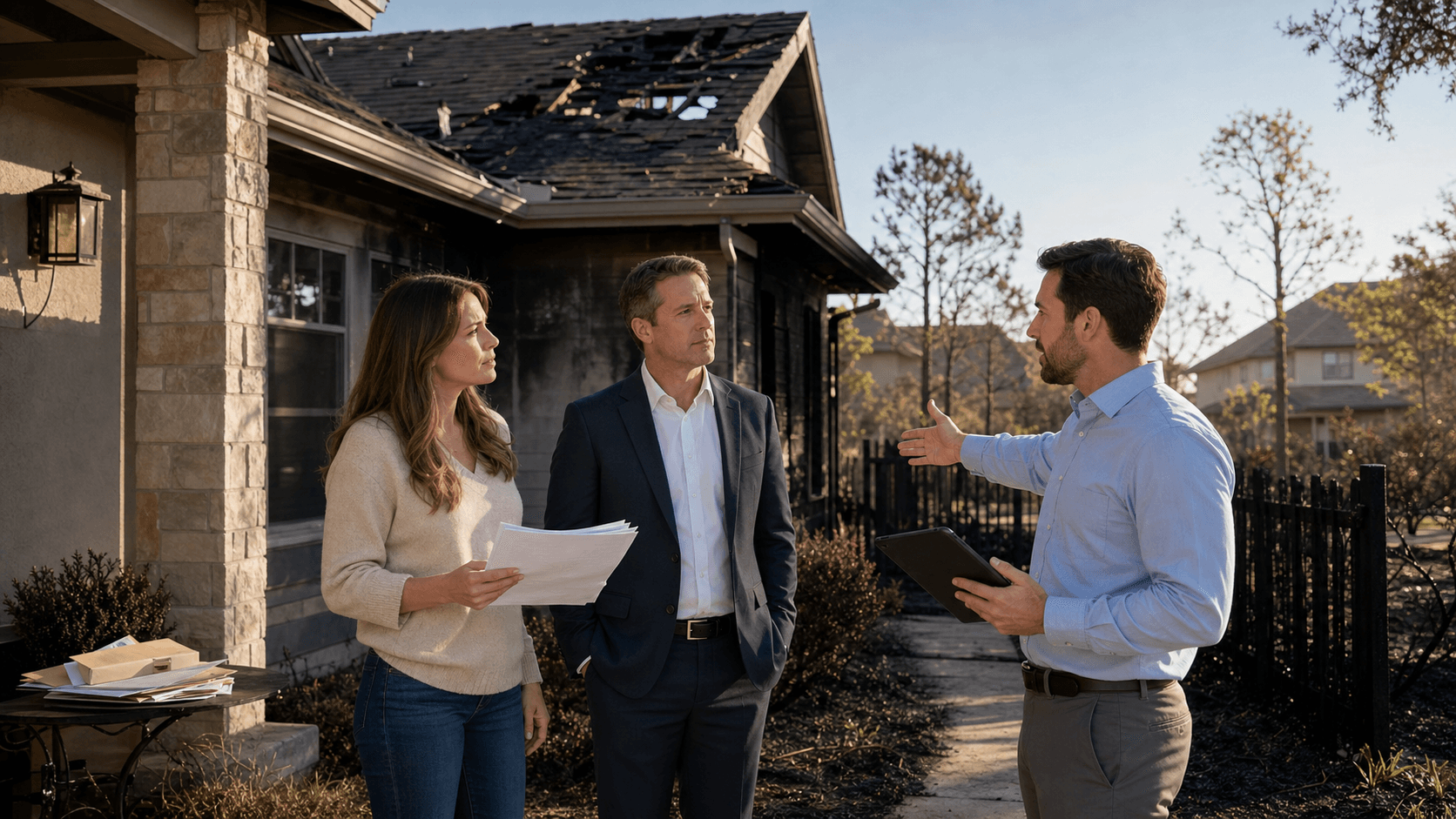
Building a Portfolio-Grade Hail Claim System for Texas Properties
Texas hail does not respect property lines or loan documents. When a major cell rolls through, it hits entire trade areas, not just a single roof. For commercial owners, REITs, and managers, that usually means you are not dealing with one commercial hail damage insurance claim; you are confronting a portfolio event across dozens or even hundreds of buildings.
If each claim is run as a one-off emergency response, you lose time, facts, and leverage. Adjusters change, carriers delay, and you are left chasing photos, estimates, and emails. A disciplined, repeatable intake and tracking system should be part of your permanent operations, just like accounting or leases.
This article outlines how sophisticated Texas policyholders can build that system: the key data fields, photo and video standards, how to think about unit-level versus building-level scoping, and what an audit-ready timeline looks like when a carrier denies, delays, or underpays a first-party property claim.
Designing a Portfolio-Grade Intake Framework
A strong intake system should do three things for every commercial property after a hail event:
- Allow fast triage across the portfolio
- Keep documentation consistent from site to site
- Create clean data that supports coverage, causation, and damages
Begin with property-level data that should exist before the storm ever hits. The goal is to have a ready baseline for each location, so you are not rebuilding the file under pressure while the carrier is already forming opinions about the loss. For each location, maintain a standard set of fields:
- Property name, address, GPS if available
- Occupancy type, single-tenant or multi-tenant, and basic construction type
- Roof age, roof type, and known prior repairs
- Prior hail or roof claims and how they were resolved
- Deductible structure, including per-building or per-occurrence details
- Policy form and key endorsements that affect hail or wind coverage
- General lease loss allocation for roof, structure, and interiors
After the event, layer in claim-specific fields that capture what happened, what you observed, and what you did in response. For a commercial hail damage insurance claim, capture at least:
- Date and general time of storm
- Weather verification sources you plan to rely on
- Observed damage categories: roof, rooftop equipment, facades, glazing, parking lots, signage, and site items
- Early mitigation steps, such as tarps, temporary repairs, and drying
- Any business interruption indicators, including tenant closures, unsafe areas, or access limits
When this information is standardized across the portfolio, you can quickly see which properties need immediate attention, which claims share the same storm, and where coverage or deductible issues are likely to drive disputes with the carrier.
Setting Photo and Video Standards That Withstand Scrutiny
Random phone pictures taken in poor conditions rarely support a high-value first-party property claim. Insurers often lean on gaps, inconsistent angles, and missing elevations to argue that damage is minor, old, or unrelated.
Set a clear photo and video protocol before the next storm so every site is documented the same way and nothing important is missed. For exteriors, require at least:
- All elevations, including wide shots and closer details
- All roof slopes and sections, documented in a logical pattern
- Rooftop units, curbs, lines, and related equipment
- Penetrations, flashings, parapets, metal edges, and gutters
- Skylights, vents, hatches, and other roof features
Where there are leaks or interior signs of damage, establish a corresponding interior shot list:
- Ceiling damage in each affected room or tenant space
- Walls, flooring, and contents where staining or wet areas appear
- Above-ceiling conditions if accessible
- Any temporary repairs, such as buckets, tarps, or patchwork
Use reference markers so photos have scale and context. Simple tools work well: a tape measure, a coin, or a clearly labeled marker board with the property ID, building ID, and location code. Video walkthroughs that match the photo sequence can also be helpful.
Storage and labeling discipline is as important as the images themselves, because a great photo set becomes far less persuasive if you cannot tie it to a location, date, and building area. At a minimum:
- Turn on date and time stamping and GPS when available
- Create a file naming system that always includes property ID, building ID, and location code
- Use folder structures that match how you will scope the claim, by building, roof section, and tenant space
If the claim later moves into litigation, a disciplined photo set makes it far easier for consulting experts and your Texas policyholder counsel to analyze what happened and explain it to a jury.
Unit-Level Versus Building-Level Scoping Strategy
How you scope the loss often matters as much as the numbers on the estimate. A single building-level scope, one loss sheet for the entire structure, might seem simple, and for a small, single-tenant building it may even be adequate.
For high-value commercial hail losses in Texas, that approach can be risky because it can blur where damage exists, how it ties to specific building systems, and how the policy applies. A more effective strategy is unit-level or system-level scoping, where you break out:
- Roof sections by type, age, or slope
- Tenant spaces and common areas
- Mechanical systems and rooftop equipment by unit
This level of detail helps in several ways. It clarifies deductible application when some policies apply deductibles per building or per location and others have special wind or hail terms. It also supports co-insurance analysis because granular data shows the real values and damage distribution, and it aligns with lease provisions because many leases split roof, structure, and interior obligations between landlord and tenant.
In multi-tenant retail, office, or industrial properties, unit-level scoping is often the only way to tie interior damage to the correct tenant and to link it back to a specific portion of the roof or exterior. Insurers often rely on vague building-level scopes to:
- Push for limited repairs instead of appropriate roof replacement
- Ignore rooftop equipment that is dented, impaired, or otherwise damaged
- Skip interior issues by claiming they are unrelated or pre-existing
On simpler, single-tenant buildings with one roofing system, building-level scoping might work. Even then, be explicit about roof sections, equipment, and interiors so the carrier cannot selectively accept or deny parts of the loss without a clear explanation.
Building Audit-Ready Timelines and Communications Logs
An audit-ready timeline turns a messy claim file into a coherent narrative. For a commercial hail damage insurance claim, your timeline should show what occurred from the storm date through resolution, with no gaps that allow an insurer to recast the history of the claim.
At a basic level, track:
- Storm date and time, with weather data sources noted
- Date of notice of loss and how notice was given
- All inspections, carrier, engineer, consultant, contractor, and your own
- Temporary repairs and mitigation efforts, with who performed them and when
- Payments, coverage letters, partial denials, and reservation of rights letters
For each touchpoint, capture enough detail that a third party could reconstruct what happened and when, and could see how the carrier's position evolved. For each touchpoint, log:
- Date and time
- Participants and their roles
- Type of communication: email, phone, onsite, letter
- Carrier requests, including documents or information they asked for
- Documents you provided and on what date
- Any change in the carrier's position on coverage, causation, or scope
When carriers delay, send multiple inspectors, or bring in new engineers who reach more favorable conclusions for the insurer, a detailed timeline often shows the pattern. That record can support bad-faith and unfair claim handling arguments under Texas law when claim handling drags out or shifts without a sound basis.
Using Claim Data to Strengthen Complex First-Party Property Disputes
All of this structure, data, and discipline is aimed at strengthening your position in complex first-party property insurance disputes. When you can show precise damage counts, well-organized photos, clear causation links, and documented delay or underpayment, you shift pressure back onto the insurer.
Across a portfolio, consistent data also helps you identify patterns that might not be obvious in a single file, such as:
- Systemic underpayment on certain roof types across multiple locations
- Repeated use of the same preferred engineers or vendors who consistently find only minimal damage
- Claim handling practices that slow down, under-scope, or carve out rooftop equipment and interior damage
When you see those patterns in high-value commercial losses, it is often time to involve experienced Texas property insurance counsel who represent policyholders only, not insurance companies. For hail, windstorm, tornado, hurricane, fire and smoke, or internal non-flood water loss claims (such as pipe bursts, plumbing leaks, or sprinkler failures), a disciplined intake and tracking system allows your legal team to move quickly, challenge weak carrier positions, and, when necessary, prepare a case grounded in organized, credible evidence that aligns with Texas first-party property insurance law.
Protect Your Commercial Property Claim With Experienced Legal Help
If your business is struggling with delays, denials, or lowball offers on a commercial hail damage insurance claim, we are ready to step in and advocate for you. At Lundquist Law Firm, we carefully review your policy, document your losses, and negotiate directly with the insurer so you can stay focused on running your business. Reach out today to discuss your situation, and we will outline clear next steps for your claim. If you are ready to move forward, you can contact us to schedule a consultation.