Should Texas Businesses Challenge Pipe Burst Denials Blaming Maintenance
A pipe burst can disrupt nearly every part of a business. Internal water may damage finishes, inventory, equipment, tenant spaces, electrical systems, and building components. The interruption can be just as serious, especially when repairs limit access, halt production, or force a business to operate at reduced capacity.
When an insurer blames maintenance, many policyholders assume the claim is over. We do not view a maintenance-based denial as the final word. At Lundquist Law Firm, we represent Texas policyholders only in first-party property insurance disputes, and we often see coverage questions turn on the actual policy language, the true cause of the failure, and the full extent of resulting damage.
A Maintenance Denial May Not Resolve the Coverage Question
Insurers frequently point to corrosion, wear, deterioration, deferred repairs, or poor upkeep after a pipe fails. Those observations may be relevant, but they do not automatically eliminate coverage for the entire loss. An older pipe is not the same thing as an excluded claim.
The real issue is usually narrower: Does the policy exclusion apply to what caused this particular break, and does the policy still cover the water damage that followed? A carrier should identify the exact exclusion it relies on and explain how that wording applies to the facts.
We recommend reviewing the insurer's position alongside the available evidence, including:
- The full commercial property policy and endorsements
- The insurer's engineering or plumbing conclusions
- Photographs of the failed component and affected areas
- Repair, inspection, and property-management records
- Estimates addressing both the pipe and resulting interior damage
A Texas attorney for pipe burst water damage insurance claims can assess whether the insurer has tied its denial to the actual cause of loss or has relied on a broad maintenance label to avoid a larger internal water damage claim.
Exclusions Must Be Connected to the Actual Cause of Loss
Commercial policies may include exclusions or limitations for corrosion, deterioration, repeated leakage, faulty maintenance, defective construction, or wear and tear. Still, the existence of such language does not permit an insurer to deny every category of damage after a pipe burst.
For example, a carrier may argue that corrosion caused a pipe to fail. The policyholder's evidence may point to a sudden pressure event, a concealed condition, a prior installation problem, or another cause that requires closer evaluation. Causation disputes are often central, particularly where the insurer's conclusion rests on a short inspection or a report prepared after emergency repairs have already changed the scene.
The failed plumbing component and the property damaged by escaping water may also present separate questions. Even if a policy does not pay to replace the part that failed, that does not necessarily answer whether it covers the drywall, flooring, inventory, equipment, or tenant improvements damaged after the failure.
For a substantial commercial loss, the insurer should not treat a prior repair or an aged component as a shortcut to deny the whole claim. We look closely at whether the carrier has interpreted the policy fairly and whether its investigation supports the coverage decision it made.
Resulting Interior Damage Requires Its Own Review
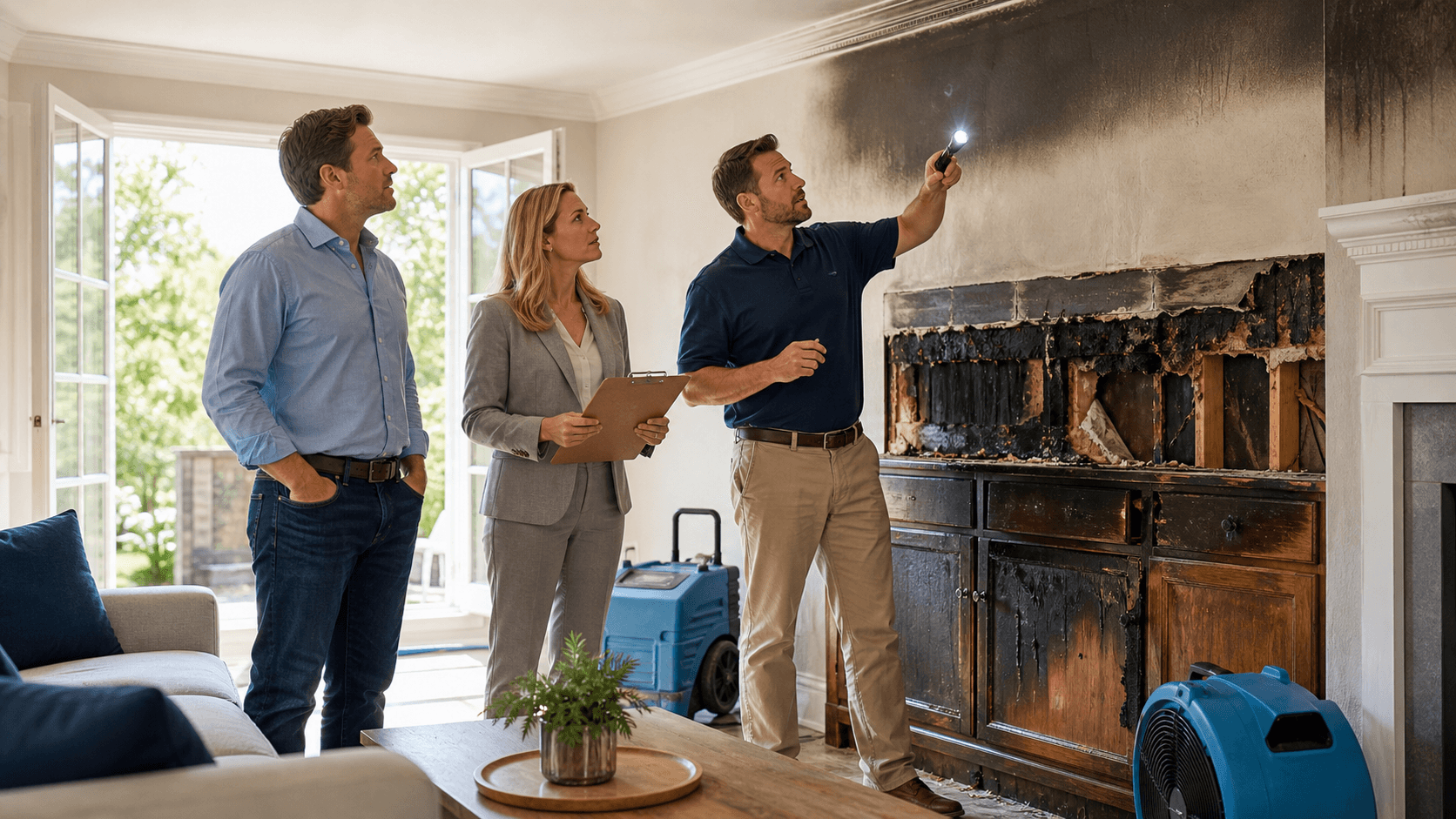
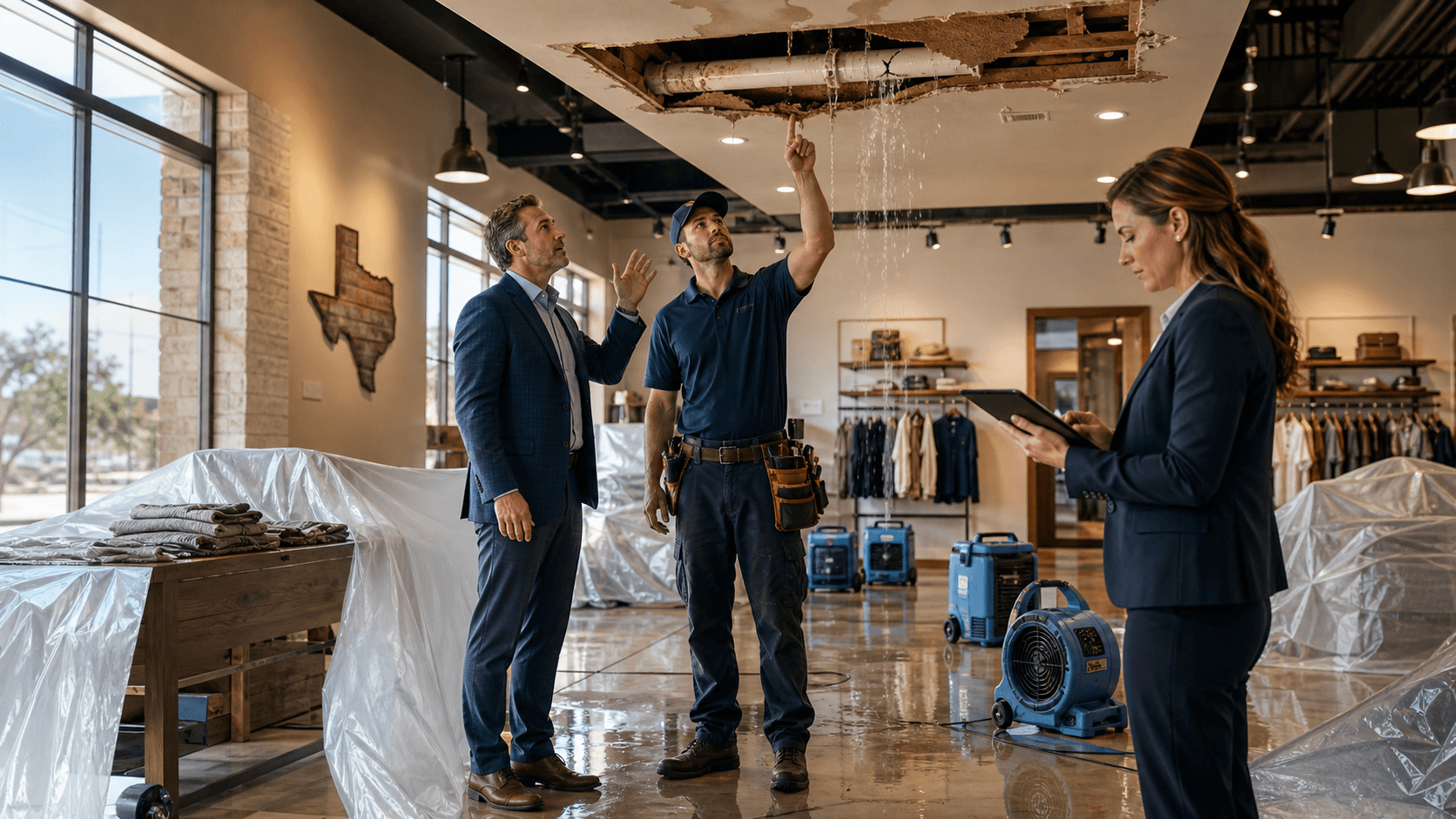
A burst pipe can release water far beyond the visible point of failure. Moisture may move behind walls, beneath flooring, through ceilings, and into adjoining suites. A limited estimate written shortly after the loss may miss concealed damage, necessary demolition, drying work, reconstruction, or repairs required to restore affected systems.
The scope should account for the practical reality of returning the property to its pre-loss condition. A superficial cleanup may not be enough for a business to reopen safely and operate normally. Depending on the property and the damage path, restoration may involve testing building systems, replacing damaged equipment, coordinating work in occupied areas, and addressing tenant improvements.
Common resulting damage may include:
- Drywall, insulation, ceilings, and flooring
- Cabinetry, furniture, fixtures, and interior finishes
- Electrical components and building systems
- Inventory, machinery, and business equipment
- Damage extending into tenant or adjacent commercial spaces
We encourage policyholders to separate the discussion of the pipe itself from the discussion of everything the water damaged. An insurer's dispute over one repair item should not automatically become a denial of all resulting loss.
Records Can Test a Neglected-Maintenance Narrative
Maintenance records matter, but a business does not need perfect paperwork to challenge an insurer's conclusion. The key question is whether the evidence actually supports the claim that a maintenance condition caused the specific pipe failure.
Property-management files, plumbing invoices, inspection reports, renovation records, prior leak reports, tenant communications, surveillance footage, and post-loss repair estimates can all help clarify what happened. These materials may show that known issues were addressed, that no warning signs existed, or that the insurer's stated cause does not match the property's history.
Physical evidence can be equally important. When feasible, the failed pipe or plumbing component should be preserved before it is discarded. If the insurer claims corrosion, deterioration, poor installation, or lack of maintenance caused the break, the component itself may be needed to examine competing conclusions.
By the time a coverage dispute develops, emergency mitigation and repairs may have altered the conditions that existed immediately after the loss. Prompt documentation helps preserve a clearer record of the damage path, the failed component, and the steps taken to protect the property.
Business Income and Extra Expense Should Not Be Overlooked
The physical repair estimate is only part of a commercial pipe burst claim. If water damage closes part of a building, limits tenant access, interrupts operations, delays production, or requires temporary relocation, business income and extra expense coverage may need separate analysis.
The period of restoration, the business's expected income, seasonal operations, occupancy, contracts, and production schedules may all affect the claim. Insurers sometimes focus narrowly on building repairs while giving too little attention to the operational harm caused by an internal water loss.
Extra expenses may include reasonable costs connected to reducing the interruption, such as:
- Emergency mitigation and cleanup
- Temporary space or temporary utilities
- Equipment rentals and replacement needs
- Security measures and expedited work
- Expenses required to keep operations functioning during repairs
When the insurer denies the property damage claim based on maintenance, it may also deny business income coverage on the same basis. If the underlying coverage analysis is flawed, the business-income decision may require review as well.
Preserve the Claim Before the Evidence Changes
A serious pipe burst claim should be treated as a property insurance dispute, not merely as a maintenance issue. We advise Texas businesses to preserve damaged materials when possible, document conditions before repairs change the evidence, keep mitigation and repair records, and request a clear written explanation of the insurer's coverage position.
Early records can make a meaningful difference. Preserve the policy, the insurer's reports, photographs, invoices, communications, and evidence of operational disruption so the claim can be evaluated based on what actually happened, not on a broad assumption that maintenance alone explains the loss.
Protect the Full Value of Your Property Claim
Lundquist Law Firm represents policyholders facing disputed pipe burst and internal water damage losses throughout Texas. If your insurer has denied or limited coverage based on alleged maintenance issues, speak with a Texas attorney for pipe burst water damage insurance claims about the policy language, causation evidence, and available next steps. Contact us to discuss a serious commercial or residential property claim with our team.