Fire Findings Can Shape the Entire Insurance Claim
An origin-and-cause investigation is not a routine formality after a Texas fire loss. The investigator's conclusions may influence whether the insurer accepts coverage, limits payment, expands its investigation, or asserts that an exclusion applies. For a commercial loss, those findings can affect far more than building repairs. They can also shape the insurer's position on inventory, equipment, tenant-related losses, and business interruption.
At Lundquist Law Firm, we represent Texas policyholders facing complex first-party property insurance disputes. We often see how quickly an insurer's early narrative can harden into a coverage position. An origin-and-cause investigation generally seeks to determine where a fire began, how it started, and whether the available evidence supports an accidental, electrical, mechanical, intentional, or undetermined cause.
Fire Prevention Week begins in early October, a useful reminder for Texas businesses entering the busy holiday season. Increased cooking activity, seasonal inventory, changing occupancy demands, and heavier use of equipment can all create added operational pressure. If a serious fire occurs, disciplined claim handling from the beginning can help prevent incomplete information from controlling the outcome.
How Origin and Cause Investigations Actually Work
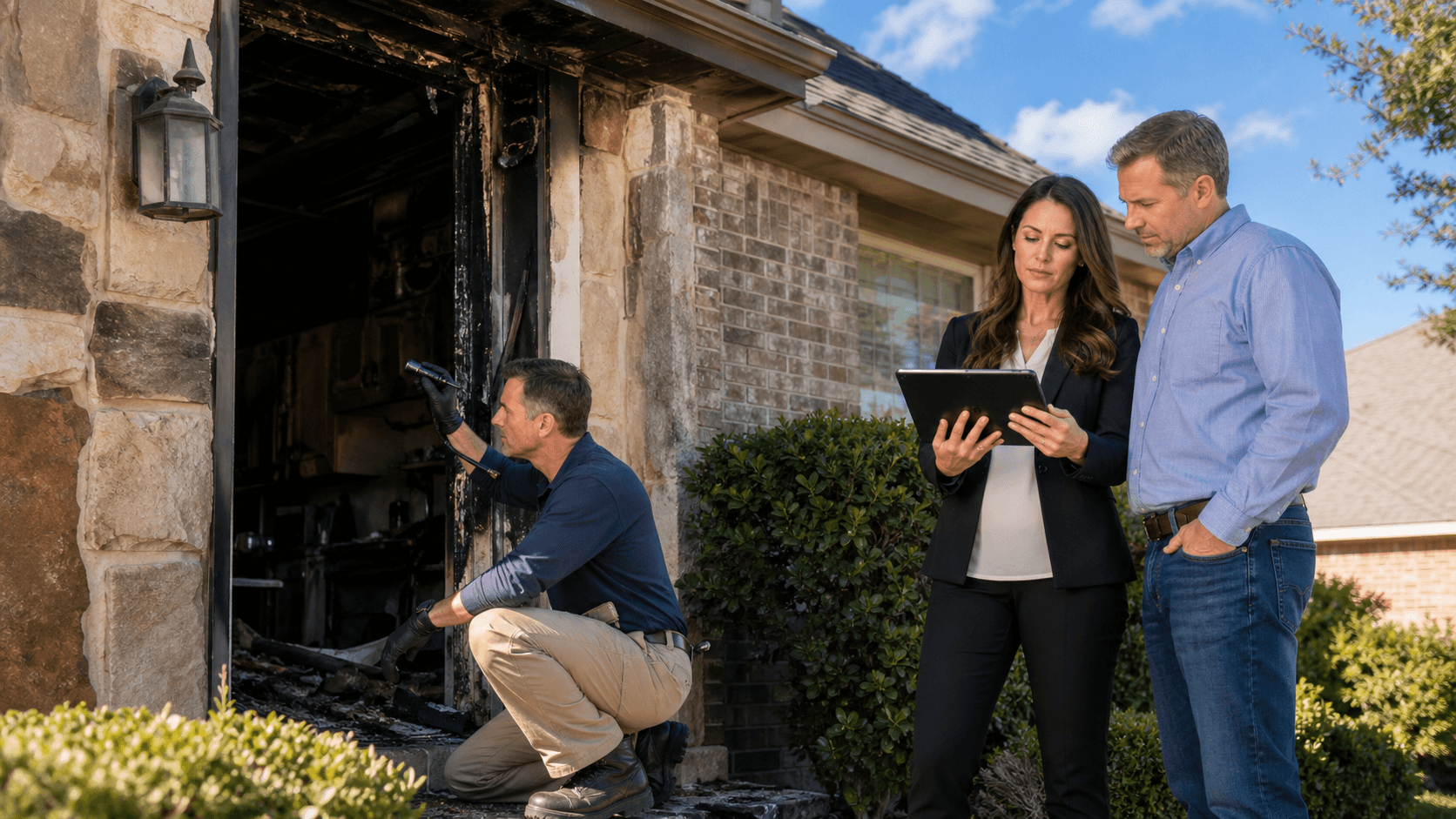
A fire investigator may examine the scene, take photographs, study burn patterns, inspect electrical systems or appliances, collect physical evidence, interview witnesses, and review fire-department records. Maintenance logs, repair invoices, construction records, security footage, and equipment history may also matter. Investigators often rely on established methods, but their opinions remain dependent on the evidence they reviewed and the condition of the scene when they inspected it.
Fire scenes do not stay intact for long. Emergency mitigation, debris removal, demolition, weather exposure, and efforts to resume business can all change or eliminate evidence. That creates a difficult balance for commercial policyholders: the property may need immediate work for safety and restoration, while the fire scene may also contain evidence relevant to coverage.
We generally recommend that policyholders document conditions and preserve information before materials are discarded or destructive testing occurs. The insurer should receive appropriate notice when evidence may be affected. Useful records can include:
- Photos and video of the structure, contents, and damaged equipment
- Fire-department reports and names of responding personnel
- Maintenance, repair, and inspection records
- Security footage, access logs, and relevant communications
- Details about emergency mitigation and debris handling
The insurer's investigator is retained in connection with the insurer's claim evaluation. That fact does not automatically make the report wrong. Still, an insurer-selected investigation is not necessarily the final word on causation, damage scope, or coverage.
Why Insurer Fire Findings Deserve Independent Scrutiny
A causation opinion can be disputed for many reasons. We see disagreements involving an incorrect point of origin, unsupported electrical-failure theories, limited access to the scene, missed witness information, and incomplete consideration of prior repairs or construction activity. Equipment operation, tenant activity, and observations made by fire personnel may also deserve closer review.
The investigator's conclusion and the insurer's coverage decision are related, but they are not the same thing. A fire investigator offers an opinion about how a fire may have started. The insurance policy and applicable law govern the insurer's coverage obligations, the exclusions it may rely upon, and whether it has a reasonable basis to delay, reduce, or deny payment.
For a commercial property owner or operating business, an adverse finding can create wide-ranging consequences. It may affect rebuilding costs, code-upgrade questions, damaged inventory, equipment replacement, lease obligations, and lost-income claims. When the loss is substantial, an independent technical review may be appropriate before a policyholder accepts the carrier's findings or responds to a denial. Our role is to assess the claim from the policyholder's side, including the technical record, policy language, and the insurer's handling of the loss.
When an Insurer Alleges Arson or an Excluded Cause
An allegation of arson, intentional loss, concealment, fraud, vacancy, faulty workmanship, wear and tear, or another exclusion is a serious development. These positions can lead to extended investigations, examinations under oath, broad document demands, and requests for financial or operational records. A carrier may seek information that it believes bears on motive, opportunity, maintenance, occupancy, or the condition of the property before the fire.
Policyholders should take their cooperation duties seriously, but careful and accurate responses matter. You should not speculate about the cause of the fire, guess about facts you do not know, or provide incomplete records without context. A broad insurer request is not automatically improper, but it is also not automatically unlimited. The policy terms, the stated purpose of the request, and the facts of the loss should guide the response.
This is often where a denied fire insurance claim attorney can provide meaningful assistance. We can help coordinate the technical record, evaluate insurer requests, identify missing context, and assess whether the insurer's investigation supports its coverage position under Texas law. Early involvement can be particularly important when the insurer's questions signal that it is building an exclusion-based defense.
Protecting a Commercial Claim While Evidence Is Fresh
The physical loss and the business-income claim should be treated as related but separate parts of the file. An origin-and-cause investigator may focus on where the fire began and how it spread. Meanwhile, the business must document how the fire affected revenue, continuing expenses, payroll decisions, inventory flow, tenant obligations, and the time required to restore operations.
A clear record can help show both the fire's impact and the reasonableness of the policyholder's response. We encourage businesses to preserve and organize materials such as:
- Invoices for mitigation, cleanup, and temporary protective measures
- Inventory records, purchase orders, and records of damaged contents
- Financial statements and sales records showing interrupted operations
- Lease documents, tenant communications, and continuing obligations
- Records of extra expenses incurred to continue or relocate operations
Early legal and technical coordination can be especially important if the carrier delays payment, disputes the restoration scope, issues a reservation of rights, or characterizes the loss as excluded or only partly covered. The goal is not to turn every claim into a dispute. It is to avoid allowing an incomplete investigation or unsupported causation theory to dictate the claim result.
Get Legal Guidance Before the Fire Record Hardens
Origin-and-cause findings can become the foundation of a Texas fire insurance coverage dispute, particularly when the loss involves a commercial building, multifamily property, equipment, inventory, or business interruption. Lundquist Law Firm represents policyholders only, not insurance companies, in serious property insurance disputes involving denied, delayed, and underpaid claims.
Before responding to consequential insurer allegations, agreeing to unsupported coverage limitations, or allowing important evidence to disappear, policyholders should understand the factual record and the policy issues at stake. Prompt documentation, careful communications, and informed review can preserve options while the evidence is still available.
Protect The Value Of Your Fire Claim
Lundquist Law Firm represents Texas policyholders facing complex fire-loss disputes, including claims involving disputed origin-and-cause findings, coverage defenses, and inadequate valuations. If you need a denied fire insurance claim attorney, our team can assess the insurer's position and the available evidence. Contact us to discuss your commercial or residential fire insurance claim.