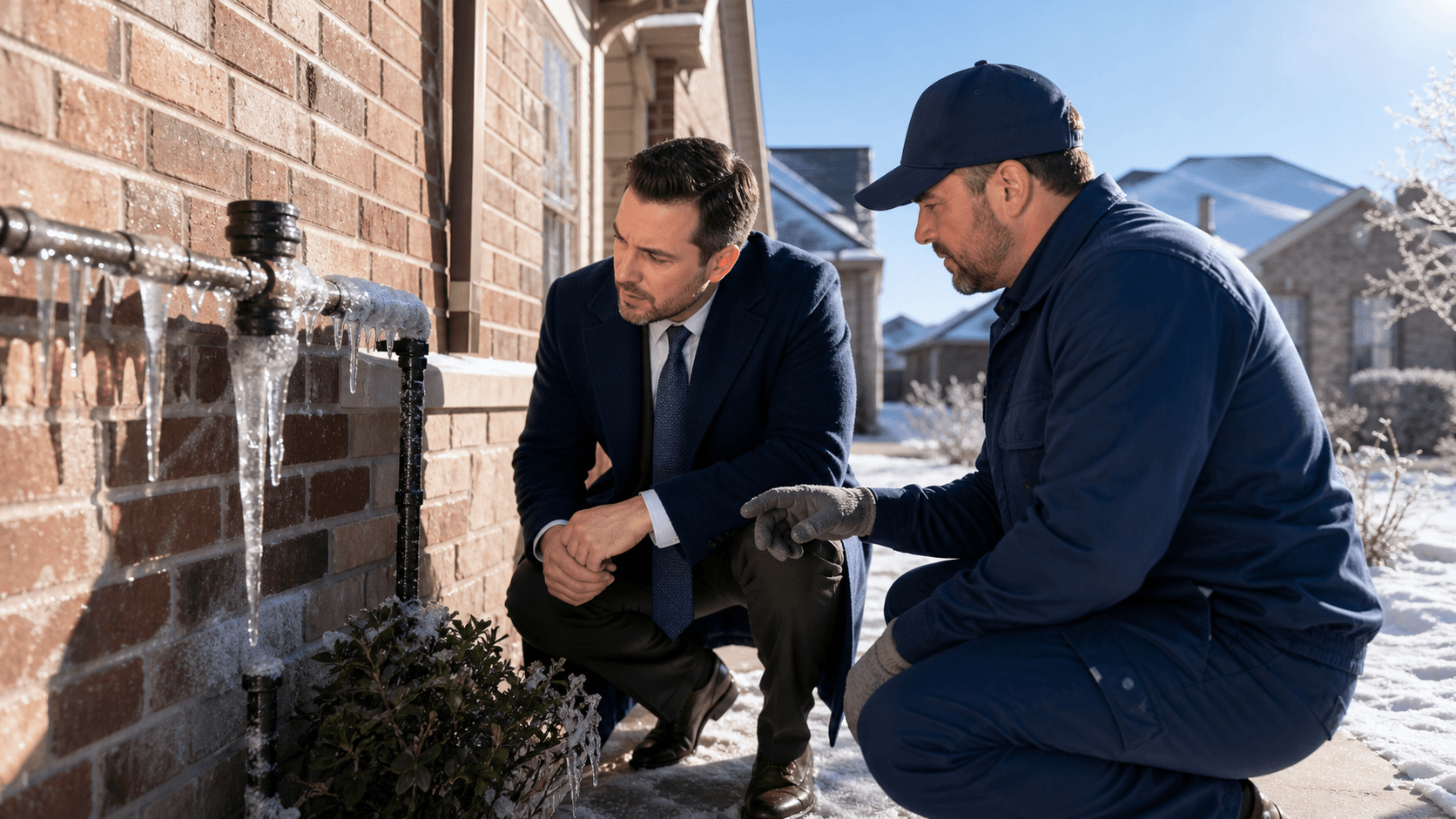
A frozen pipe can cause major property damage in a matter of hours, but the coverage dispute may turn on what happened long before the freeze. For Texas commercial property owners, landlords, developers, and homeowners, an insurer may focus on whether the building was "vacant," whether heat was maintained, or whether the property was properly monitored.
At Lundquist Law Firm, we represent policyholders facing denied, delayed, and underpaid first-party property claims. In a burst-pipe loss, vacancy is not an automatic reason to deny coverage. The policy language, the building's actual use, the alleged vacancy period, and the cause of the damage all matter.
Vacancy Clauses Can Reshape Frozen Pipe Coverage
A burst plumbing line, sprinkler failure, or freeze-related pipe rupture may be undisputed, yet the insurer may still contest the resulting claim. Vacancy provisions can give carriers a basis to limit certain losses after a building has been vacant for a stated time. That does not mean every lightly used property is vacant under the policy.
The stakes can be significant. Internal water may move through ceilings, walls, insulation, electrical systems, flooring, cabinetry, inventory, tenant improvements, equipment, and building finishes. By the time the leak is found, the damage may extend well beyond the pipe itself and may disrupt ongoing operations or tenant occupancy.
We often see insurers present vacancy as a broad answer to a difficult claim. The real question is narrower: does the policy's vacancy clause apply to this property, during this period, and to this particular cause of loss? A Texas frozen pipe insurance claim lawyer should assess those questions against the complete policy and the actual record, not an insurer's assumptions.
What "Vacant" Means Under the Policy
"Vacant" is usually a defined insurance term. It does not automatically mean that a building had no active tenant, limited foot traffic, reduced utility use, or a temporary pause in business operations. A property can be between tenants, under renovation, partially leased, used for storage, or visited regularly for management and maintenance without fitting the policy definition of vacancy.
Commercial policies may treat owners and tenants differently. For a building owner, the policy may look at whether enough of the property is being used for customary operations or tenant activity. For a tenant, the policy may focus on whether the insured removed business property or stopped normal operations at the premises.
Policy wording varies, but vacancy provisions often require a consecutive period before they apply. Before accepting a carrier's conclusion, we recommend reviewing:
- The declarations page, endorsements, and complete vacancy language
- The dates the insurer claims the property became vacant
- Lease records, property-management files, and renovation documents
- Evidence of storage, maintenance, security, or other ongoing activity
A carrier cannot replace the policy's actual definition with a general statement that the building "looked empty."
How Insurers Use Vacancy and Freeze-Protective Duties
Some property policies restrict specified causes of loss after a stated vacancy period. In a frozen pipe claim, an insurer may contend that water damage from frozen plumbing is excluded, limited, or subject to reduced payment because the building was allegedly vacant.
That issue is separate from freeze-protection duties. Many policies also impose requirements concerning heat, water shutoff, drainage, monitoring, or reasonable steps to protect plumbing during cold weather. Insurers sometimes blend vacancy and freeze-protection provisions together, even though they create different questions under different policy language.
For example, a carrier may point to low utility bills as supposed proof that heat was not maintained. It may rely on a lack of an active tenant to claim the property was abandoned. It may also treat incomplete repairs, tenant turnover, or a construction pause as if they prove vacancy. Those facts may be relevant, but they are not the end of the analysis.
A sound investigation should examine the actual building conditions, the timing of the cold event, the condition of the plumbing system, and the property's use throughout the period in question. Assertions about occupancy or heating must be supported by evidence, not generalizations.
Evidence That Can Challenge a Vacancy-Based Denial
The best time to preserve evidence is early, before the insurer's coverage position becomes fixed. A detailed record can show that the building remained in use, that protective measures were in place, or that the carrier's investigation overlooked important facts.
Useful occupancy and property-use evidence may include:
- Leases, tenant communications, rent records, and move-in or move-out documents
- Property-management logs, access records, security footage, and alarm reports
- Maintenance invoices, vendor visits, cleaning contracts, and inspection records
- Photographs showing stored property, active work, renovations, or occupied areas
- Utility information, HVAC records, thermostat data, and temperature-monitoring reports
Records related to the pipe failure also matter. Preserve plumbing reports, emergency mitigation records, repair estimates, photographs and video, alarm notifications, boiler or HVAC service records, and documents showing when the damage was discovered. If the system failed despite reasonable protection, that fact may be important to the coverage analysis.
We also examine the insurer's investigation. Did the carrier inspect promptly? Did it speak with the property manager, tenants, maintenance personnel, or contractors? Did it consider records that support continued use of the building? Did it retain qualified experts and apply the correct policy terms? A denial based on selective evidence or a strained reading of the policy deserves close scrutiny.
Protecting the Full Scope of the Loss
Insurers may focus on the broken pipe and emergency extraction work while undervaluing the full scope of resulting damage. Yet a serious internal water loss can involve concealed moisture, damaged insulation, electrical components, flooring, drywall, cabinetry, inventory, specialized equipment, and code-required repair work. Where covered, remediation issues may also require careful evaluation.
For operating businesses, the physical repair claim may be only part of the loss. A burst pipe can interrupt retail activity, office use, manufacturing, hospitality operations, tenant occupancy, and other revenue-producing functions. Business income and extra expense coverage may require a separate review of lost income, continuing expenses, reasonable mitigation costs, and the period reasonably required to restore operations.
A vacancy allegation should not become a shortcut for withholding payment on damage the insurer does not genuinely dispute. Even when a legitimate coverage question exists, the carrier should explain its position, evaluate the claimed damage fairly, and avoid using an unresolved issue to underpay the rest of the claim.
Address Vacancy Issues Before the Claim Hardens
Vacancy disputes are fact-intensive. The outcome may depend on a single endorsement, the calculation of consecutive days, evidence of ongoing property activity, heating records, or the true cause of the pipe failure. Broad statements about a building being "empty" can create problems when they are not matched to the policy definition.
Lundquist Law Firm represents Texas policyholders only in complex first-party property insurance disputes involving commercial property losses, business interruption, burst pipes, plumbing leaks, sprinkler failures, fire, hail, windstorm, and other significant property damage. For a substantial loss, a policy and claim-file review by a Texas frozen pipe insurance claim lawyer can clarify whether the insurer's vacancy position is supported by the contract and the evidence.
Preserve documents, protect the damaged property from further loss, and request the insurer's coverage rationale in writing. Careful attention to the policy language and the property's real operating history can make a meaningful difference when vacancy becomes the insurer's reason for denying or limiting a frozen pipe claim.
Experienced Counsel for Complex Frozen Pipe Claim Disputes
Lundquist Law Firm represents policyholders facing coverage disputes involving vacant or partially occupied properties, damaged plumbing systems, and significant business losses. If you need a Texas frozen pipe insurance claim lawyer, our team can assess the insurer's position, the policy terms, and the evidence supporting your claim. Contact us to discuss a denied, delayed, or underpaid frozen pipe insurance claim.