When a Texas Commercial Fire Claim Becomes a Code-Upgrade Dispute
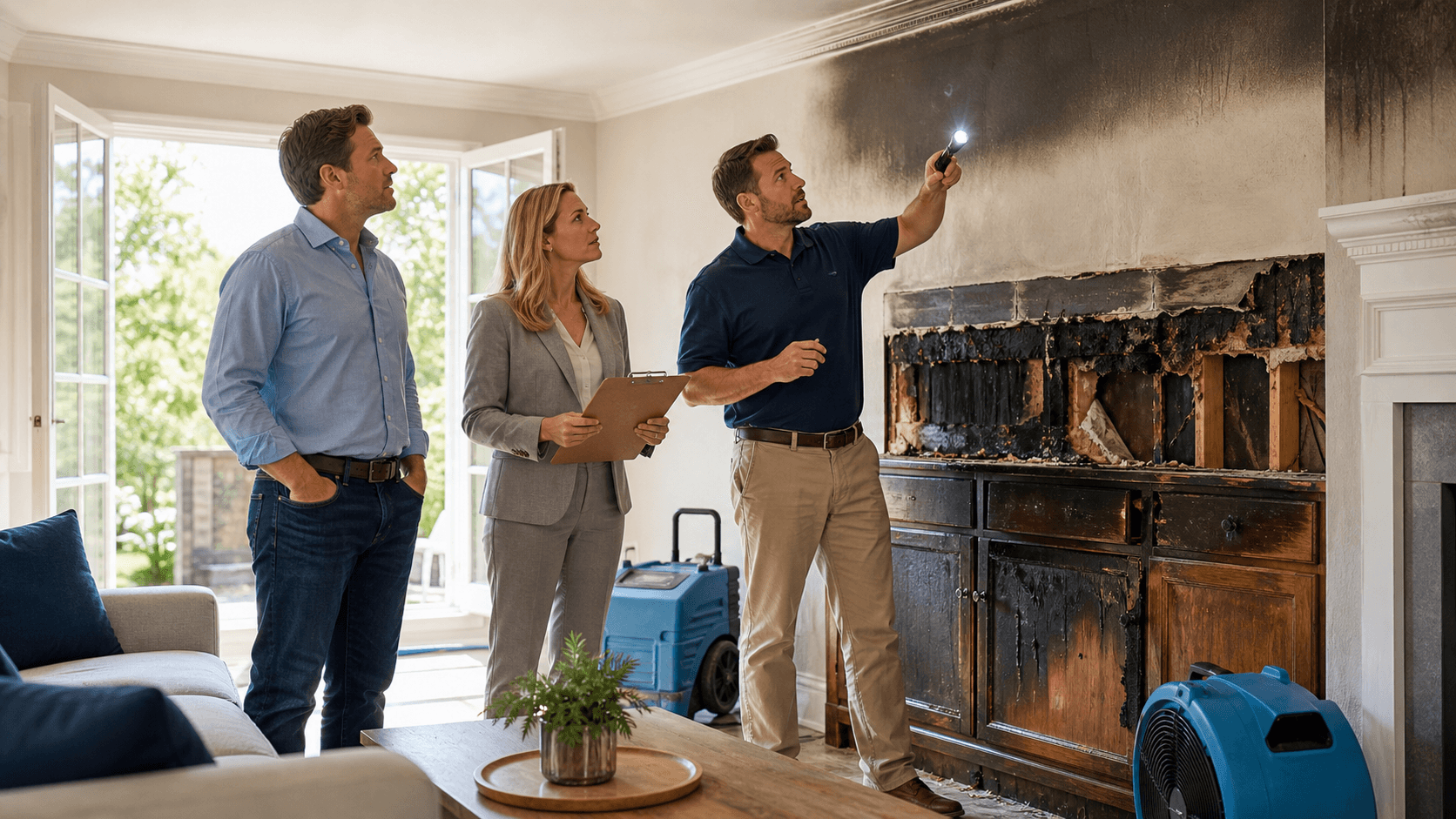
A major fire loss can create costs that go far beyond replacing burned walls, damaged inventory, or smoke-affected equipment. Once demolition and reconstruction begin, your building may be required to meet current building, electrical, plumbing, accessibility, energy, or fire-suppression rules that did not apply when it was built.
Those added expenses are often called code-upgrade costs, ordinance-or-law costs, or increased costs of construction. Although an insurer may agree that the fire itself is covered, it may still dispute whether it must pay for the work required to bring the property into compliance. That disagreement can leave a commercial owner with a large gap in the reconstruction budget at the worst possible time.
Fire Damage and Code Compliance Are Different Coverage Questions
Direct fire damage coverage generally addresses property physically damaged by the fire, subject to the policy's exclusions, deductibles, limits, valuation terms, and conditions. Code compliance addresses a separate question: what must be done because local law now requires more than restoring the building exactly as it stood before the loss.
A damaged commercial structure may trigger requirements involving:
- Electrical service, wiring, panels, or emergency power
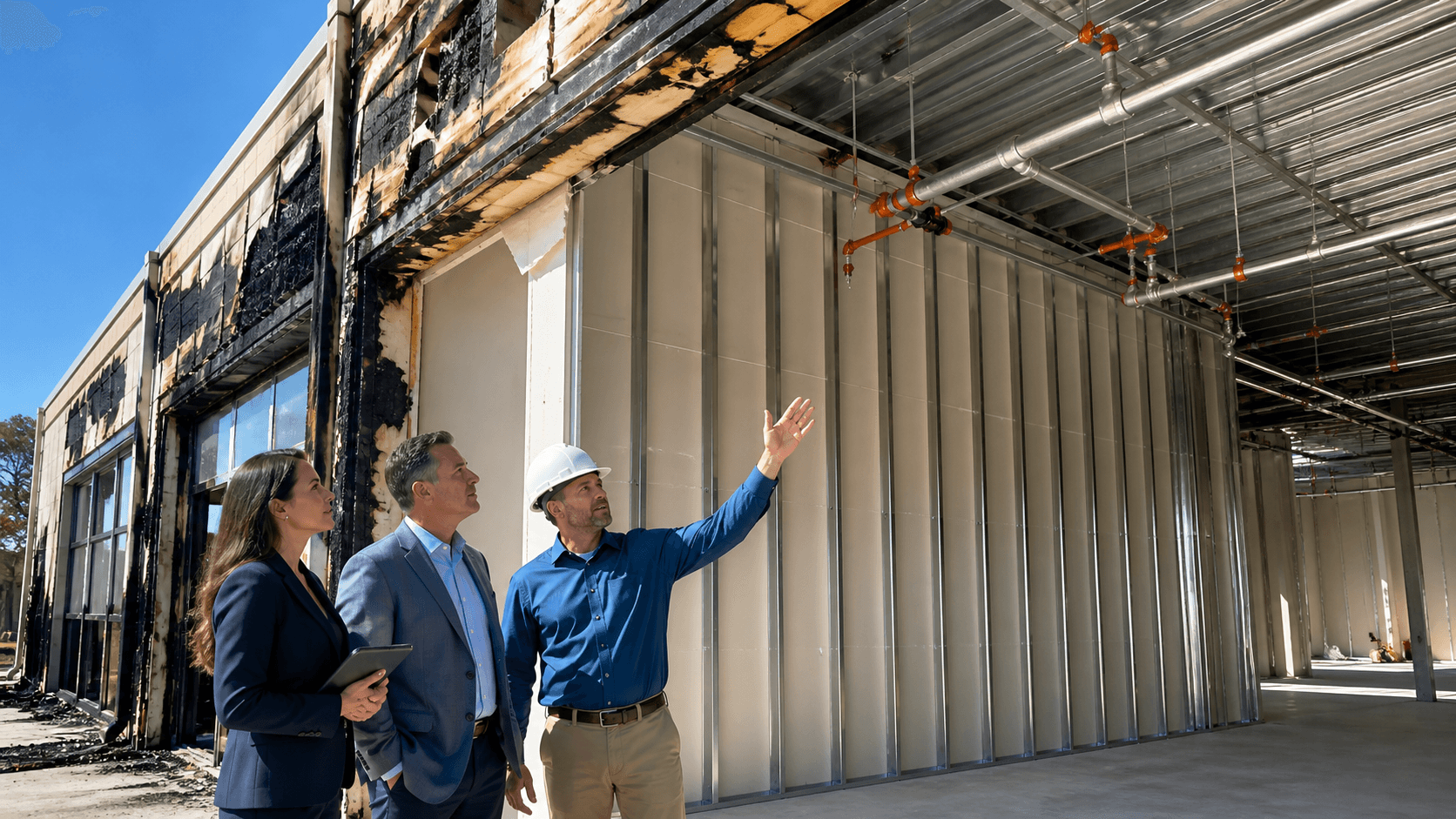
- Fire alarms, sprinkler systems, and fire-rated assemblies
- Emergency exits, exit lighting, and occupancy-related changes
- Accessibility features, including entrances, restrooms, or parking areas
- Energy-code and structural requirements tied to the reconstruction work
The governing requirements depend on the building, the extent of the fire damage, the planned repairs, and the local authority having jurisdiction. Texas municipalities and counties can adopt and enforce building standards differently. A requirement imposed during one commercial rebuild may not arise in another, even where both properties suffered fire damage.
For that reason, we recommend separating the question of what the fire damaged from the question of what reconstruction legally requires. Both may be connected to the same loss, but they are not automatically treated the same way under the policy.
Policy Language Determines Whether Upgrade Costs Are Paid
Many commercial property policies contain an ordinance-or-law exclusion or limitation. In broad terms, that language may restrict coverage for losses caused by the enforcement of building laws unless the insured purchased an endorsement that adds coverage for those costs.
Where ordinance-or-law coverage exists, it may address several different categories of loss:
- The value of an undamaged part of a structure that must be demolished
- Required demolition costs
- The increased cost of rebuilding in compliance with current codes
Each category may have its own sublimit, trigger, and timing condition. An endorsement may provide meaningful coverage for one category while limiting another. Some provisions may require actual repair or replacement before certain amounts become payable. Others may interact with replacement-cost terms or create issues about whether the damaged property must be rebuilt at the same location.
An adjuster's summary is not a substitute for a full policy review. As a commercial fire insurance claim lawyer in Texas, we examine the declarations, endorsements, exclusions, replacement-cost provisions, business-income terms, and claim conditions together. The insurer's first explanation of available coverage may not account for all policy language that applies to the loss.
Lundquist Law Firm represents Texas policyholders only, not insurance companies, in complex first-party property disputes. That policyholder-side focus matters when a carrier treats a major reconstruction issue as a minor estimate adjustment.
Scope Disputes Often Hide the Real Code-Upgrade Fight
Insurers do not always issue a direct denial of ordinance-or-law coverage. Instead, they may dispute whether the work is truly required, classify an item as an elective improvement, or argue that it is unrelated to the covered fire damage.
Causation is often central. A carrier may contend that a new sprinkler component, electrical upgrade, accessibility change, or structural modification stems from an old condition rather than the fire. Your position may depend on what the building official required as part of permitting the repairs and whether the proposed work is reasonably connected to restoring the fire-damaged structure.
The documents that tend to matter include written directions from building officials, permit applications, inspection records, engineering opinions, contractor proposals, and design plans. These records can help show whether an item was required by code and whether that requirement arose because of the fire reconstruction.
Low estimates can create the same problem in a different form. A carrier's scope may include basic cleaning and repair while omitting demolition, architectural or engineering work, permits, code-required systems, and the contractor labor needed to complete a lawful rebuild. Before treating a payment as sufficient, compare the insurer's estimate with the actual reconstruction plan.
Rebuilding Delays Can Expand Business Income Losses
Code disputes can extend a project long after visible fire damage has been addressed. Design revisions, permit review, inspections, material specifications, and disagreement over the proper repair scope can all affect when a business returns to normal operations.
Property damage and business-income claims should be evaluated together. Depending on the policy, business-income coverage, extra-expense coverage, an extended period of indemnity, and ordinance-or-law provisions may affect how the insurer evaluates losses connected to a delayed rebuild. The answer is policy-specific and often turns on the facts behind the reconstruction timeline.
Commercial policyholders may face consequences that are not obvious from a property estimate alone, including tenant obligations, interrupted lease revenue, lost production, relocation costs, and lender requirements. We encourage you to preserve records that show when the fire occurred, when code requirements were identified, what the insurer approved or disputed, and how those events affected operations.
Document the Required Work Before Reconstruction Decisions Become Fixed
Early documentation can prevent a code issue from being reduced to an unsupported disagreement months into the claim. Qualified construction professionals, code consultants, and experienced coverage counsel can help identify the full scope of legally required work while the project is still being planned.
Keep records that clearly distinguish direct fire repairs from code-required upgrades, including:
- Written communications from building officials
- Permit and inspection materials
- Contractor estimates and change proposals
- Design documents and engineering reports
- Photographs showing the pre-repair condition and fire damage
A careful record helps address the recurring insurer arguments that an item was optional, unrelated to the fire, or outside a policy sublimit. It also creates a clearer timeline for evaluating whether claim handling delays affected the reconstruction period and related business losses.
When a fire claim involves major rebuilding, code compliance should be addressed as early as the damaged materials and repair estimates. The right question is not simply whether the insurer paid for fire damage. It is whether the payment reflects the legal and practical requirements of restoring the commercial property after the loss.
Protect the Full Value of Your Rebuild
Lundquist Law Firm represents policyholders facing disputed fire-loss payments, including conflicts over ordinance-and-law coverage, repair scope, and rebuilding requirements. If your insurer has limited or questioned upgrade costs, speak with a commercial fire insurance claim lawyer in Texas who can evaluate the policy and claim record. Contact us to discuss the issues affecting your commercial property claim.